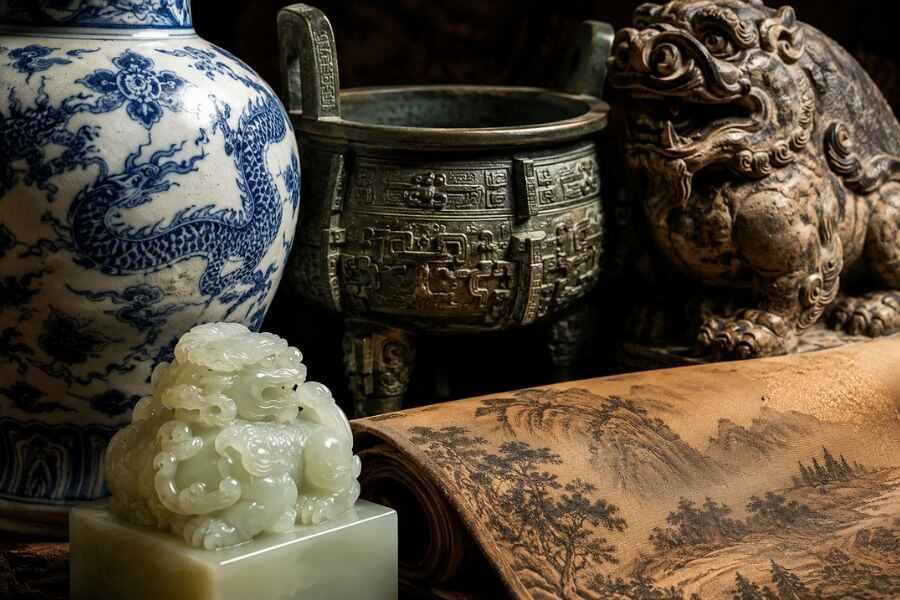
Chinese auctions have become some of the most exciting events in the global art and antiques world. Wealthy collectors, museums, investors, and history lovers often compete fiercely for rare treasures connected to China’s long cultural history. From ancient porcelain and imperial paintings to rare jade carvings and handwritten scrolls, some items have sold for prices so high that they shocked the world.
When you look at these record-breaking sales, you are not just seeing expensive objects. You are seeing symbols of history, status, craftsmanship, and national pride. Many of these treasures survived wars, dynastic changes, and centuries of travel before ending up in major auction houses.
In this article, you will discover the 10 most expensive things ever sold at Chinese auctions, why collectors wanted them so badly, and what made their values climb into the millions.
Quick Summary Table 💎
| Rank | Item | Estimated Sale Price | Type |
|---|---|---|---|
| 1 | Qing Dynasty Pekingese Vase | Around $84 million | Porcelain |
| 2 | Chicken Cup of the Ming Dynasty | Around $36 million | Porcelain |
| 3 | Qi Baishi Painting Collection | Around $140 million combined | Paintings |
| 4 | Imperial Jade Seal | Around $22 million | Jade Artifact |
| 5 | Yuan Dynasty Blue and White Vase | Around $27 million | Porcelain |
| 6 | Su Shi Calligraphy Scroll | Around $59 million | Calligraphy |
| 7 | Imperial Tibetan Tapestry | Around $45 million | Textile Art |
| 8 | Huang Tingjian Calligraphy | Around $64 million | Calligraphy |
| 9 | Qianlong Revolving Vase | Around $19 million | Porcelain |
| 10 | Rare Bronze Ritual Vessel | Around $28 million | Ancient Bronze |
How We Ranked These Auctions 📜
We ranked these incredible auction sales using several important factors:
- Final hammer price
- Historical importance
- Cultural value in Chinese history
- Rarity and condition
- Global collector demand
- Influence on the art market
- Media attention after the sale
- Importance to museums and investors
- Craftsmanship and artistic detail
- Long-term impact on auction trends
1. Qing Dynasty Pekingese Vase 🐉
One of the most shocking auction stories ever involved a Qing Dynasty vase found in a small family house in England. The owners reportedly believed it was simply an old decorative item until experts identified it as an extremely rare imperial treasure from the 18th century.
When the vase entered the auction, wealthy Chinese buyers pushed the bidding war to unbelievable levels. The final price exploded to around $84 million, making it one of the most expensive Chinese antiques ever sold.
What made this vase so special was its detailed enamel work, imperial quality, and connection to the Qianlong Emperor period. Experts believed the vase was originally made for the royal palace, which greatly increased its value.
The sale also showed how strongly Chinese collectors wanted to bring cultural treasures back to China. Many buyers were motivated not only by money but also by national pride and historical preservation.
2. Chicken Cup of the Ming Dynasty 🐓
The famous Chicken Cup became legendary in the auction world because of its tiny size and massive value. This small porcelain cup from the Chenghua period of the Ming Dynasty sold for around $36 million.
The cup featured delicate paintings of chickens, hens, and chicks surrounded by flowers. Even though it looked simple compared to larger imperial pieces, collectors considered it one of the greatest examples of Ming porcelain ever created.
Only a few authentic Chicken Cups are known to exist today. Because of this rarity, billionaires and museums competed heavily whenever one appeared for sale.
The buyer, a wealthy Chinese collector, reportedly drank tea from the priceless cup after purchasing it. That story spread worldwide and added even more fame to the object.
3. Qi Baishi Painting Collection 🎨
Qi Baishi is one of China’s most respected modern painters. His paintings of shrimp, insects, flowers, and village life became symbols of Chinese artistic identity during the 20th century.
At one major auction, a large collection of his works sold for a combined price of roughly $140 million. That result placed Qi Baishi among the most valuable artists in Asian auction history.
Collectors love his paintings because they combine simplicity with emotional depth. His brushwork looks effortless, but every line carries a strong personality and skill.
Another reason his works became so valuable is that they appeal to both traditional and modern buyers. Older collectors admire the connection to classical Chinese painting, while younger investors see his art as a stable luxury asset.
Today, owning an authentic Qi Baishi painting is considered a major status symbol among elite collectors.
4. Imperial Jade Seal 🟢
Jade has always held enormous importance in Chinese culture. For thousands of years, it represented purity, authority, wisdom, and power. Imperial jade seals were especially important because emperors used them to approve official documents and royal commands.
One rare imperial jade seal sold for around $22 million at auction, attracting international attention from collectors and historians.
The seal featured incredibly detailed carving work and was connected to the Qing imperial court. Its condition was also unusually good for such an old object.
Collectors viewed the seal as more than an art object. It was essentially a piece of political history linked directly to imperial China.
Because jade is difficult to carve and extremely valued in Chinese tradition, rare imperial pieces continue to rise in auction value year after year.
5. Yuan Dynasty Blue and White Vase ⚱️
Blue and white porcelain from the Yuan Dynasty is considered some of the finest ceramic work ever produced in China. These pieces influenced pottery styles across Asia, the Middle East, and Europe for centuries.
One especially rare Yuan Dynasty vase sold for around $27 million after an intense bidding battle.
The vase stood out because of its rich cobalt blue patterns, elegant shape, and historical importance. Experts believed it was created during the early development of blue and white porcelain techniques.
Collectors value Yuan porcelain because so few original examples survived. Many were damaged, lost, or destroyed over time.
This vase also represented a turning point in global trade history because Chinese porcelain became one of the world’s most desired luxury exports during that era.
6. Su Shi Calligraphy Scroll ✒️
Su Shi, also known as Su Dongpo, was one of China’s greatest poets, scholars, and calligraphers. His surviving handwritten works are incredibly rare today.
One important scroll connected to Su Shi sold for around $59 million at auction, stunning the art world.
Chinese calligraphy is often treated with the same respect as painting because every brushstroke reflects the personality and emotions of the writer. In Su Shi’s case, collectors believed his work carried deep cultural and intellectual value.
The scroll attracted enormous attention because authentic Song Dynasty calligraphy pieces rarely appear on the market.
For many collectors, owning a Su Shi work is like owning a direct piece of Chinese literary history.
7. Imperial Tibetan Tapestry 🧵
Chinese auctions do not only feature porcelain and paintings. Rare textiles and religious objects also attract huge prices.
One imperial Tibetan tapestry connected to the Qing court sold for roughly $45 million. The artwork featured detailed Buddhist imagery woven with extraordinary craftsmanship.
The tapestry likely belonged to the imperial family or high-ranking religious figures. Its condition remained remarkably strong despite its age, which increased collector interest.
Many buyers saw the tapestry as a cultural bridge between Chinese imperial history and Tibetan spiritual traditions.
Textile artworks are much harder to preserve than porcelain or bronze, so surviving examples of this quality are extremely rare.
8. Huang Tingjian Calligraphy 🖌️
Huang Tingjian was another legendary Chinese calligrapher from the Song Dynasty. His handwriting style influenced generations of artists and scholars.
One of his rare calligraphy pieces sold for around $64 million, making it one of the most expensive Chinese artworks ever auctioned.
The scroll featured elegant brush movements filled with energy and balance. Experts praised the work for its authenticity and historical importance.
Chinese collectors often place calligraphy at the very top of artistic achievement because it combines writing, philosophy, rhythm, and visual beauty into one form.
The massive sale price proved that ancient calligraphy can compete with the world’s most expensive paintings in value and prestige.
9. Qianlong Revolving Vase 🔄
The Qianlong Emperor period produced some of the most technically advanced porcelain in Chinese history. One of the best examples was the famous revolving vase, which sold for around $19 million.
This vase featured an inner section that could rotate inside the outer body. Creating such a design required extraordinary engineering and ceramic skill.
Collectors were amazed by both the artistic beauty and mechanical complexity of the piece.
Imperial workshops during the Qianlong era were known for experimenting with difficult techniques, and this vase represented the peak of that innovation.
Because very few revolving vases survived intact, collectors treated this item almost like a miracle of historical craftsmanship.
10. Rare Bronze Ritual Vessel 🔥
Ancient Chinese bronze vessels were originally used in religious ceremonies and royal rituals thousands of years ago. Today, they are among the most valuable archaeological artifacts in the world.
One rare bronze ritual vessel sold for around $28 million due to its age, condition, and historical importance.
The vessel featured detailed inscriptions and decorative patterns connected to early Chinese dynasties. Experts believed it may have belonged to a powerful noble family.
Collectors highly value bronze ritual objects because they offer direct insight into ancient Chinese society, politics, and spiritual beliefs.
Unlike many decorative antiques, these vessels were deeply connected to real historical events and ceremonial traditions.
Conclusion 🌟
The world of Chinese auctions is filled with drama, competition, and incredible history. These record-breaking sales show how valuable Chinese cultural treasures have become in the modern market.
When you look at these auction prices, you are seeing more than luxury spending. You are seeing collectors fighting to preserve pieces of civilization, reclaim national heritage, and own objects connected to emperors, scholars, and ancient dynasties.
Chinese auctions will likely continue breaking records in the future as wealthy collectors search for rare items with strong historical stories. Whether it is a tiny porcelain cup or a massive imperial vase, these treasures continue to capture global attention because of their beauty, rarity, and cultural importance.
Frequently Asked Questions ❓
Why are Chinese antiques so expensive?
Chinese antiques are expensive because many are extremely rare and connected to thousands of years of history. Wealthy collectors, museums, and investors all compete for the best pieces, which drives prices higher.
Which Chinese dynasty produces the most valuable auction items?
The Ming and Qing Dynasties usually produce the highest value auction pieces, especially imperial porcelain, jade, and calligraphy works connected to royal courts.
Why is Chinese calligraphy worth millions?
Chinese calligraphy is considered one of the highest art forms in Chinese culture. Famous calligraphers are respected similarly to legendary painters or writers, making authentic works extremely valuable.
Are Chinese auction prices still increasing today?
Yes, many Chinese antiques and artworks continue to increase in value because demand remains strong among global collectors and wealthy buyers in Asia.
What types of Chinese items sell best at auctions?
Porcelain, jade carvings, imperial seals, ancient bronzes, paintings, and rare calligraphy usually achieve the highest auction prices due to their rarity and historical significance.