When you think about dangerous jobs, you probably imagine skyscraper workers, deep-sea fishermen, or firefighters in big cities. But some of the riskiest jobs in the world are hidden far away in the mountains, forests, rivers, and villages of rural China. These jobs are often passed down through generations and still exist because local communities depend on them for survival.
In many remote areas, workers face steep cliffs, wild weather, dangerous animals, heavy machinery, toxic materials, and life-threatening conditions every single day. Some of these jobs have little modern safety equipment, while others rely almost entirely on experience and courage.
In this article, you will discover 10 of the most dangerous jobs that still exist only in rural China and why the people who do them continue despite the risks.
Quick Summary Table 🚜
| Rank | Job | Main Danger | Rural Area Type |
|---|---|---|---|
| 1 | Cliff Honey Collectors | Falling from cliffs and bee attacks | Mountain regions |
| 2 | Bamboo Raft Log Transporters | Drowning and river currents | Remote rivers |
| 3 | Mountain Tea Pickers | Landslides and dangerous slopes | Tea mountains |
| 4 | Snake Catchers | Venomous bites | Forest villages |
| 5 | Rural Coal Miners | Cave ins and toxic gases | Mining towns |
| 6 | Yak Herders | Extreme cold and altitude | Tibetan plateaus |
| 7 | Hanging Coffin Preservation Workers | Cliff climbing accidents | Canyon areas |
| 8 | Traditional Firework Makers | Explosions and burns | Small villages |
| 9 | Rice Terrace Farmers | Slippery cliffs and exhaustion | Terraced mountains |
| 10 | River Sand Collectors | Strong currents and collapsing banks | Rural waterways |
How We Ranked These Jobs ⚠️
We ranked these dangerous rural jobs based on several important factors:
- Risk of serious injury or death
- Lack of modern safety equipment
- Exposure to dangerous environments
- Physical exhaustion and long working hours
- Isolation from hospitals or emergency services
- Frequency of accidents reported in rural regions
- Dependence on traditional methods instead of machines
- Extreme weather and environmental hazards
1. Cliff Honey Collectors 🍯
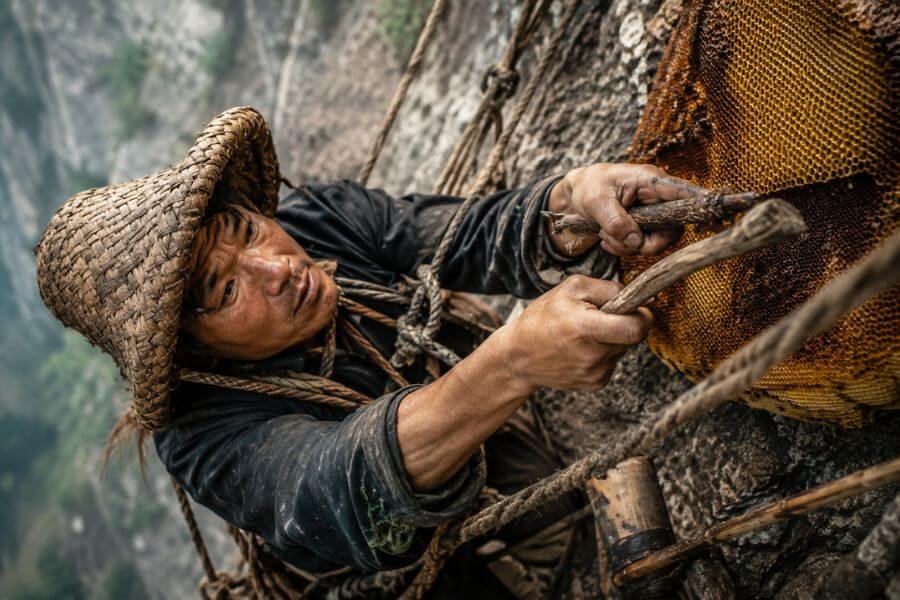
One of the most terrifying jobs in rural China is collecting wild honey from giant hives attached to steep mountain cliffs. In remote provinces like Yunnan and parts of Sichuan, honey hunters climb dangerous rock faces using ropes made from bamboo or old climbing gear.
You can imagine how risky this becomes when thousands of aggressive bees swarm around the workers while they hang hundreds of feet above the ground. A single mistake can lead to a deadly fall.
Many collectors work during sunrise because cooler temperatures make the bees slightly calmer. Even then, bee stings can cause allergic reactions, blurred vision, or panic while climbing.
Despite the danger, wild cliff honey sells for high prices because many people believe it has medicinal benefits. For some rural families, this dangerous tradition remains one of the few ways to earn a decent income.
2. Bamboo Raft Log Transporters 🛶
In some remote forest regions, workers still transport logs down rivers using handmade bamboo rafts. While modern roads exist in cities, isolated villages often rely on rivers to move heavy timber.
The job sounds simple until you realize these rivers can become deadly during rainy seasons. Strong currents, hidden rocks, and sudden floods regularly destroy rafts and throw workers into freezing water.
Many transporters cannot swim well, yet they spend entire days balancing massive logs while steering through narrow mountain rivers. During storms, visibility drops and accidents become much more common.
This work demands constant physical effort because workers often use long poles to guide the raft manually. One slip can trap a person beneath heavy timber in seconds.
3. Mountain Tea Pickers 🍃
China produces some of the world’s most famous tea, but many people never think about the dangers behind harvesting it in remote mountain regions.
Tea pickers in rural provinces such as Fujian and Zhejiang climb steep, muddy hillsides before sunrise. During rainy seasons, the ground becomes extremely slippery, increasing the risk of falls and landslides.
Some tea farms sit on narrow mountain ledges with little protection from cliffs. Workers spend long hours bent over while carrying heavy baskets on their backs. This creates severe strain on the knees, hips, and spine.
Fog also creates visibility problems in high mountain areas. In isolated farms, medical help may be hours away if someone becomes injured.
Although the scenery looks peaceful, mountain tea harvesting can be physically punishing and surprisingly dangerous.
4. Snake Catchers 🐍
In several rural areas of southern China, snake catching is still a real profession. Workers capture venomous snakes for traditional medicine, food markets, and research centers.
This job requires incredible speed and precision. Many snake catchers work in thick forests, rice fields, and caves where deadly species hide beneath rocks or inside tall grass.
A single bite from certain snakes can become fatal if treatment is delayed. Rural hospitals may not always have enough antivenom available nearby, making every encounter risky.
Snake catchers often work at night because many snakes are more active after dark. That means they also face poor visibility, rough terrain, and dangerous weather while searching.
Even experienced workers suffer bites from time to time, especially when handling multiple snakes in small spaces.
5. Rural Coal Miners ⛏️
While large mining operations are heavily regulated today, some smaller rural coal mines still operate in remote regions under difficult conditions.
Coal miners face dangers including tunnel collapses, toxic gases, underground flooding, and explosions caused by methane buildup. In smaller rural mines, safety standards are sometimes weaker than in major industrial operations.
Workers spend long hours underground breathing dusty air that can seriously damage the lungs over time. Many miners also work in narrow tunnels with very limited escape routes.
Because these mining towns are isolated, rescue operations after accidents can take longer than in urban areas. Families in these communities often depend entirely on mining income despite the risks.
For decades, coal mining has remained one of the deadliest forms of labor in rural China.
6. Yak Herders 🏔️
On the high plateaus of western China, yak herders spend months in freezing temperatures while caring for animals across enormous open landscapes.
At first, herding may not sound dangerous. But life at high altitude creates serious risks, including oxygen shortages, snowstorms, frostbite, and isolation.
Some herders travel through mountain passes where sudden weather changes can trap people far from shelter. Heavy snow and strong winds make navigation difficult, especially during winter.
Wild animals can also threaten both herders and livestock. In remote regions, medical services may require hours or even days to reach.
The physical demands are extreme because herders walk long distances daily while carrying supplies across rugged terrain.
7. Hanging Coffin Preservation Workers ⚰️
One of the strangest and most dangerous rural jobs involves preserving ancient hanging coffins placed high on cliff walls centuries ago.
In certain canyon regions, specially trained workers climb dangerous rock faces to inspect, clean, or stabilize these historical coffins. Many of the wooden structures sit in locations that are difficult to reach, even with modern equipment.
The cliffs are often steep, unstable, and exposed to strong winds. Falling rocks create additional danger during restoration work.
Because these sites are historically important, workers must move carefully and avoid damaging fragile materials. That means they cannot simply rush through the process for safety.
This unusual profession combines archaeology, climbing, and preservation work in one of the most hazardous environments imaginable.
8. Traditional Firework Makers 🎆
China is famous for fireworks, and many traditional workshops still exist in small rural villages. Some families have made fireworks for generations, using techniques passed down over hundreds of years.
Unfortunately, this work can be incredibly dangerous.
Workers handle explosive powders daily, often in hot weather where accidental ignition becomes more likely. Even small mistakes can trigger devastating explosions.
In tiny workshops, safety systems may be limited compared to large industrial factories. Dust from chemicals can also create breathing problems over time.
Despite these risks, many rural communities continue firework production because it provides local jobs and supports cultural celebrations across the country.
9. Rice Terrace Farmers 🌱
The beautiful rice terraces seen in photos often hide the brutal reality of farming in steep mountain landscapes.
Farmers climb slippery, narrow paths while carrying tools, fertilizer, and baskets filled with rice. During planting season, they spend hours standing in muddy water under intense heat.
Many terraces sit beside sharp drops with few barriers. Heavy rain increases the chance of falling or being caught in landslides.
Because machines cannot easily operate on steep terraces, much of the work must still be done by hand. This creates enormous physical strain, especially for older farmers who continue working into old age.
The work is exhausting, repetitive, and filled with environmental hazards that most urban workers never experience.
10. River Sand Collectors 🌊
In some rural river communities, workers collect sand from riverbeds for construction use. While modern equipment exists elsewhere, smaller operations often rely on manual labor and simple boats.
Collectors work in fast-moving water where strong currents can pull people underwater without warning. Riverbanks may suddenly collapse, especially after heavy rain.
Workers frequently dive or dig in unstable conditions while carrying heavy loads. In colder seasons, freezing water increases the risk of exhaustion and hypothermia.
This work becomes even more dangerous during flood season when water levels rise quickly and visibility drops.
Although it is physically exhausting and risky, sand collection remains an important source of income in some remote areas.
Conclusion 🌄
Rural China is filled with jobs that most people outside these regions rarely hear about. Many of these professions survive because remote communities still depend on traditional labor, local resources, and generations of knowledge.
What makes these jobs especially dangerous is not just the physical risk. Workers often face isolation, limited medical access, harsh weather, and outdated equipment all at the same time.
Yet despite the hardships, millions of rural workers continue doing these jobs to support their families and preserve traditions that have existed for centuries.
The next time you drink mountain tea, watch fireworks, or see beautiful rice terraces online, you may remember the incredible risks some rural workers take every day behind the scenes.
Frequently Asked Questions ❓
Are these dangerous jobs legal in China?
Yes, most of these jobs are legal because they are tied to traditional industries, farming, mining, or local cultural practices. However, the government has increased safety regulations in many sectors over the years.
Why do people continue working in such risky jobs?
Many rural workers continue because these jobs provide income in areas where employment opportunities are limited. Some jobs are also part of family traditions passed down through generations.
Which rural job in China has the highest death risk?
Small-scale mining and dangerous cliff-related work are often considered among the highest-risk professions because accidents can quickly become fatal.
Are younger people in rural China still taking these jobs?
In many cases, younger generations are leaving rural villages for city jobs. However, some traditional professions still continue because older workers train younger family members.
Do tourists ever see these dangerous jobs in person?
Yes, tourists sometimes witness tea harvesting, yak herding, rice farming, or bamboo rafting in rural regions. However, the most dangerous parts of these jobs are usually hidden from public view.