Key Takeaways
Traveling as a vegetarian or vegan in meat-heavy Chinese cities might seem intimidating at first, but it is entirely possible with the right tools and knowledge. Here are the core strategies to keep you well-fed and happy:
- Look for Buddhist Vegetarian Restaurants: These spots are safe havens where you will find zero meat, seafood, or dairy. They often create mind-blowing plant-based versions of classic local dishes.
- Master a Few Essential Mandarin Phrases: Knowing how to say “I do not eat meat” or “Is there lard in this?” will be your ultimate superpower when ordering street food or at local joints.
- Watch Out for Hidden Animal Products: Chicken powder, lard, oyster sauce, and meat-based broths are common hidden ingredients in dishes that look perfectly green on the outside.
- Use Smartphone Apps to Navigate: Digital maps, translation apps, and local restaurant discovery platforms will save you tons of time and effort in finding hidden gems.
- Emphasize Clear Customization: Always communicate your dietary needs clearly before the chef fires up the wok, as cross-contamination or automatic additions of minced meat are common.
Imagine walking down a bustling street in a massive Chinese city. Your senses are hit with a wave of sights and sounds. Smoke rises from roadside grills, giant steaming baskets hold plump dumplings, and the aroma of sizzling spices fills the air. It is an food lover’s paradise. But as a vegetarian or vegan, your stomach might do a little nervous flip. You look around and see skewered meats, roasting ducks hanging in windows, and bubbling cauldrons of bone broth. You might wonder if you are going to survive your trip on plain white rice and watermelon.
Do not panic. While it is true that many regional Chinese cuisines love their pork, beef, and seafood, China is also home to a deep-rooted history of plant-based cooking. You do not have to live on packed snacks from home. With a little bit of preparation, some clever phrases, and an adventurous spirit, you can unlock an incredible world of delicious, cruelty-free food. Let us dive into exactly how you can navigate even the most meat-loving cities in China without compromising your lifestyle.
Understanding the Landscape of Chinese Cuisine
To find great plant-based food, you first need to understand how local people view food. In Western countries, vegetarianism is often seen as a health choice, an ethical stance, or an environmental lifestyle. In China, the concept has a slightly different history and cultural meaning. When you step into a regular local restaurant, their understanding of what counts as meat might surprise you.
In everyday Chinese cooking, meat is frequently used as a flavor enhancer rather than just a main centerpiece. A chef might stir-fry a large plate of fresh green beans but toss in a handful of minced pork just to make the dish taste richer. To the chef, that bean dish is still a vegetable dish, not a meat dish. If you simply ask for vegetable dishes, you might still end up with tiny bits of bacon, chicken powder, or dried shrimp mixed into your food.
Furthermore, seafood is often viewed in a completely separate category from land animals. It is highly common for someone to tell you a dish has no meat, only for you to find fish balls or oyster sauce inside. Understanding this mindset is your first step toward success. You are not dealing with a lack of options, you are just dealing with a different way of describing food.
The Two Worlds of Chinese Plant-Based Food
When you look for food, you will generally find that plant-based options fall into two separate categories. Knowing the difference helps you set your expectations and find exactly what your body is craving.
Traditional Buddhist Vegetarianism
This is your ultimate safety net. Buddhism has a history in China that goes back thousands of years. Monks and devout followers eat a strictly plant-based diet. When you visit a temple or a dedicated Buddhist vegetarian restaurant, you can relax completely. These establishments do not use any meat, poultry, seafood, or eggs.
There is one unique detail to keep in mind, traditional Buddhist cooking also avoids the five pungent roots, which include garlic, onions, leeks, chives, and scallions. They believe these root vegetables disturb the peace of the mind. So, while your food will be one hundred percent vegan, it might taste a bit different from standard stir-fries because it lacks garlic and green onions. However, these chefs are absolute masters at using ginger, soy sauce, mushrooms, and sesame oil to create deep, comforting flavors.
Modern Vegan and Western Styles
In massive, booming hubs like Shanghai, Beijing, Shenzhen, or Chengdu, a new wave of plant-based eating is taking over. This style is driven by health-conscious young people, environmental awareness, and international trends.
In these cities, you can easily find trendy cafes serving avocado toast, oat-milk lattes, vegan burgers, and plant-based pizzas. You will also find high-end Chinese restaurants reinventing traditional dishes using modern meat alternatives. This world is highly familiar to Western travelers, but it is usually more expensive and mostly found in wealthier neighborhoods or shopping malls.
Mastering the Language Barrier
You do not need to speak fluent Mandarin to get an amazing meal, but relying solely on English will limit you to international hotel restaurants and fast-food chains. Learning just a handful of spoken words and saving written characters on your phone will completely change your travel experience. It gives you the confidence to walk into any local joint and make your needs known.
When you speak to a server, it is best to be specific about what you cannot eat rather than using general terms. The Chinese term for vegetarianism is “chisu” (eating vegetables), but as we discussed, this can mean different things to different people. Being explicit is always the safest route.
Key Words to Say and Show
Here is a list of simple, crucial terms. You can read them aloud using the pronunciation guides, or you can simply point to the written Chinese characters on your screen when ordering food.
| English Meaning | Written Chinese | Pronunciation Guide |
| I eat vegetarian food. | 我吃素。 | Wo chee soo. |
| I do not eat meat. | 我不吃肉。 | Wo boo chee row. |
| I do not eat seafood. | 我不吃海鲜。 | Wo boo chee hi-shyen. |
| I do not eat eggs. | 我不吃鸡蛋。 | Wo boo chee jee-dan. |
| I do not eat milk/dairy. | 我不吃牛奶。 | Wo boo chee nyoo-ni. |
| Please do not add lard. | 请不要放猪油。 | Cheeng boo yow fang joo-yo. |
| Please do not add chicken powder. | 请不要放鸡精。 | Cheeng boo yow fang jee-jeeng. |
| Is this dish vegetarian? | 这个菜是素的吗? | Jay-guh tsiy shee soo duh ma? |
Crafting a Custom Explanation Card
One of the smartest things you can do before your trip is to create a digital note or a printed card that explains your diet in detail. You can hand this over to the server or the chef before they write down your order. A well-written card removes all guesswork. Here is an excellent translated message you can screenshot or copy:
“Hello! I am a strict vegetarian/vegan. I do not eat any kind of meat, including pork, beef, chicken, duck, fish, shrimp, or seafood. Please do not use lard, chicken broth, meat stock, or oyster sauce when cooking my food. Simple vegetables stir-fried in vegetable oil with salt, garlic, and soy sauce are perfect. Thank you so much for your help!”
In Chinese characters, that looks like this:
“您好!我是一个严格的素食主义者。我不吃任何肉类,包括猪肉、牛肉、鸡肉、鸭肉、鱼类、虾类或任何海鲜。做菜时请不要使用猪油、鸡汤、肉汤或耗油。只用植物油、盐、大蒜和酱油炒清菜就可以。非常感谢您的帮忙!”
Showing this card at a local restaurant will usually result in a nod of understanding. The staff are generally very kind and want to help, they just need to know exactly what your boundaries are.
Navigating the Hidden Traps in Everyday Dishes
You are sitting at a restaurant table, looking at a beautiful plate of steamed broccoli or stir-fried cabbage. It looks safe, clean, and green. But in a country where meat flavors everything, hidden animal ingredients can slip into almost anything. Being aware of these stealth ingredients is the secret to staying truly plant-based.
Animal Fats and Cooking Oils
In the West, vegetable oil is the default standard for frying. In many parts of China, especially in traditional or rural areas, animal fat is prized for its ability to add a rich, savory aroma to simple ingredients.
Lard (Zhu You)
Lard is the biggest hidden hurdle for vegetarians in China. It is commonly used to stir-fry leafy green vegetables, coat noodles, and flavor savory pastries. Even a simple bowl of plain noodles might have a spoonful of lard hidden at the bottom of the bowl to keep the noodles from sticking together. Always use your phrase “Cheeng boo yow fang joo-yo” to ensure your meal is cooked in peanut, soybean, or rapeseed oil.
Tallow and Mutton Fat
If you travel to northern or western China, or if you visit a hot-pot restaurant, beef fat (tallow) and mutton fat are very common. They form the base of rich, spicy soup bases. A vegetable boiled in a beef fat broth is no longer vegetarian, so you must always check what liquid is being used in the kitchen.
Seasonings, Sauces, and Powders
Sometimes the meat is not visible because it has been processed into a liquid or a powder. These flavor enhancers are staples in standard Chinese commercial kitchens.
Chicken Powder (Ji Jing)
This yellow powder is a mix of salt, flavor enhancers, and dehydrated chicken meat or extract. It is sprinkled onto almost every savory dish, from vegetable stir-fries to simple soups, just like salt. Chefs use it automatically without thinking of it as meat. If you are a strict vegetarian or vegan, you must explicitly ask the kitchen to skip the chicken powder and use only regular salt.
Oyster Sauce (Hao You)
Oyster sauce is thick, brown, savory, and sweet. It is famously tossed with steamed broccoli, mushrooms, and gai lan (Chinese broccoli). While it makes vegetables taste incredible, authentic versions are made from concentrated oyster extracts. Look out for “Hao You” on menus, and ask for regular soy sauce instead.
Fish Sauce and Dried Shrimp
In southern coastal areas, like Guangdong or Fujian provinces, fish sauce is used to add saltiness to dishes. Small, paper-thin dried shrimps are also frequently tossed into soups, dumpling fillings, or stir-fried cabbage for a pop of flavor.
The Magical World of Chinese Tofu
If there is one thing that will make your trip to China absolutely spectacular, it is tofu. In many Western countries, tofu has a reputation for being bland, spongy, or boring. In China, tofu is a culinary superstar with a history stretching back over two thousand years. It is treated with immense respect, and the variety available will blow your mind.
The best part about eating tofu in China is that it comes in dozens of textures and forms, each suited for a specific cooking method. You could eat tofu for breakfast, lunch, and dinner for a week and never feel like you are eating the same thing twice.
Common Tofu Varieties You Must Try
To help you order like a pro, let us break down some of the most exciting and delicious types of tofu products you will find across the country.
Firm and Soft Tofu (Lao Doufu and Nen Doufu)
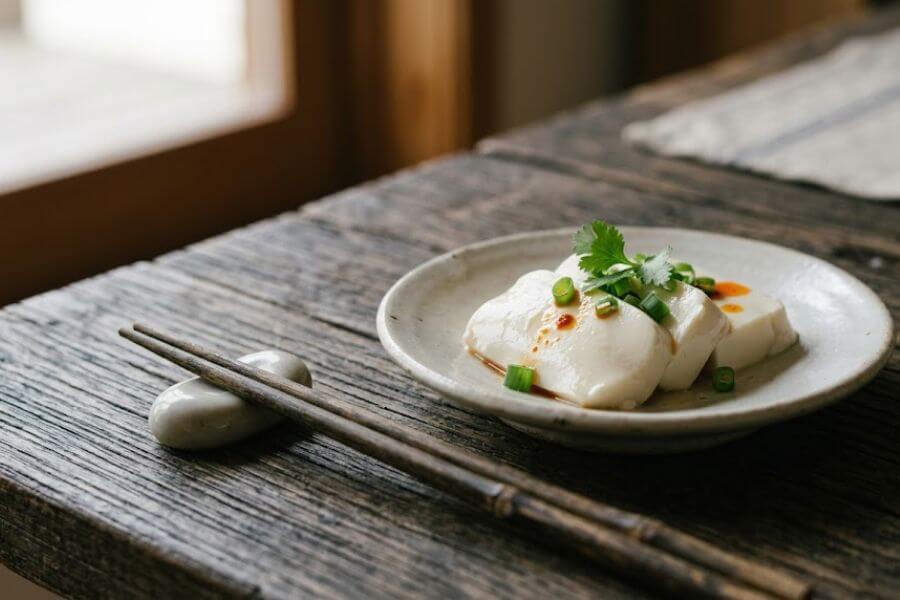
Firm tofu has a rugged texture that holds up beautifully to heavy braising and intense stir-frying. It absorbs sauces like a sponge. Soft or silken tofu is incredibly smooth and delicate, often served cold with a splash of black vinegar, soy sauce, garlic, and sesame oil, or gently simmered in a light sauce.
Tofu Skins and Sheets (Fuzhu and Bapi)
When soy milk is boiled in large open vats, a thin skin forms on the surface. Workers lift this skin off and dry it into wrinkled sticks called fuzhu, or flat sheets called bapi. Fuzhu has a wonderful, chewy texture that mimics meat beautifully, making it a favorite in stews, hot pots, and cold salads.
Smoked and Dried Tofu (Doufugan)
This tofu has had most of its water pressed out, making it dense and meaty. It is often simmered in a fragrant bath of soy sauce, star anise, cinnamon, and clove, then sliced into thin strips. It is commonly stir-fried with hot green peppers or celery, providing a fantastic bite and a deep, smoky flavor.
Frozen Tofu (Dong Doufu)
When you freeze tofu, the water inside turns to ice, creating large pockets. When thawed and pressed, the tofu becomes a literal sponge. It is an absolute must-have for hot pot, as it soaks up incredible amounts of flavorful broth with every single bite.
Safe Tofu Dishes to Order
While tofu is plant-based, remember that chefs love to mix it with meat. For example, the famous Mapo Tofu is traditionally cooked with minced pork or beef. To stay safe, look for these naturally vegetarian-friendly tofu masterpieces.
- Jiachang Doufu (Home-Style Tofu): This dish features triangles of firm tofu that are deep-fried until golden, then stir-fried with wood-ear mushrooms, bamboo shoots, bell peppers, and a savory, slightly spicy fermented bean sauce. Just remember to ask for no meat.
- Liangban Doufugan (Cold Shredded Tofu Salad): Thinly shredded strips of dried smoked tofu are tossed with fresh cilantro, celery, sesame oil, garlic, and a touch of chili oil. It is refreshing, high in protein, and naturally vegan.
- Pidan Doufu (Century Egg Tofu): If you are a vegetarian who eats eggs, this cold dish pairs silky soft tofu with chopped rich, creamy century eggs, topped with soy sauce, vinegar, and garlic. Vegans can simply ask to skip the egg and enjoy the seasoned silky tofu.
Top Vegetarian-Friendly Dishes in Standard Restaurants
You do not always need to hunt down a specialized vegan cafe to get a filling meal. If you find yourself in a standard, meat-heavy local restaurant with your friends or family, you can easily order a feast of accidentally vegetarian dishes. These are staples that almost every Chinese kitchen can whip up in minutes using basic pantry items.
Incredible Vegetable Stir-Fries
Vegetables in China are not an afterthought, they are celebrated for their freshness and natural crunch. Chefs flash-fry them in super-hot woks, preserving their vibrant color and nutrients.
Di San Xian (Three Treasures from the Earth)
Originating from the chilly northeastern part of China, this dish is a hearty comforting classic. It features thick chunks of potato, eggplant, and green bell peppers. The potatoes and eggplants are fried until soft and caramelized, then tossed together in a rich, sweet, and savory garlic soy sauce. It is completely vegetarian, deeply filling, and loved by everyone who tries it.
Qingchao Tudou Si (Stir-Fried Shredded Potatoes)
If you think potatoes can only be mashed, baked, or turned into french fries, this dish will change your mind. Raw potatoes are sliced into matchstick-thin strips, soaked to remove excess starch, and quickly stir-fried with garlic and mild chilis. The result is a crisp, crunchy, savory dish that is incredibly addictive. For a sour twist, ask for Suanla Tudou Si, which adds a generous splash of Chinese black vinegar.
Suanrong Kongxincai (Stir-Fried Hollow Water Spinach with Garlic)
Water spinach has hollow stems that crunch beautifully and flat leaves that soak up flavor. Flash-fried with massive amounts of crushed garlic and a pinch of salt, it is a clean, green, and healthy side dish available throughout central and southern China.
Egg and Tomato Staples
For vegetarians who include eggs in their diet, China offers some of the most comforting, foolproof dishes on earth. These are cheap, widely available, and universally loved.
Xihongshi Chao Jidan (Scrambled Eggs with Tomatoes)
This is the ultimate Chinese comfort food. Almost every child in China grows up eating this dish over a bowl of warm rice. Juicy red tomatoes are cooked down into a sweet, tangy sauce, then folded together with fluffy, softly scrambled eggs. It is warm, sweet, savory, and can be found in literally every single neighborhood diner across the country.
Xihongshi Jidan Mian (Tomato and Egg Noodle Soup)
If you need a quick, warming lunch on a rainy day, this noodle soup is your best friend. It uses the same sweet tomato and egg combination, served over freshly pulled wheat noodles in a clear, soothing vegetable broth. It is simple, safe, and highly satisfying.
Mastering Street Food Markets
Street food markets are the beating heart of Chinese nightlife. They are loud, smoky, crowded, and filled with incredible energy. While rows of lamb skewers and sizzling seafood dominate the scene, street markets are actually fantastic places for vegetarians and vegans if you know what to look for. You can graze your way through various stalls, sampling unique snacks for just a few dollars.
The key to enjoying street food safely is observation. Take a moment to watch the vendor cook. Do they use the same brush to put oil on meat skewers and vegetable skewers? Do they cook everything on the same flat-top grill without wiping it down? If you want to avoid cross-contamination, look for vendors who specialize in only one specific plant-based item.
Street Food Treasures to Hunt Down
Let us look at some of the most iconic, mouth-watering plant-based street foods you can find across major Chinese cities.
Jianbing (Chinese Crepes)
Jianbing is the king of Chinese breakfast street food. A thin batter made of mung bean and wheat flour is spread across a hot circular griddle. The vendor cracks an egg over it, sprinkles it with scallions and cilantro, spreads a savory hoisin and chili sauce, and wraps it around a crispy fried cracker called baocui. Vegans can easily ask the vendor to skip the egg. It is hot, crunchy, savory, and made right in front of your eyes in less than two minutes.
Shaokao Kao Jiaosu (Grilled Street Vegetables)
Shaokao refers to Chinese street barbecues. While most people flock there for meat, the vegetable options are spectacular. You can pick out skewers of thick king oyster mushrooms, lotus root slices, eggplants, potato rounds, and green beans. The vendor grills them over open coals and dusts them with a spicy, fragrant mix of cumin, chili powder, and salt. Just make sure to ask them to use vegetable oil and double-check that they do not brush meat juices onto your food.
Stinky Tofu (Chou Doufu)
Do not let the intense smell scare you away. Stinky tofu is a beloved street food snack, especially famous in cities like Changsha and Hangzhou. Firm tofu is fermented in a special brine until it develops a strong, pungent aroma, then deep-fried until the outside forms a super-crisp crust while the inside stays silky smooth. It is poked open and stuffed with garlic sauce, chili oil, and pickled radishes. It tastes far more savory and less intense than it smells, and it is entirely vegan.
App Checklist for Your Smartphone
Traveling in China without a smartphone is like trying to sail a boat without a rudder. The country runs on a highly advanced digital ecosystem. Traditional cash and physical maps have mostly been replaced by mobile apps. Having the right tools downloaded and set up before you land will turn a stressful search for food into a smooth, fun adventure.
Essential Digital Tools
Make sure these apps are downloaded, updated, and connected to an international roaming plan or a local SIM card before you set out to find your next meal.
Translation Apps
You will want an app that can translate text in real-time using your phone’s camera. When you are handed a massive paper menu written entirely in Chinese characters, you can simply hold your phone over the page, and the app will overlay English words onto the screen. This helps you quickly spot words like “pork” or “chicken” so you know which dishes to avoid. Look for apps that allow you to download Chinese for offline use, ensuring you can still translate even if you lose your internet connection in a basement dining room.
Navigation and Maps
Standard Western mapping applications often do not have updated layouts or accurate business listings in China. To find specific restaurant addresses, download local Chinese mapping apps. Even if you cannot read all the characters, you can copy and paste Chinese restaurant names into the search bar, and the app will guide you with precise walking or subway directions.
Dazhong Dianping (The Local Food Explorer)
This app is the Chinese equivalent of Yelp or TripAdvisor, but on a much larger scale. It is the ultimate tool used by millions of locals to find the best food in town. You can search for the characters for vegetarian food (“素食” – Sushi) or vegan food, and the app will display a list of nearby options, ranked by distance and popularity. It shows photos of the restaurant, pictures of the menu, prices, and honest customer reviews. Even without knowing the language, you can look at the photos, choose a dish that looks safe and amazing, and show the picture to your server.
Regional Breakdown: Veg-Friendly vs. Meat-Heavy Cities
China is massive, and its food choices change dramatically depending on which province or city you are visiting. Some regions are naturally a dreamland for plant-based eaters, while others present a much tougher challenge. Knowing what to expect in each major city allows you to plan your food strategy effectively.
The Vegetarian Safe Havens
These cities feature thriving international populations, strong Buddhist traditions, or local cooking styles that place a heavy emphasis on fresh, creative vegetable dishes.
Shanghai
Shanghai is arguably the easiest city in China for vegans and vegetarians. As a global financial hub, it embraces international food trends with open arms. You will find dozens of high-end plant-based fine-dining restaurants, cozy vegan bakeries serving dairy-free croissants, and trendy cafes offering international fare. It also has historic Buddhist temples, like the Jade Buddha Temple, which serves legendary, affordable bowls of vegetarian mushroom noodles to the public.
Chengdu
Chengdu is famous for its fiery, numbing Sichuan cuisine. While Sichuan food uses a lot of meat, it is also a fantastic place for vegetarians because the local flavor profiles rely heavily on plant-based ingredients like chili peppers, Sichuan peppercorns, garlic, ginger, and fermented bean pastes. Chengdu has a deeply relaxed lifestyle and a massive Buddhist community centered around temples like Wenshu Monastery. The monastery grounds feature an incredible, low-cost vegetarian buffet and a historic teahouse where you can relax for hours.
The Tougher Meat-Heavy Challenges
In these cities, meat, poultry, or seafood form the very core of local identity and pride. Finding pure plant-based food here requires a bit more effort and strategy.
Beijing
The capital city loves hearty, heavy meat dishes. From the iconic Peking roast duck to boiling mutton hot pots, the local culinary scene is heavily centered around animal proteins. Street corners are often filled with the aroma of roasting meats. However, because Beijing is a massive metropolis, it holds hidden gems. You just need to look away from the traditional old-style barbecue spots and look toward the university districts or shopping centers where modern vegetarian buffets and Buddhist restaurants tend to cluster.
Guangzhou
Located in the south, Guangzhou is the cradle of Cantonese cuisine. The local philosophy focuses on bringing out the natural, delicate flavors of fresh ingredients, especially seafood, poultry, and pork. Dim sum baskets are filled with shrimp dumplings, pork buns, and chicken feet. To survive in Guangzhou, look for specialized vegetarian dim sum spots that use mushrooms, taro, and water chestnuts to recreate classic steamed treats, or head to the historic Dafo Temple in the city center for an amazing plant-based meal.
Frequently Asked Questions
What do I do if I accidentally eat something with meat or animal fat in it?
Do not be too hard on yourself. Travel is all about learning, and when you are navigating a culture where hidden animal products are the norm, mistakes can happen. If you take a bite of a dish and realize it contains minced pork or was fried in lard, simply stop eating it, politefully let the server know, and order a simple, safe replacement like plain boiled rice or fresh fruit. Your intentions are what matter most, and a single mistake does not ruin your lifestyle or your trip.
Can I find dairy products hidden in standard Chinese cooking?
Traditional Chinese cuisine uses almost zero dairy. You will not find butter, cheese, cream, or cow’s milk in standard stir-fries, soups, or rice dishes. This makes China an absolute paradise for lactose-intolerant travelers and vegans. However, be cautious with modern bakeries, milk-tea shops, and Westernized cafes, which use large amounts of milk, cream, and condensed milk. When ordering popular local milk teas, always check if they offer oat milk or soy milk options, or stick to refreshing, naturally vegan fruit teas.
Are Buddhist vegetarian buffets expensive to eat at?
Not at all, they are usually some of the cheapest and most high-quality dining options in the country. Many Buddhist temples run non-profit or low-cost buffets to feed the community and promote kind living. For a very small fee, you gain access to dozens of hot dishes, including steamed greens, various tofu preparations, braised mushrooms, noodles, soups, and fresh fruits. The food is clean, healthy, and completely free of hidden meats. Just remember to only take what you can finish, as wasting food is highly discouraged in these spiritual spaces.
Is MSG safe for vegetarians and vegans to consume?
Yes, Monosodium Glutamate, commonly known as MSG, is completely plant-based. It is made through the fermentation of starch, sugar beets, sugar cane, or molasses, using a process very similar to how yogurt or vinegar is made. While it is highly effective at adding a savory flavor to dishes, it does not contain any animal products. If you prefer to avoid MSG for personal health reasons, you can tell your server “Cheeng boo yow fang weijeeng,” which means “Please do not add MSG.”
How can I make sure my hot pot experience is entirely vegetarian?
Hot pot is an incredibly fun, social dining experience, but it can be a minefield for vegetarians. To enjoy it safely, order a split pot, often called a Mandarin Duck pot (Yuanqiang Guo), which divides the boiling broth into two separate sides. Fill one side with a plain mushroom or tomato broth for yourself, while your companions can use the other side for meat broths. Make sure you use a dedicated set of chopsticks and ladles for your vegetarian side to prevent any meat from crossing over into your safe broth.