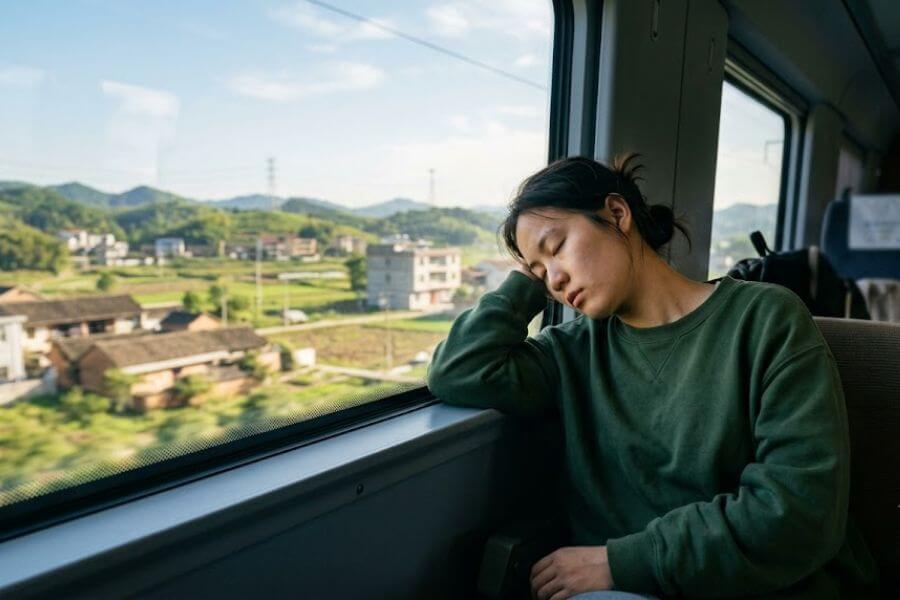
Imagine stepping off a massive airplane after a fifteen-hour flight. Your feet feel heavy, your eyes burn, and your brain feels like it is floating in a thick fog. You look at your watch, but the time does not match the bright sunshine outside the airport windows. You are in China, but your body is still back home in the United States, fast asleep in your warm bed.
This confusing feeling is jet lag. It is a real physical challenge that happens when you cross multiple time zones very quickly. Your body has an internal clock that tells you when to eat, sleep, and wake up. When you fly across the Pacific Ocean, that clock gets completely mixed up. Traveling from the US to China is especially tough because you are flipping your world upside down, changing your schedule by twelve to fifteen hours, depending on where you started.
Do not let this scare you. You can easily beat the exhaustion and enjoy your incredible trip. This guide will show you exactly how to prepare your body, handle the long flight, and adjust to your new environment like a pro.
Key Takeaway
Note: The secret to beating jet lag is simple. You must control your light exposure and meal times to force your internal body clock to match China time as fast as possible. If you start adjusting your habits a few days before you leave, stay active during the first day of your trip, and sleep only when the sun goes down in China, you will feel fantastic in no time.
The Secret World of Your Internal Clock
To defeat jet lag, you first need to understand what is happening inside your body. You have a built-in biological clock called the circadian rhythm. This rhythm operates on a twenty-four-hour cycle and controls everything from your body temperature to your energy levels. It relies heavily on clues from the outside world, especially natural sunlight.
When sunlight enters your eyes, it sends a powerful message to your brain to stop making melatonin. Melatonin is the natural chemical that makes you feel sleepy. When the sun goes down, your brain starts pumping melatonin back into your blood, telling your body that it is time to rest.
When you hop on a flight from the US to China, you travel faster than the turning of the planet. You are essentially skipping ahead in time. Your internal clock still thinks you should be sleeping when the Chinese sun is shining brightly. This conflict between your internal clock and the external world causes the headaches, tiredness, and grumpiness known as jet lag.
Why the US to China Route is Extra Hard
Traveling west from the United States to Asia is notoriously famous for causing severe jet lag. Doctors and scientists often say that traveling east is harder, but the sheer number of time zones you cross on a trip to China makes it a unique challenge. You are changing your life by half a day.
When the local people in Beijing or Shanghai are sitting down to a delicious lunch of noodles at noon, your body thinks it is midnight, which is the time you normally cuddle up under your blankets. When you are supposed to be deep asleep at three in the morning in China, your brain wakes up hungry and alert because it thinks it is three in the afternoon back in New York or Los Angeles.
This massive shift requires total strategy. You cannot just wing it and hope for the best. You need a clear plan that begins before you even pack your bags.
Phase One: Pre-Flight Preparation
Your battle against jet lag begins at home a few days before your scheduled departure. If you wait until you land in China to start changing your schedule, you will spend the first week of your vacation feeling like a zombie. Tiny shifts at home make a huge difference later.
Shift Your Sleep Schedule Early
Three to four days before your flight, start moving your bedtime. Since China is ahead of the United States, you want to train your body to go to bed earlier and wake up earlier if you are flying from the West Coast, or adjust based on your specific route.
- Day One: Go to bed thirty minutes earlier than usual and set your alarm for thirty minutes earlier in the morning.
- Day Two: Move your bedtime and wake-up time by a full hour.
- Day Three: Push it to an hour and thirty minutes.
This gradual change gently nudges your internal clock in the right direction. It reduces the sudden shock your body experiences when you finally change time zones.
Change Your Watch and Mindset
The moment you step inside the departure airport in the United States, change the time on your watch and your phone to the local time of your destination city in China. Stop thinking about what time it is back home.
If your mom calls you to say goodbye and says it is six in the evening, look at your watch and remind yourself that it is actually six in the morning in China. This mental trick helps your brain start the adjustment process early. If your new watch face says it is nighttime in China, try to rest during your wait at the gate. If it says it is daytime, force yourself to stay awake and read a book or walk around the terminal.
Hydrate Like a Champion
Airplanes are incredibly dry places. The air inside the cabin is sucked in from the outside high-altitude atmosphere and treated, meaning it holds almost no moisture. This dry air dehydrates your body rapidly, which makes the symptoms of jet lag twice as bad.
Start drinking extra water two days before your flight. Avoid sweet sodas, sugary juices, and caffeinated drinks like coffee or energy drinks. These liquids can actually drain moisture from your body and mess up your sleep patterns. Carry a reusable water bottle with you and fill it up right after you pass through airport security.
Eat Light and Clean Meals
Your digestive system has its own clock, and it gets just as confused as your brain during long trips. Heavy, greasy, or spicy meals require a lot of energy to digest, which can make you feel sluggish and disrupt your sleep.
In the days leading up to your trip, stick to clean and simple foods. Eat plenty of fresh fruits, crisp vegetables, lean chicken, and whole grains. This keeps your stomach happy and stable, preventing middle-of-the-night belly aches when you cross the ocean.
Phase Two: Mastering the Long Flight
The fifteen-hour journey across the ocean is the most critical time for managing jet lag. Many travelers make the mistake of watching movies for twelve hours straight or sleeping the entire time without a plan. You must be purposeful with your choices.
The Ultimate Flight Strategy Comparison
To maximize your comfort and success, look at how different choices during the flight affect your body.
| Feature | The Unprepared Traveler | The Jet Lag Expert |
| Water Intake | Drinks one cup when the cart passes | Drinks a glass of water every hour |
| In-Flight Entertainment | Watches five action movies in a row | Watches one movie, then rests according to China time |
| Movement | Sits completely still for twelve hours | Walks the aisles and stretches every two hours |
| Clothing Choice | Tight jeans and uncomfortable shoes | Loose sweatpants, layers, and cozy socks |
| Food Choices | Eats every heavy snack offered | Eats light meals and skips mid-flight sugar |
Use Light to Your Advantage
Light is the most powerful tool you have to control your brain. If it is daytime in China while you are flying, keep your window shade open if you have a window seat, or turn on your overhead reading light. Look at bright screens and stay active.
If it is nighttime in China while you are in the air, block out all light. Close your window shade tightly. Put on a dark, comfortable eye mask that fits snugly over your nose. Turn off your video screen completely. Even the small amount of blue light from a screen can trick your brain into thinking the sun is rising, which stops the production of helpful melatonin.
Move Your Body Safely
Sitting in a cramped airplane seat for hours slows down your blood circulation. This makes your legs swell, causes muscle aches, and increases your overall fatigue.
Every two hours, unbuckle your seatbelt and take a short walk up and down the airplane aisles. You can do simple exercises while standing near the back galley kitchen, such as rolling your ankles in circles, lifting up onto your tiptoes, and gently bending your knees. When you are sitting down, draw circles with your toes and stretch your arms high above your head. This keeps your blood moving freely and keeps your body feeling alive.
Sleep Smarts in the Air
Only sleep on the plane if it matches the nighttime schedule of your destination in China. If you fall into a deep four-hour nap when it is two in the afternoon in Beijing, you will arrive at your hotel wide awake at midnight, ready to run a marathon.
If you struggle to sleep when you need to, create a relaxing routine. Put on noise-canceling headphones and play soft sounds, like rain falling or gentle waves. Use a supportive neck pillow so your head does not flop around. Keep your body warm by wearing a soft sweater or using the airplane blanket, as a cold body cannot fall asleep easily.
Phase Three: Landing and the First Twenty-Four Hours
You have arrived in China. The airport signs are in beautiful Chinese characters, and the air smells like new adventures. The choices you make during these first twenty-four hours will determine how fast you shake off your jet lag.
Push Through the First Day
No matter how tired you feel when your plane lands, do not go to your hotel room and sleep if the sun is still up. This is the biggest mistake travelers make. If you land at eleven in the morning and take a nap until five in the afternoon, you will ruin your schedule for days.
Force yourself to stay awake until at least nine in the evening local time. If you feel an overwhelming wave of sleepiness in the afternoon, go outside. Walk through a local park, visit a bustling market, or explore a museum. The physical movement and the bright sunlight will send powerful signals to your brain that it is daytime, helping you stay awake.
Soak in the Morning Sunlight
On your first full morning in China, wake up at a normal local time, like seven or eight in the morning. Immediately open your curtains wide and let the daylight flood your room.
Step outside for a morning walk. The bright, natural morning light hits the receptors in your eyes and acts like a reset button for your internal clock. It tells your brain to stop making melatonin immediately and boosts your morning energy levels naturally.
Eat on Local China Time
Your stomach will likely feel confused on your first day. It might growl for a huge meal at four in the morning, or you might feel completely full when sit down for a traditional Chinese dinner at seven in the evening.
Force yourself to eat meals at the exact times the local people eat. Have a nice breakfast in the morning, a light lunch at noon, and dinner in the evening. Even if you are not starving, eat a few bites of healthy food during these times. This trains your digestive tract to adapt to the new environment, which helps fix your overall body rhythm.
Create a Perfect Sleeping Haven
When nine or ten o’clock at night finally arrives, reward your body with a wonderful night of sleep. Make your hotel room as dark, quiet, and cool as possible.
- Block the Light: Close the heavy blackout curtains completely. Use clips or a hair tie to hold them shut if light leaks through the middle.
- Keep it Cool: Set the air conditioning to a comfortable, cool temperature. A room that is too hot causes tossing, turning, and early waking.
- Ditch the Tech: Put your phone and tablet across the room. Do not look at them if you wake up in the middle of the night. The bright screen will tell your brain to wake up permanently.
Special Tips for Young Travelers and Families
If you are a kid, a teenager, or traveling with family, jet lag can feel even more intense. Younger bodies sometimes react to extreme fatigue with grumpy moods, upset stomachs, or sudden bursts of wild energy at midnight.
Listen to Your Body Without Giving In
It is completely normal to feel frustrated or extra tired. If you feel overwhelmed, find a quiet place to sit down and rest your eyes for just ten minutes. Take deep breaths.
Parents should plan low-stress activities for the first two days in China. Do not schedule long tours, intense hikes, or crowded events right away. Instead, visit an open park where kids can run around in the sunshine, which burns off strange midnight energy and helps everyone sleep better later.
Bring Familiar Comforts From Home
A new country brings new sounds, smells, and environments. To help your brain relax and fall asleep on the new schedule, bring a few familiar comfort items from your bedroom back in the United States.
Pack your favorite soft pillowcase, a small stuffed animal, or a familiar cozy book. Using the same items you use at home creates a sense of safety and routine, signaling to your brain that it is safe to drift off to sleep, even if you are on the other side of the planet.
Frequently Asked Questions
What exactly is jet lag and why does it happen?
Jet lag is a temporary physical condition that occurs when you travel across multiple time zones very quickly on an airplane. Your body has an internal clock called the circadian rhythm that controls when you feel awake and when you feel sleepy based on your home location. When you fly to a distant place like China, your internal clock is still synchronized with your home time zone in the United States, causing a mismatch that makes you feel exhausted, confused, and uncomfortable.
How long does it take to fully recover from jet lag in China?
As a general rule of thumb, your body can adjust to about one or two time zones per day. Because the time difference between the United States and China is so large, it usually takes about three to five days to feel completely normal and energetic. However, if you follow a strict routine of light exposure, hydration, and proper meal timing, you can significantly reduce this recovery time and feel great within forty-eight hours.
Should I use sleeping pills to help me sleep on the long flight?
It is generally best to avoid strong, prescription sleeping pills unless a doctor specifically tells you to take them. These medicines can make you feel groggy for hours after you land and can prevent you from moving around safely during the flight, increasing your risk of muscle cramps. Natural options like a low-dose melatonin supplement can be helpful, but simple techniques like blocking out light with an eye mask and listening to calming music are safer and highly effective.
What should I do if I wake up at three in the morning wide awake?
If you wake up in the middle of the night, do not panic and do not turn on the television or your smartphone. Stay in bed in the dark and practice slow, deep breathing exercises to keep your body relaxed. If you absolutely cannot fall back asleep after twenty minutes, get up and read a printed book under a very dim light until you feel your eyelids get heavy again, then return to bed. Avoid eating a heavy snack, as this will convince your stomach that it is daytime.
Does drinking tea or coffee help beat jet lag faster?
Caffeine can be a helpful tool to stay awake during the first afternoon of your trip, but you must use it very carefully. Limit your coffee or tea consumption to the morning hours. Avoid all caffeine after two in the afternoon local China time. If you drink caffeine late in the day, it will stay in your system for hours and prevent you from falling into a deep, restful sleep at night, which actually prolongs your jet lag.