You have a brilliant product idea. You spent months sketching designs, building models, and testing how it works. Now, you are ready to bring your creation to life by partnering with a factory in China. This is an exciting step that can help your business grow quickly. However, it also brings a big risk. If you do not shield your ideas, someone else might copy your product, use your brand name, and sell it as their own.
Protecting your creations, special brand names, and designs is called guarding your intellectual property. Many people assume that their home country rules protect them everywhere, but that is not how it works. When you step into the world of global making, you must play by the local rules of the country where your goods are made. Taking the right steps early will save you from massive headaches later.
Key Takeaways for Smart Creators
Before diving into the deep details, look at these core actions you must take to keep your ideas safe.
- Register locally first: Your home country protections do not count in China. You must register your brand marks and designs directly with the Chinese government before you even talk to a factory.
- The first to file wins: China gives ownership to whoever fills out the paperwork first, not the person who invented the item or used the name first.
- Use targeted agreements: Standard contracts from your home country will not work. You need special agreements that are written specifically for Chinese courts and translated into the local language.
- Check on your partners: Always research factories before working with them to ensure they have a clean record and do not secretly own your competitors.
- Divide the work: Never let one single factory make your entire product if you can avoid it. Break your product into pieces so no single group knows the whole secret.
Understanding Intellectual Property in the Making World
To protect your hard work, you first need to know what you are actually guarding. Intellectual property is a broad term for creations of the human mind. Think of it as a protective bubble around your thoughts, designs, and logos. When you make a physical item, that item usually contains a few different types of protected elements.
The Three Pillars of Idea Protection
There are three main categories you need to think about when you start making goods across the sea. Each one shields a different part of your business.
- Trademarks: These are the names, logos, symbols, and catchy phrases that tell customers a product comes from your company. Think of the unique symbol on your favorite shoes or the name of a famous phone brand.
- Patents: These shield inventions and how things work. If you discover a brand-new way to make a zipper slide smoother, or a battery last twice as long, a patent stops others from building that exact same mechanism.
- Copyrights: These guard original works of authorship, like the words in a book, the specific code in a software program, or the artistic illustrations on your product packaging.
Why Manufacturing Sites Require Extra Care
When you hire a factory to build your goods, you are handing them the ultimate instruction manual for your business. You give them blueprints, material lists, and your brand labels. This gives a factory everything they need to recreate your item.
Without clear legal boundaries, a factory might decide to build an extra thousand units of your product at night and sell them to someone else for a quick profit. They might even pass your designs along to a cousin who runs a competing shop. This is why you cannot rely on trust alone when dealing with overseas production.
The Great Trademark Trap First to File Rules
One of the biggest surprises for new creators is how the Chinese trademark system operates. In countries like the United States, you gain rights to a brand name simply by being the first person to sell items with that name in public. This is called a first-to-use rule. In China, the system is completely reversed.
The Race to the Registry
China uses a system called first-to-file. This means the legal owner of a brand name or logo is the person who fills out the official government paperwork first. It does not matter if you have been selling your product under that name for ten years in your hometown. If a local speculator notices your success and files the paperwork for your name in China before you do, they legally own that name within the country.
This leads to a practice known as trademark squatting. People look for rising brands in other countries, register those exact names in China, and then wait. When the original creator comes to China to find a factory, they discover they cannot legally print their own brand name on their products. The squatter will then demand a massive sum of money to hand the name back to the true creator.
What Happens If Someone Steals Your Name
If a squatter registers your brand name before you, your business can grind to a sudden halt. The squatter can tell Chinese customs officials that you are making counterfeit goods. Customs officers can then seize your products at the shipping port, lock them away, and prevent them from ever leaving the country. You could lose all the money you spent on manufacturing just because someone else beat you to the registry office.
Registering Your Brand the Right Way
Now that you know the danger of the first-to-file rule, you need to know how to navigate the registration process. You should begin this process long before you sign a contract with a factory or send over your digital design files.
Working with the China National Intellectual Property Administration
To get official protection, you must file your applications with the China National Intellectual Property Administration, which people often call CNIPA. This is the government department that handles all applications for brand names, logos, and inventions.
The application process requires precision. You must categorize your goods into specific classes. If you make plastic water bottles, you must register in the class for kitchenware. If you later decide to sell t-shirts with your logo on them, your kitchenware registration will not protect your clothing line. You must file a separate application for each category of goods you plan to make or sell.
The Importance of a Chinese Language Brand Name
Do not just register your English brand name. Most consumers and factory workers in China will struggle to pronounce or remember an English name, so they will naturally create a Chinese version for your product. If you do not choose this Chinese name yourself, the public or a squatter will choose it for you.
When choosing a local name, you can approach it in a couple of ways. You can find characters that sound similar to your original name, or you can choose characters that mean the same thing as your original name. Once you settle on the perfect local name, register it immediately alongside your English version.
Essential Agreements for Factory Partners
You cannot just send an email to a factory saying you hope they keep your secrets. You need solid legal documents that clearly explain what the factory can and cannot do with your information. A standard contract from your local town will not hold up in an overseas court. You need agreements written to fit Chinese law.
Moving Beyond the Standard Non-Disclosure Agreement
Most business owners are familiar with a Non-Disclosure Agreement, or an NDA. This document tells a partner they cannot talk about your secrets. While an NDA is fine for home-country projects, it is far too weak for international manufacturing. Instead, you need a specialized agreement known as an NNN Agreement.
The three Ns stand for distinct promises that protect your business from different angles:
- Non-Disclosure: This stops the factory from sharing your secret designs, blueprints, and ideas with any outside person or business.
- Non-Circumvention: This stops the factory from bypassing you to sell your product directly to your own customers for a lower price.
- Non-Competition: This stops the factory from using your knowledge to create their own version of your product and selling it as a rival brand.
How an NNN Agreement Protects You
| Contract Feature | Standard NDA | Chinese NNN Agreement |
| Language | English Only | English and Chinese |
| Primary Focus | Stopping Secret Leaks | Stopping Leaks, Cloning, and Direct Selling |
| Court Location | Your Home Country Court | Chinese Courts |
| Damage Control | Hard to Prove Losses | Specific Financial Penalties Set in Advance |
| Enforcement Speed | Very Slow Internationally | Fast Local Court Action |
An NNN agreement must be written in Chinese as the official version so local judges can read and understand it instantly. It should also state that any legal battles will take place in a Chinese court. This might sound scary, but it is actually the best way to get fast results. If you try to sue a factory in a home-country court, the factory will simply ignore the ruling, and your local police cannot cross the ocean to help you.
Crafting a Solid Manufacturing Agreement
Once you finish your initial talks using an NNN agreement and decide to work with a specific factory, you need a bigger contract. This is called a Manufacturing Agreement. This document controls the entire daily relationship between your business and the factory floor.
Defining Ownership of Tools and Molds
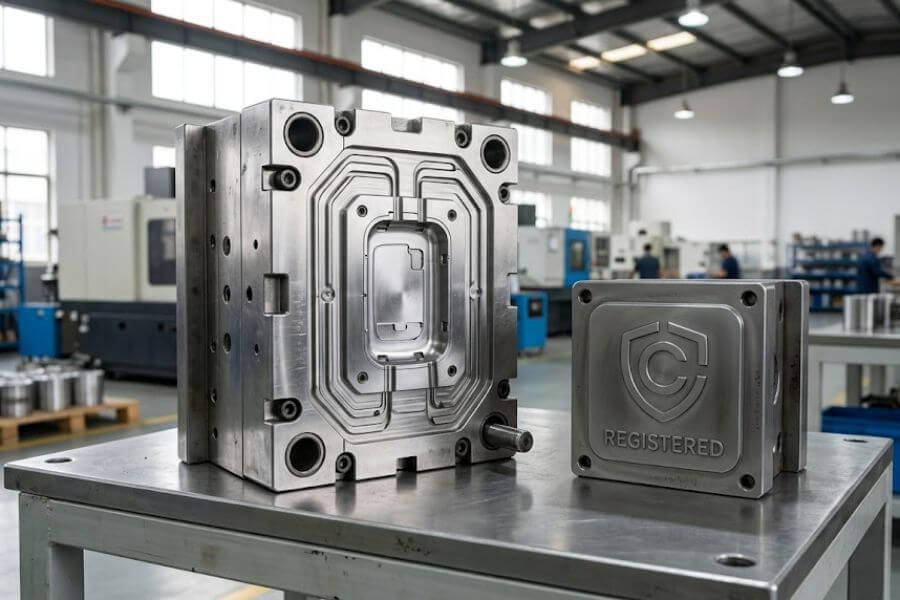
To build your product, the factory often has to make special metal molds, stamps, or custom tools. These molds are the physical shapes used to stamp out your plastic or metal parts. They are incredibly expensive to design and build.
Your contract must state clearly that you own these molds and tools completely. If you do not include this rule, the factory might claim they own the molds because they physically built them. If you ever want to move your production to a different factory because prices went up or quality dropped, the old factory might lock your molds in a warehouse and refuse to give them back. This would force you to spend thousands of dollars building new molds from scratch.
Setting Clear Penalties for Violations
A contract is only useful if it has teeth. Your agreement should include something called liquidated damages. This is a rule that sets a specific, clear dollar amount the factory must pay you if they break your safety rules or copy your items.
For example, you can state that if the factory sells your product to anyone else, they must pay you one hundred thousand dollars for every single violation. Having a fixed number makes it much easier to win a court case, because you do not have to spend months trying to calculate and prove exactly how much money your business lost from the theft.
Selecting and Vetting Your Factory Partners
No matter how good your contracts are, it is always better to work with honest people from the start. Finding the right factory requires a lot of investigative work before you sign any paperwork or pay a deposit.
Identifying the True Factory Owner
When you search for suppliers online, you will encounter hundreds of profiles that claim to be large, state-of-the-art factories. In reality, many of these profiles are run by trading companies or middle-men who do not own a single machine. They take your designs, find a cheap, hidden workshop to make the goods, and pocket the price difference.
Working with an unverified middle-man throws your security out the window. You have no idea who is actually looking at your blueprints or handling your product parts. You must insist on visiting the factory in person or hiring a professional inspection service to visit for you. Confirm that the company name on your contract matches the name on the factory building walls and the local business license.
Red Flags to Watch For
Keep your eyes open for strange behaviors when talking to potential manufacturing partners. If a factory manager exhibits these signs, you should consider looking for a different partner:
- Refusing to sign agreements: If they make excuses about why they cannot sign your NNN agreement, they likely plan to share your ideas.
- Too cheap to be true: If their price quote is drastically lower than every other factory, they might plan to make their profit by selling copies of your item on the side.
- Hidden sub-contracting: If they refuse to let you view the actual assembly lines where your products are made, they might be secretly outsourcing your work to an unregulated shop down the road.
- Vague business history: If they cannot show you a clear, registered business license that matches their banking details, walk away.
Smart Production Strategies to Limit Risk
You should not put all your trust in legal papers. You can structure the actual way you make your goods to make it physically difficult for anyone to copy your inventions.
The Strategy of Fragmented Production
If you build a complex item like an electronic toy or a multi-part tool, try using a method called fragmented manufacturing. Instead of giving your entire design to a single factory, break the product down into separate components.
You can hire Factory A to make the internal circuit board, Factory B to mold the plastic outer shell, and Factory C to sew the fabric carrying case. Then, you can ship all those finished pieces to a completely separate assembly warehouse, or even back to your home country, to put them together.
This ensures that no single factory manager ever sees the complete product blueprint. Factory A only knows how to make a basic circuit board, and Factory B only sees a hollow piece of plastic. This makes it almost impossible for either factory to clone your entire product line.
[Factory A: Makes Internal Parts Only] -----\
                                             +---> [Separate Assembly Site: Puts Everything Together]
[Factory B: Makes Outer Shell Only]  -------/
Adding Hidden Identifiers to Your Goods
Another clever trick is to build small, unique markers directly into your product designs. This could be a tiny, hidden logo stamped deep inside a plastic case where customers never look, or a specific, intentional microscopic flaw in a decorative pattern.
If you ever discover copies of your product being sold online by a different company, you can buy one of those items, open it up, and look for your hidden marker. If the marker is present, you have instant, undeniable proof that the counterfeit goods came from your exact factory molds. This makes it very easy to confront your manufacturer or take them to a local court.
Guarding Your Ideas at Shipping Ports and Customs
Your protection journey does not end inside the factory walls. You also need to safeguard your products as they move out of the factory and travel toward the shipping vessels.
Registering Your Rights with Chinese Customs
Many business owners do not realize that Chinese Customs offices do more than just check incoming cargo. They also monitor outbound shipping containers to stop illegal goods from leaving the country. However, they will only look for your copied goods if you ask them to.
You can record your registered trademarks and patents with the General Administration of Customs of China. Once your brand is in their central database, customs officers at every major port will look at shipments leaving the nation. If they spot a container full of items bearing your logo, and the shipping paperwork does not have your official authorization stamp, the officers will halt the shipment, seize the cargo, and contact you immediately.
Managing Your Shipping Documents
Always maintain tight control over your shipping and export paperwork. Ensure your manufacturing contracts state that you or your designated shipping company are the ones who handle the official export declarations.
If you let the factory handle all the export paperwork without your oversight, they can easily hide extra boxes of goods inside the shipping container or falsify the records to move unauthorized products out of the country under your nose.
Monitoring the Global Marketplace for Fakes
Even with excellent contracts and port protection, you must remain vigilant. You need to constantly scan the internet and retail markets to ensure no one has found a loophole to sell your ideas.
Keeping Track of Major Online Selling Platforms
Counterfeit items usually appear online first. You should regularly search large international e-commerce platforms and wholesale directories for your product name or distinctive design features.
If you find an unauthorized shop selling your exact item, look closely at their location details. If the seller is based in the exact same city or province as your manufacturing partner, that is a massive clue that your factory, or one of their workers, is leaking your inventory.
Taking Action Against Digital Theft
When you discover a copycat listing on a major retail platform, you do not always have to file an expensive lawsuit right away. Most large internet marketplaces have strict internal rules against intellectual property theft.
You can use the platform’s official reporting system to submit your official registration documents from the Chinese government. Once the platform confirms that you are the legal owner of the trademark or design patent, they will usually take down the offending listings within a few days. This cuts off the copycat’s access to customers without costing you a fortune in legal fees.
Frequently Asked Questions
Does my trademark from my home country protect me while manufacturing goods in China?
No, it does not. Intellectual property rights are bound by geography. A trademark registered in your home country only protects you within that specific nation’s borders. Because China operates under a first-to-file system, you must register your brand name and logos directly with the Chinese government to have any legal protection while your goods are being made there.
What exactly is an NNN agreement and why do I need it instead of a regular contract?
An NNN agreement is a specialized contract designed specifically to protect secrets under Chinese law. It stands for Non-Disclosure, Non-Circumvention, and Non-Competition. A standard contract from your home country usually only focuses on stopping people from talking about your secrets. An NNN agreement stops the factory from talking about your secrets, bypassing you to sell directly to your buyers, or building a rival product using your ideas. It is written in the local language and designed to work inside local courts.
Can I protect my ideas if my product is simple and cannot be patented?
Yes, you can still protect your business even if your product does not feature a ground-breaking scientific invention. You can register a design patent to protect the specific visual look and style of your item. You can also rely on strong brand trademarks so customers know they are buying an authentic piece from you. Finally, you can use production strategies like splitting the manufacturing between different factories so no single partner can copy the whole item.
What should I do if a factory registers my brand name before I can file the paperwork?
If a factory or a speculator registers your name first, you are dealing with a trademark squatter. You have a few options, though none are easy. You can try to prove to the government that the squatter filed the paperwork in bad faith, but this is often difficult and expensive. Alternatively, you can negotiate with the squatter to buy your name back, or you can choose a completely new brand name for your products before you begin manufacturing.
Is it safe to let my factory arrange the creation of the product production molds?
It is common for factories to help build product molds, but you must ensure your contracts state that you own those molds completely. You must pay for the mold creation as a separate, clear line item so you can prove ownership. Your contract should also state that you have the right to enter the facility and remove your molds at any time if you decide to change manufacturing partners.