Key Takeaways for Your Solo Chinese Adventure
Traveling solo through China as an American woman is an amazing, deeply rewarding experience. While it requires careful planning, it is highly achievable and remarkably secure. Here are the core things to keep in mind:
- Preparation Is Key: Your digital setup is your most important tool. Download all necessary apps, including payment platforms and translation tools, before you leave home.
- Safety Is High: Violent crime rates are incredibly low in China. Your main concerns will be basic scams and navigating massive crowds.
- Stay Connected: A reliable cellular data plan with a built-in roaming option or a high-quality data package is essential to bypass local internet restrictions and access your usual communication apps.
- Cultural Respect: Dress modestly, keep your voice at a moderate level in public, and always ask before taking photos of local people.
- Embrace the Challenge: Language barriers will happen, but local people are generally patient, kind, and willing to help you find your way.
Exploring China on your own terms is an unforgettable thrill. The ancient palaces, the towering modern skyscrapers, and the incredible food are waiting for you. Many people worry about safety, especially solo female travelers from America, but the reality on the ground is welcoming and highly organized. Let us dive straight into how you can navigate this beautiful country safely, smoothly, and with total confidence.
Getting Your Digital Tools Ready Before You Fly
Your smartphone will be your absolute lifeline during your solo journey. China runs on a digital ecosystem that is quite different from what you use in America. Taking care of these tech setups before you board your flight will save you a lot of stress.
The Magic of Digital Payments
Cash is rarely used in Chinese cities today, and foreign credit cards are not accepted at most standard shops or restaurants. You must set up local payment apps on your phone.
- Alipay: This is one of the two main payment networks. You can download the international version, link your American credit card, and verify your identity with your passport.
- WeChat Pay: This lives inside the WeChat app, which is also China’s main communication tool. You can link your international card here as well.
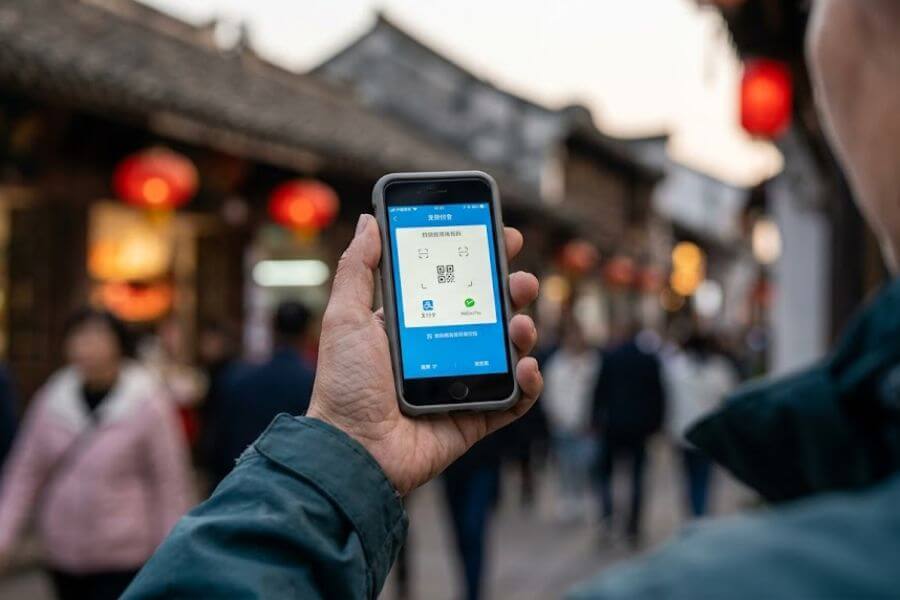
Once these are set up, you will pay for everything by scanning quick-response codes on your phone. From high-end hotels to street vendors selling steamed buns, this is how money moves. Always keep a backup credit card and a small amount of physical cash in your bag just in case your phone battery dies or an app glitches.
Setting Up Your Internet Access
Many American websites and apps do not work behind China’s local network system. To check your usual emails, use American social media, or access western search engines, you need a smart connection strategy.
- International Roaming: Check with your American phone carrier. Many plans offer daily or monthly international data passes. This is often the simplest way to keep your phone working normally because international roaming naturally bypasses local website blocks.
- Electronic SIM Cards: If your phone is unlocked, you can buy an electronic data card online before you arrive. Look for cards that specifically mention unblocked access to western apps.
Essential Mobile Apps to Download
Do not wait until you land to fill your phone with these digital tools. Download them while you are still at home on your regular internet connection.
| App Category | App Name | What It Does for You |
| Translation | Apple Translate or Baidu Translate | Helps you read signs and talk to locals |
| Navigation | Apple Maps or Gaode Maps | Guides you through streets and subway systems |
| Communication | Allows you to message hotels and new friends | |
| Transportation | DiDi | The local ride-sharing service, similar to Uber |
Navigating Local Transit Alone and Without Stress
Moving between massive Chinese cities and finding your way around town is an adventure in itself. The transport network is vast, fast, and very efficient, making it excellent for solo travelers.
Mastering the High-Speed Trains
The bullet train network in China is world-class. It connects almost every major city at speeds over one hundred and eighty miles per hour.
To book tickets, use an international travel booking app like Trip-dot-com. You can select your train, choose your seat type, and pay with your American card. When you get to the train station, you do not need a paper ticket. You simply scan your American passport at the electronic gates to enter.
Inside the stations, signs are written in both Chinese characters and English. Give yourself plenty of time to go through security baggage checks, which look very similar to airport security. On the train, announcements are made in English, and the cars are clean, quiet, and well-policed.
Using City Subways with Confidence
Every large city has a spectacular underground train system. They are incredibly clean, well-lit, and monitored by security guards and cameras at every turn.
To ride, you can usually buy a single-use card at a machine inside the station using your Alipay app. Alternatively, you can activate the transport section inside Alipay to get a digital metro card on your phone. You just scan your phone at the turnstile when you enter and exit.
Station names are announced in English, and there are clear maps above every door showing exactly where the train is heading. This makes subways an ideal way to travel alone without having to speak any Chinese.
Taking Taxis and Ride-Share Cars
Walking out to the street to hail a traditional taxi can be tough if you do not speak the language, as most drivers do not know English. The smart alternative is using the DiDi app.
The app has a full English version. You type in your destination in English, the app calculates the price, and it matches you with a driver. The app tracks your location in real-time, which adds an extra layer of personal safety. The payment is automatically deducted from your linked Alipay or WeChat account, so you never have to worry about cash or wrong change.
Choosing the Safest Places to Stay
Where you rest your head at night matters immensely when you are exploring a new country on your own. China offers a massive variety of lodging options for every budget.
High-End International Hotels
If you have the budget, staying at well-known international hotel chains provides a high level of comfort and security.
- English-Speaking Staff: There will always be someone at the front desk who speaks English well. They can help you book tours, call reliable cars, or give you specific local safety tips.
- Familiar Layouts: The room setups and security systems will feel very similar to what you experience in America.
- Helpful Concierge: They can write down destinations in Chinese characters on physical paper for you, which you can show to drivers if your phone stops working.
Local Boutique Hotels and Hostels
For a more traditional experience, small boutique hotels or youth hostels are wonderful choices.
Hostels are fantastic for solo female travelers because they are social hubs. You can meet other international travelers, share stories, and even find a travel buddy for a day trip. Look for places with high ratings on international booking sites. Read the reviews written by other solo women to see how they felt about the location and the staff behavior.
Essential Rules for Lodging Safety
When you check into any accommodation in China, the law requires the hotel to register your passport with the local police. This is a standard procedure for every single foreign traveler, so do not be alarmed when the clerk takes photos of your visa pages.
Always pick a place that is close to a subway station. This ensures you do not have to walk through dark, empty streets late at night. Keep the hotel address card inside your wallet or saved as a screenshot on your phone screen so you can always find your way back.
Understanding Personal Safety and Local Laws
China is consistently rated as one of the safest destinations for solo female travelers. Serious violent crime against tourists is extremely rare. However, understanding the legal landscape and social rules will keep you out of trouble.
The Presence of Security and Surveillance
The first thing you will notice in Chinese cities is the sheer number of security cameras. They are on street corners, inside buses, in subways, and throughout hotel lobbies.
While this level of tracking can feel surprising to an American visitor, it acts as a massive deterrent for crime. You can walk down major city streets late at night without feeling the need to constantly look over your shoulder. Police stations or small safety kiosks are also common sights in busy areas, and officers are generally helpful to tourists.
Scams and Tourist Traps to Avoid
While you are safe from violent crime, petty scams do exist, especially in heavy tourist zones like Tiananmen Square in Beijing or the Bund in Shanghai.
- The Tea House Scam: A friendly student or couple might approach you, practice their English, and invite you to a traditional tea tasting or an art gallery nearby. Once you finish, you are hit with a massive bill worth hundreds of American dollars. If someone invites you to a second location, politely decline and walk away.
- The Fake Taxi: Only ride in taxis that have official meters or use your DiDi app. Avoid drivers who hang around airport exits waving you toward their unmarked private cars. They will charge you triple the normal rate.
- Counterfeit Money: Since almost everything is digital now, this is less common, but if you do use cash, never let a vendor take your bill out of your sight and hand you back a different one claiming it is fake.
Local Laws You Must Follow
As an American citizen, you are fully subject to Chinese laws while you are in the country.
Never engage in any political protests, avoid taking pictures of military buildings or police checkpoints, and do not carry or use any illegal substances. Drug laws are exceptionally strict in China, and violations carry severe punishments. Carry a physical copy of your passport and visa with you at all times, as authorities have the right to check your identification.
Eating Solo, Healthy, and Without Fear
Chinese food is incredibly diverse, fresh, and delicious. Eating alone is completely normal in China, so you never have to feel awkward sitting at a table by yourself.
How to Order Food Without Speaking Chinese
Many local restaurants do not have English menus, but they have embraced technology to make ordering seamless.
At most casual dining spots, you will find a quick-response code stuck to your table. You scan it using Alipay or WeChat. This opens a digital menu on your phone. Many of these digital menus have clear photos of every single dish. You can use your phone translation tool to read the ingredients, select what you want, and pay directly through the app. The food then arrives at your table without you needing to say a single word.
If there is no code on the table, look for restaurants that have point-and-shoot picture menus on the wall or look at what other people are eating and politely point to a dish that looks tasty to you.
Water and Food Hygiene Practices
To keep your stomach happy and avoid getting sick during your trip, follow a few simple health rules.
- Do Not Drink Tap Water: The tap water in China is not safe to drink directly. Always buy bottled water, which is cheap and available everywhere. Even local people boil their water before drinking it.
- Enjoy Street Food Smartly: Street food is a huge part of the culture. Look for stalls that have long lines of local people. A fast turnaround means the ingredients are fresh and cooked at high heat, which kills germs.
- Watch the Spice Levels: If you travel to regions like Sichuan or Hunan, the food can be intensely spicy. If you cannot handle high heat, learn the words for no spice, which sounds like “bu la.”
Dietary Preferences and Allergies
If you are a vegetarian, vegan, or have a specific food allergy, traveling takes a bit more care. Traditional Chinese cooking uses a lot of soy sauce, peanut oil, and hidden meat broths.
Create a digital card on your phone with clear Chinese characters explaining your dietary needs. For example, you can write “I do not eat meat” or “I am severely allergic to peanuts.” Show this to the server before you order so they can guide you toward safe dishes.
Packing Smart for Comfort and Security
Packing for China requires balancing respect for local customs with the practical needs of moving your bags through trains and subways.
Clothing Choices for Women
China is generally a conservative country when it comes to clothing, though modern cities are very fashionable.
- Modest Cuts: When visiting temples, historical sites, or smaller towns, it is respectful to keep your shoulders and knees covered. Avoid shirts with very low necklines.
- Layering Is Crucial: The weather can change drastically depending on the region and the season. Pack lightweight layers that you can put on or take off easily.
- Excellent Walking Shoes: You will walk thousands of steps every day on hard concrete, stone steps, and marble floors. Bring supportive, broken-in sneakers. Leave your high heels at home.
Health and Personal Care Essentials
Certain items that are easy to find in America can be difficult to locate in China, so pack them in advance.
- Tissues and Wet Wipes: Many public restrooms do not provide toilet paper. Always carry a small pack of tissues and hand sanitizer in your purse.
- Sanitary Products: Tampons with applicators are hard to find in standard Chinese supermarkets, as pads are much more popular. Bring a full supply of your preferred feminine hygiene items.
- Prescription Medications: Keep your medicines in their original bottles with your name clearly printed on the label, and carry a doctor’s note explaining why you need them.
Luggage and Packing Strategies
You will be lifting your own bags up train steps, over curbs, and through crowded stations. Choose a sturdy, medium-sized backpack or a rolling suitcase that you can handle without any outside assistance. Use a small cross-body purse with a secure zipper for your daily walks. Keep your passport, phone, and main credit cards in this front-facing bag where you can always see and feel them.
Mastering Cultural Norms and Communication
Being a solo American woman in China means you will stand out, especially if you visit areas outside of Shanghai or Beijing. Understanding the local culture helps you navigate social interactions gracefully.
Dealing with Staring and Attention
In many parts of China, locals rarely see foreigners. People might stare at you, point, or even take photos of you without asking.
This attention is almost always driven by pure curiosity rather than malice or threat. If someone is staring, a simple smile or a nod will usually make them smile back warmly. If you do not want your photo taken, politely shake your head and say “no,” and people will respect your boundaries.
Key Phrases to Learn Before You Go
While translation apps are wonderful, speaking a few basic words shows respect and can help you connect with the people around you.
- Ni Hao (Nee How): Hello. This is the universal greeting.
- Xie Xie (Shyeh Shyeh): Thank you. Use this often.
- Ting Bu Dong (Teeng Boo Doong): I listen but do not understand. This is incredibly useful when someone speaks to you in fast Chinese.
- Jiu Ming (Jyoo Meeng): Help me. This is an emergency word to know, though you will likely never need to use it.
Communication Style Comparison
Understanding the difference between how Americans and Chinese people communicate can prevent misunderstandings during your journey.
| Communication Aspect | American Style | Chinese Style |
| Directness | Very direct, says “no” clearly | Indirect, prefers to suggest alternatives |
| Volume | Often speaks loudly in public spaces | Prefers a quieter tone, except in busy markets |
| Personal Space | Values a large bubble of personal space | Accustomed to tight crowds in public transit |
| Eye Contact | Strong and direct eye contact | Modest, can be brief or indirect |
A Step-by-Step Guide to Managing an Emergency
Even with the best planning, unexpected situations can happen. Knowing exactly what to do will keep you calm and safe.
What to Do If You Lose Your Passport
Your passport is your absolute most valuable document in China. If it disappears, follow these steps immediately.
First, report the loss to the nearest local police station. They will issue you a official document proving you reported the loss. Next, contact the closest American Embassy or Consulate. You will need to travel to their office with passport-sized photos, proof of your American citizenship, and the police report to apply for an emergency replacement passport. Keep digital copies of your passport photo page and Chinese visa saved in your email cloud so you can print them out easily if needed.
Handling Medical Issues Alone
If you feel sick or get injured, China has excellent medical facilities, especially in major cities.
Look for a hospital that has an international clinic. These departments are designed for foreigners and have doctors who speak English fluently. You will usually have to pay for your treatment upfront with your Alipay app or a credit card, so keep your receipts. You can submit these documents to your travel insurance company once you return to America to get your money back.
Useful Emergency Phone Numbers to Remember
Save these numbers into your phone contacts before your trip begins. You do not need a local SIM card to call emergency services.
- 110: Police assistance for immediate safety threats or reporting crimes.
- 120: Ambulance services for serious medical emergencies.
- 119: Fire department services.
- 12301: National tourism hotline, which often has English operators to help with travel complaints or general guidance.
Frequently Asked Questions
Is it safe for an American woman to walk alone at night in major Chinese cities?
Yes, it is remarkably safe. Because of the heavy presence of street lighting, widespread security cameras, and active police patrols, violent street crime is extremely low. You can walk through major areas in cities like Beijing, Shanghai, Chengdu, or Xi’an late at night with a high level of confidence. Of course, you should always use standard city smarts, stick to well-lit paths, and avoid completely empty alleys.
Will I face anti-American sentiment while traveling solo in China?
You are highly unlikely to experience any hostility. While political discussions between governments can be tense, regular Chinese citizens are almost always incredibly welcoming, polite, and curious about visitors from America. They separate politics from individual tourists. You will often find that people are eager to practice their English with you or assist you if you look lost.
How do I handle public restrooms as a solo female traveler?
Public restrooms in China are common and generally clean, but they are mostly squat toilets, which are flush toilets set into the floor. This requires you to squat down rather than sit. Major malls, airports, and high-speed train stations will usually have at least one western-style stall with a sitting toilet, which is often marked with a specific sign. Always remember to carry your own pocket tissues and hand sanitizer, as soap and toilet paper are frequently not provided in public stalls.
Can I travel to Tibet or Xinjiang alone as a solo American woman?
Traveling to these specific regions requires extra steps and strict adherence to government rules. Solo foreign tourists cannot enter Tibet independently; you must organize a tour through an authorized travel agency that provides a guide and a special travel permit. Xinjiang is open to solo travelers, but you will experience a much higher number of police checkpoints, passport scans, and security screenings compared to the rest of China. For a smoother first-solo trip, sticking to central and eastern China is recommended.
What should I do if my mobile phone stops working or runs out of battery?
Since China is a highly digital society, losing your phone power can feel scary, but there are simple solutions. Almost every restaurant, convenience store, and hotel lobby has a shared power-bank rental station. You can plug your phone in for a few moments to get enough power to log in. As a safe backup, always carry a small printed notebook with your hotel name and address written in Chinese characters, along with a physical printed copy of your passport. You can show this paper to a taxi driver or a hotel clerk to get back to your room safely.