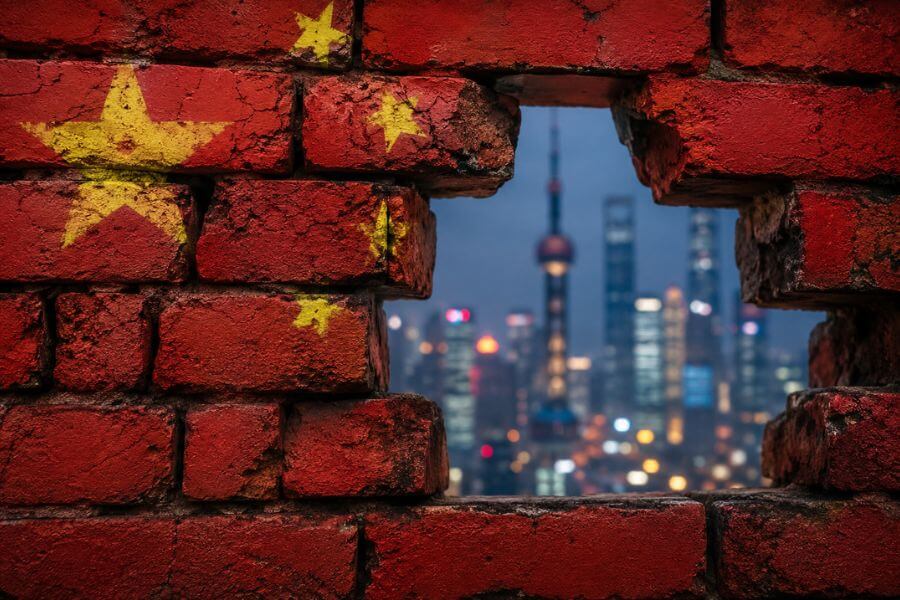
If you have ever traveled to China or talked with people who live there, you have probably heard about the Great Firewall of China. This system controls and filters internet access across the country. While many outsiders focus on politics, the reality is that the Great Firewall also affects normal daily life in ways that most people never think about.
For millions of citizens, the internet works very differently from what you may be used to. Popular websites are blocked, apps behave differently, and even simple online tasks can become frustrating. At the same time, many Chinese companies have created local alternatives that people use every day without thinking twice.
In this article, you will discover the biggest ways the Great Firewall shapes communication, entertainment, education, business, and everyday routines across China.
Quick Summary Table 📊
| # | Impact | Everyday Effect |
|---|---|---|
| 1 | Blocked Global Apps | People cannot freely use apps like Google, YouTube, or Instagram |
| 2 | Different Social Media Culture | Chinese platforms dominate online conversations |
| 3 | Slower Internet Speeds | International websites often load very slowly |
| 4 | VPN Dependence | Many people rely on VPNs for outside access |
| 5 | Limited News Sources | Access to global news becomes restricted |
| 6 | Education Challenges | Students struggle to reach foreign research tools |
| 7 | Business Difficulties | International companies face communication problems |
| 8 | Entertainment Restrictions | Movies, games, and music may be censored or unavailable |
| 9 | Online Shopping Ecosystem | Domestic apps replace foreign services completely |
| 10 | Different Digital Habits | Daily online behavior develops differently from the West |
How We Ranked These 🔍
We ranked these effects based on several important factors:
- How often ordinary citizens experience the issue
- The impact on daily routines and communication
- The influence on work, school, and entertainment
- Long-term cultural effects on society
- How strongly each issue changes internet behavior
- The number of people affected across different age groups
- The level of dependence created by local alternatives
1. Blocked Access to Major Global Apps 📱
One of the most obvious effects of the Great Firewall is the blocking of many global websites and apps. If you live in China, you cannot normally access services like Google, Gmail, YouTube, Facebook, Instagram, WhatsApp, or X.
This changes everyday life immediately. Instead of using Google Maps, people use local Chinese apps. Instead of WhatsApp, they use WeChat. Instead of YouTube, they watch videos on Chinese platforms such as Bilibili or Youku.
For many citizens, especially younger people, these Chinese platforms feel completely normal because they grew up with them. However, foreigners living in China often feel shocked by how different the online world becomes.
Even simple tasks can become difficult. Sending files internationally, watching foreign tutorials, or searching for global information may suddenly require extra effort.
2. Chinese Social Media Shapes Online Culture 🎭
Because foreign social media platforms are blocked, China has built its own massive internet culture. Apps like WeChat, Douyin, Xiaohongshu, and Weibo dominate daily life.
This creates a completely separate online ecosystem. Trends that go viral in the United States may never become popular in China. At the same time, many Chinese internet trends remain almost unknown outside the country.
You also notice differences in online behavior. Chinese platforms often combine multiple services into one app. For example, WeChat is not just a messaging app. People use it to pay bills, book appointments, order food, and even manage work communication.
As a result, everyday digital life in China feels more centralized compared to many Western countries.
3. International Websites Often Load Slowly 🐢
Even when foreign websites are not fully blocked, they may still load very slowly inside China. This frustrates students, workers, and businesses every day.
A website that opens instantly in another country might take several minutes to load in China. Sometimes the connection simply fails.
This affects:
- Online learning platforms
- Cloud storage services
- International video calls
- Foreign company websites
- Research databases
- Software updates
For someone working with overseas clients, this can become a major daily problem. Video meetings freeze, emails arrive late, and collaboration tools may not work properly.
Over time, many people switch to local Chinese services simply because they perform faster and more reliably.
4. VPNs Become Part of Daily Life 🔐
Many citizens, students, expats, and businesses use VPNs to bypass internet restrictions. A VPN helps users connect to blocked websites through servers located outside China.
For some people, turning on a VPN becomes as routine as checking messages in the morning.
However, VPN use is not always stable. Connections can suddenly stop working, especially during politically sensitive periods or major national events.
This creates uncertainty. Someone may depend on a VPN for work, education, or communication, only to lose access unexpectedly.
The need for VPNs also adds extra costs and technical challenges for ordinary users who simply want open internet access.
5. Access to Global News Is Limited 📰
Another major effect is limited exposure to international news sources. Many foreign news websites are blocked or partially restricted.
As a result, people inside China often consume news through domestic platforms that follow local regulations. This shapes public discussions and influences how global events are understood.
For everyday citizens, this means:
- Fewer international perspectives
- Limited access to certain breaking stories
- Reduced exposure to foreign journalism
- More dependence on local media platforms
Some people actively search for outside information using VPNs, while others mainly stay within the Chinese digital environment.
The experience varies widely depending on age, education, profession, and personal interest in global affairs.
6. Students and Researchers Face Education Barriers 🎓
Students are heavily affected by the Great Firewall, especially those studying international subjects.
Many educational tools used globally depend on services that may be blocked or unreliable in China. Research papers, academic videos, online courses, and collaboration platforms can become difficult to access.
For example, a university student trying to watch foreign lectures on YouTube may not be able to open them without a VPN.
Researchers also face problems when accessing global databases or communicating with international academic partners.
This can slow down learning and make international cooperation harder, especially in fields that rely on global information exchange.
At the same time, Chinese universities and companies have developed local alternatives to reduce dependence on foreign platforms.
7. International Business Communication Becomes Harder 💼
The Great Firewall creates major communication challenges for businesses operating across borders.
Foreign companies entering China often discover that the tools they normally use do not work well. Services like Google Workspace, Slack, Dropbox, and Zoom may experience restrictions or unstable performance.
This affects:
- International meetings
- File sharing
- Marketing campaigns
- Customer support
- Team communication
- Remote work systems
Chinese companies often adapt by using domestic business tools instead. However, international teams may still struggle with compatibility issues.
For ordinary office workers, this means extra stress and more complicated workflows during daily tasks.
8. Entertainment Choices Are More Restricted 🎬
Movies, TV shows, music, games, and streaming content are all affected by internet controls and censorship rules.
Some foreign entertainment platforms are unavailable, while certain films or games may be edited before release in China.
This creates a different entertainment landscape where domestic content becomes extremely important.
Chinese streaming services produce huge amounts of local dramas, variety shows, and movies that attract massive audiences.
Meanwhile, international fans sometimes find it difficult to access foreign entertainment legally and consistently.
Gamers also experience restrictions. Some online games face approval delays, content changes, or playtime limits for younger users.
9. Domestic Apps Completely Dominate Shopping 🛒
China has developed one of the most advanced digital shopping systems in the world, partly because foreign competitors are limited.
Apps like Taobao, JD.com, and Pinduoduo dominate daily shopping habits.
For many people in China, almost everything happens through local apps:
- Grocery delivery
- Mobile payments
- Food orders
- Taxi booking
- Travel reservations
- Utility payments
This creates incredible convenience for citizens inside the system. However, it also means foreign platforms like Amazon play a much smaller role compared to other countries.
The result is a highly connected digital economy that operates differently from Western internet ecosystems.
10. Daily Internet Habits Develop Differently 🌏
Over time, the Great Firewall has shaped an entirely different internet culture in China.
People develop online habits based on the platforms available to them. Younger generations may never feel they are missing anything because they grew up using Chinese apps from childhood.
The Chinese internet experience often feels more self-contained. Many users spend most of their digital lives within local platforms that handle messaging, payments, shopping, entertainment, and social networking all together.
This creates a unique online environment that outsiders sometimes struggle to understand.
At the same time, it has helped Chinese tech companies become extremely powerful and innovative in areas like mobile payments and super apps.
Conclusion 🚀
The Great Firewall of China is much more than a political tool. It shapes how ordinary citizens communicate, study, shop, work, and entertain themselves every single day.
For outsiders, the restrictions may seem shocking at first. But for many people inside China, local alternatives have become deeply integrated into daily life. Entire digital habits, industries, and social behaviors have developed around this unique internet system.
Whether you view the Great Firewall positively or negatively, there is no doubt that it has created one of the most distinct online environments in the modern world.
Understanding its everyday impact helps you better understand modern China itself.
Frequently Asked Questions ❓
Can tourists in China still use blocked apps?
Tourists can sometimes access blocked apps using international roaming services or VPNs. However, performance may still be inconsistent depending on the location and current restrictions.
Why does China block foreign websites?
The Chinese government says internet controls help maintain social stability, national security, and content regulation. Critics argue that the system limits free access to information.
Do all Chinese citizens dislike the Great Firewall?
Opinions vary widely. Some people dislike the restrictions and use VPNs regularly, while others feel comfortable using local Chinese apps and services.
Is the Chinese internet completely separate from the global internet?
Not completely. China still connects to the global internet for trade, research, and business. However, many international platforms are filtered or restricted.
Are Chinese apps as advanced as Western apps?
In many cases, Chinese apps are extremely advanced. Some features in Chinese super apps, especially mobile payments and integrated services, are more developed than similar Western platforms.