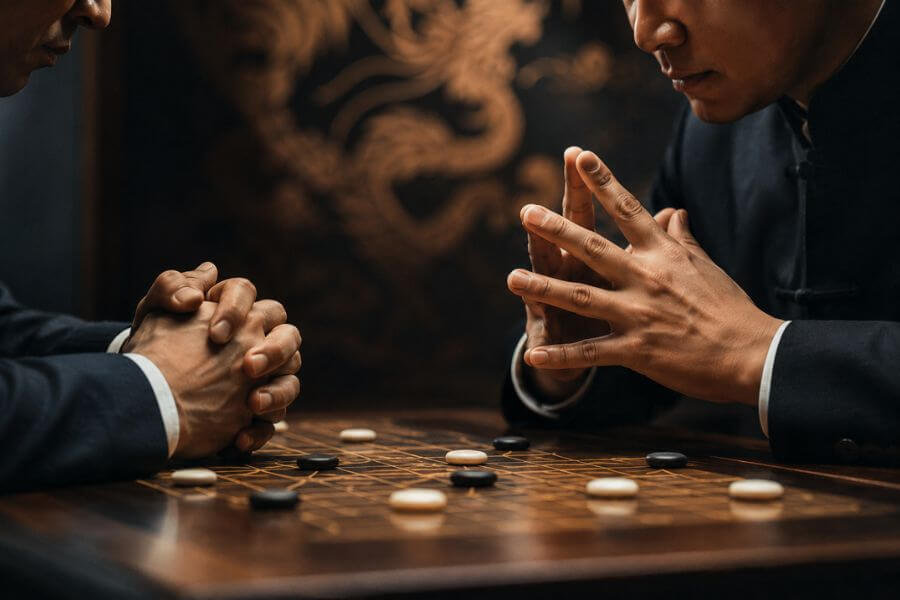
If you have ever negotiated with Chinese companies, suppliers, investors, or executives, you may have noticed that the process often feels very different from what many Western business professionals expect.
Chinese business leaders are known for being highly strategic, patient, and focused on long-term advantages. Their negotiation style is often shaped by centuries of cultural traditions, relationship-building practices, and competitive business environments. While not every Chinese executive uses these tactics, many of these approaches appear frequently in major business negotiations across industries.
Understanding these methods does not mean viewing them negatively. Instead, it helps you prepare more effectively and avoid being caught off guard when important deals are on the line.
In this guide, you’ll discover ten of the toughest negotiation tactics often associated with Chinese business leaders and learn why they can be so effective.
Quick Summary Table 📊
| Rank | Negotiation Tactic | Main Purpose |
|---|---|---|
| 1 | Extreme Patience | Wear down the other side |
| 2 | Last-Minute Demands | Gain extra concessions |
| 3 | Information Imbalance | Maintain negotiating advantage |
| 4 | Multiple Decision Makers | Create uncertainty |
| 5 | Relationship Before Business | Increase leverage |
| 6 | Strategic Silence | Pressure the opponent |
| 7 | Playing Competitors Against Each Other | Improve bargaining position |
| 8 | Incremental Concessions | Maximize deal value |
| 9 | High Initial Demands | Expand negotiating room |
| 10 | Delayed Commitment | Keep options open |
How We Ranked These ⚖️
The tactics were ranked based on the following factors:
- Frequency of use in major business negotiations
- Ability to influence deal outcomes
- Psychological pressure created on the opposing side
- Difficulty for foreign negotiators to counter
- Impact on pricing and contract terms
- Effectiveness in long-term negotiations
- Reputation among international business professionals
1. Extreme Patience as a Weapon ⏳
One of the most famous characteristics of Chinese negotiation culture is patience.
Many Western negotiators enter discussions expecting quick progress. Chinese business leaders often take the opposite approach. They may stretch discussions across days, weeks, or even months.
The goal is simple. They understand that time creates pressure. The side facing deadlines, travel schedules, quarterly targets, or investor expectations usually becomes more willing to compromise.
You might arrive expecting to finalize a contract in two days, only to discover that key discussions move at a much slower pace. As frustration grows, negotiators may start offering concessions they never intended to make.
This tactic becomes especially powerful when the Chinese side knows the other party is under time pressure.
2. Last-Minute Demands Before Signing 📝
Many experienced international executives describe a familiar scenario.
After weeks or months of negotiations, everything appears settled. The contract is ready. Both sides seem satisfied.
Then, just before signing, a new request appears.
It might be a lower price, additional services, better payment terms, or expanded warranties.
At this stage, the opposing side has already invested significant time, money, and effort into reaching an agreement. Walking away becomes psychologically difficult.
Chinese negotiators understand this reality. Small last-minute adjustments often seem minor compared to restarting negotiations from the beginning.
Even when the additional request is relatively small, it can create significant value over the life of a contract.
3. Controlling Information Flow 🔍
Information is power in every negotiation.
Many Chinese business leaders reveal information gradually rather than sharing everything upfront.
You may notice that details about budgets, priorities, internal decision-making processes, or future plans remain unclear throughout much of the negotiation.
Meanwhile, they often work hard to gather extensive information about your company, goals, constraints, and motivations.
The result is an information imbalance.
The side that knows more generally makes stronger decisions and identifies opportunities for leverage more easily.
Successful negotiators recognize this tactic and become careful about revealing sensitive information too early.
4. Using Multiple Layers of Decision Makers 🏢
Foreign negotiators often believe they are speaking directly with the final decision maker.
Sometimes they are not.
A Chinese negotiation team may include individuals with varying levels of authority. Agreements reached in one meeting may later require approval from higher-level executives who were not present.
This structure can create uncertainty.
You may believe progress has been made only to discover that another person must review the proposal.
The tactic creates flexibility and allows additional requests or adjustments to emerge later in the process.
It also prevents the negotiation team from appearing boxed into a position too early.
5. Building Relationships Before Discussing Business 🤝
In many Western business environments, companies focus heavily on contracts and numbers.
In China, relationships often come first.
Chinese business leaders frequently invest substantial time in dinners, meetings, introductions, and personal interactions before serious negotiations begin.
Some foreign executives mistakenly view this as a distraction.
In reality, it can be a critical part of the negotiation strategy.
The stronger the relationship becomes, the more difficult it may feel for the other side to reject requests or walk away from a deal.
Trust, loyalty, and personal connections can significantly influence business outcomes.
Those who ignore the relationship-building phase often place themselves at a disadvantage.
6. Strategic Silence That Creates Pressure 🤫
Silence can be surprisingly powerful.
After hearing a proposal, some Chinese negotiators intentionally remain quiet.
Many people feel uncomfortable during long periods of silence. They rush to fill the gap by explaining, justifying, or even improving their offer.
This reaction is exactly what skilled negotiators hope to trigger.
The longer the silence continues, the more psychological pressure builds.
In many cases, the person who speaks first reveals valuable information or weakens their position.
Strategic silence costs nothing to use but can produce significant negotiating advantages.
7. Playing Competitors Against Each Other 🎯
Competition creates leverage.
Chinese business leaders often communicate with multiple suppliers, vendors, or partners simultaneously.
Even if they strongly prefer one option, they may continue discussions with several alternatives.
This approach increases bargaining power.
You might hear statements such as:
“Another company has offered better terms.”
“We are evaluating several options.”
“We have not made a final decision.”
Whether the alternatives are stronger or weaker than they appear, the perception of competition often encourages companies to improve their offers.
The tactic keeps pressure on every participant throughout the negotiation.
8. Making Concessions Very Slowly 🐢
Some negotiators make large compromises early.
Chinese business leaders frequently take a different approach.
Concessions are often small, gradual, and carefully calculated.
For example, if you request a major price reduction, they may offer a tiny adjustment instead of a large discount.
This method accomplishes several goals.
First, it protects profitability.
Second, it encourages the other side to continue negotiating.
Third, it creates the impression that every concession required significant effort.
Over time, numerous small concessions can add up while preserving maximum value for their side.
9. Starting with Extremely High Demands 🚀
The opening position often shapes the entire negotiation.
Many Chinese negotiators begin with ambitious demands, high prices, or aggressive terms.
At first, these requests may seem unreasonable.
However, the goal is not necessarily to achieve every demand.
Instead, the tactic establishes a favorable starting point.
As negotiations progress, concessions appear meaningful while still keeping the final agreement closer to their preferred outcome.
People tend to negotiate relative to the starting point they are given. A strong opening position can influence discussions from beginning to end.
10. Delaying Final Commitment Until the End 🔒
Flexibility is valuable during negotiations.
Many Chinese business leaders avoid making firm commitments too early.
Even when discussions seem positive, they often leave room for adjustments as new information becomes available.
This approach allows them to:
- Evaluate additional opportunities
- Compare competing offers
- Reassess market conditions
- Seek internal approval
- Improve their bargaining position
For the other side, this can be frustrating because certainty remains elusive until the final stages.
However, maintaining flexibility often produces stronger outcomes for skilled negotiators.
Conclusion 🎓
Chinese business leaders have earned a reputation for being among the world’s most effective negotiators. Their success often comes from patience, preparation, relationship building, and a deep understanding of human psychology.
The tactics discussed here are not universal, and not every Chinese executive uses them. However, they are common enough that international business professionals frequently encounter them during major negotiations.
If you understand these methods before entering discussions, you can prepare more effectively, manage expectations, and avoid making unnecessary concessions under pressure.
The strongest negotiators are not those who try to dominate every conversation. They are the ones who recognize the strategies being used and respond thoughtfully rather than emotionally.
Frequently Asked Questions ❓
Are these negotiation tactics unique to Chinese business leaders?
No. Many of these tactics are used worldwide. However, certain approaches, such as relationship-focused negotiations, long-term patience, and indirect communication, are often associated more strongly with Chinese business culture.
Why do Chinese negotiations sometimes take so long?
Many Chinese business leaders believe that patience creates advantages. Longer negotiations provide more opportunities to gather information, build relationships, and identify the other side’s priorities and limitations.
Is relationship building really that important in Chinese business culture?
Yes. Personal trust and strong relationships can play a significant role in business decisions. Building rapport is often viewed as an essential foundation for successful long-term cooperation.
How can foreign negotiators prepare more effectively?
Preparation should include understanding cultural expectations, allowing extra time, avoiding unnecessary deadlines, gathering information carefully, and remaining patient throughout the process.
Do these tactics work in modern international business?
Many of them do. Despite advances in technology and globalization, negotiation still involves psychology, leverage, trust, and strategic decision-making. These factors remain important in business deals around the world.