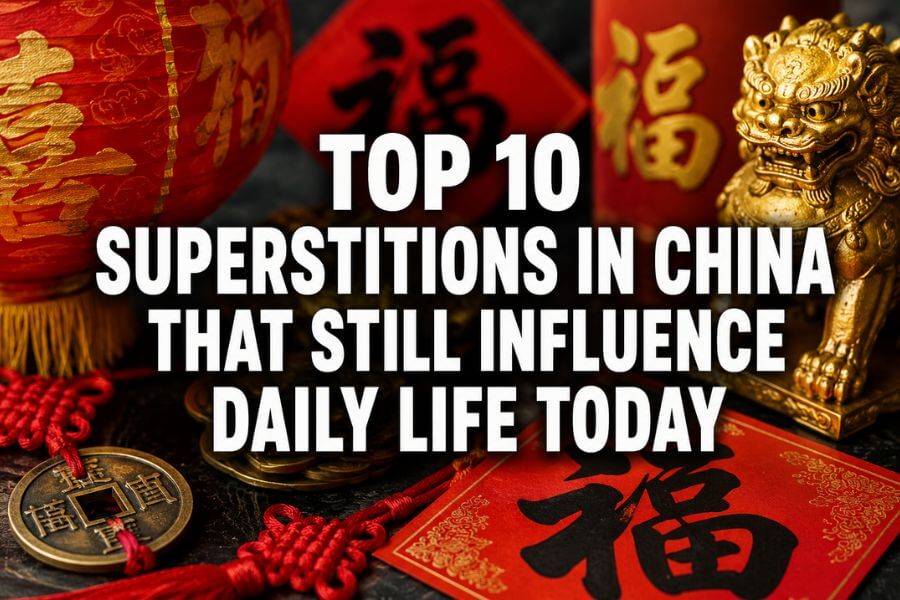
If you spend time in China, you quickly notice that traditional beliefs still shape many everyday choices. Even in modern cities filled with skyscrapers, online shopping, and advanced technology, superstitions continue to influence how people decorate homes, choose phone numbers, celebrate holidays, and even plan weddings or business deals.
These beliefs are deeply connected to Chinese history, language, culture, and symbolism. Some superstitions are taken very seriously, while others are followed more casually as a way to bring good luck and avoid bad fortune. Whether you are visiting China, doing business there, or simply curious about Chinese culture, understanding these traditions helps you better understand daily life in the country.
In this guide, you will discover the top Chinese superstitions that still affect people today and why they continue to matter in modern society.
Quick Summary Table 🧧
| No. | Superstition | Meaning | Still Common Today? |
|---|---|---|---|
| 1 | Avoiding the number 4 | Associated with death | Very common |
| 2 | Loving the number 8 | Symbol of wealth and luck | Extremely common |
| 3 | Not giving clocks as gifts | Seen as bad luck | Common |
| 4 | Feng Shui in homes and businesses | Balancing energy and fortune | Very common |
| 5 | Avoiding umbrellas indoors | Believed to attract bad luck | Moderately common |
| 6 | Lucky red colors during celebrations | Symbolizes happiness and success | Extremely common |
| 7 | Sweeping away luck during New Year | Avoid cleaning on special days | Very common |
| 8 | Avoiding broken mirrors and dishes | Seen as signs of misfortune | Common |
| 9 | Choosing lucky dates for weddings and business | Timing affects success | Extremely common |
| 10 | Whistling or cutting nails at night | Said to attract spirits | Still believed by older generations |
How We Ranked These 🏮
We ranked these Chinese superstitions based on several important factors:
- How commonly they still appear in daily life
- Their influence on modern Chinese culture
- How strongly people continue to believe in them
- Their connection to traditional Chinese history
- Their impact on homes, business, relationships, and celebrations
- How often visitors and foreigners notice them
- Their role in modern cities as well as rural communities
1. Avoiding the Number 4 ☠️
One of the strongest superstitions in China involves the number 4. In Mandarin and several Chinese dialects, the pronunciation of the number sounds very similar to the word for “death.” Because of this connection, many people try to avoid the number whenever possible.
You may notice that some apartment buildings skip the fourth floor entirely. Hospitals often avoid room numbers with 4 in them, and elevators may jump from floor 3 directly to floor 5. Some people also avoid phone numbers, license plates, or addresses containing several 4s.
This belief is so powerful that real estate prices can actually be affected by it. Apartments with the number 4 in the address may sell for less because buyers do not want to be associated with bad luck.
The superstition also affects businesses. Companies sometimes avoid launching products on dates containing multiple 4s. Parents may even try not to schedule important family events on those days.
Even younger generations who do not fully believe in the superstition often avoid the number simply because it remains socially uncomfortable. It has become deeply rooted in Chinese culture and continues to shape everyday decisions.
2. Loving the Number 8 💰
While the number 4 is feared, the number 8 is loved across China. The pronunciation of 8 sounds similar to words connected with wealth, prosperity, and success. Because of this, many people see it as the luckiest number possible.
This belief influences many parts of life. People compete for phone numbers with multiple 8s and are willing to spend huge amounts of money for them. Luxury license plates with repeating 8s can become extremely expensive.
Businesses also care deeply about the number. Companies may open stores, launch products, or sign contracts on dates containing 8. Wedding ceremonies are often scheduled around lucky dates involving this number as well.
One famous example was the opening ceremony of the 2008 Beijing Olympics. It officially started on August 8, 2008, at exactly 8:08 PM. This timing was chosen intentionally because of the strong association with good fortune.
In modern China, the number 8 continues to symbolize ambition, money, and opportunity. Even people who do not strongly believe in superstition still prefer having the number in important areas of life because it feels positive and hopeful.
3. Never Giving Clocks as Gifts ⏰
In many countries, giving someone a clock or watch may seem thoughtful and practical. In China, however, gifting a clock can create serious discomfort because the phrase for “giving a clock” sounds very similar to a phrase connected with attending a funeral or saying goodbye to someone who has died.
Because of this linguistic connection, clocks are considered unlucky gifts, especially for older people. Giving one may unintentionally suggest that a person’s time is running out.
This superstition remains surprisingly strong today. Many Chinese people would politely refuse such a gift or feel uncomfortable receiving it. Foreign visitors sometimes accidentally make this mistake without realizing the cultural meaning behind it.
The belief shows how important language and pronunciation are in Chinese culture. Words that sound alike can carry emotional or symbolic meanings beyond their direct definitions.
Instead of clocks, people usually choose gifts associated with luck, health, happiness, or prosperity. Red envelopes with money, tea sets, fruit baskets, or luxury foods are often considered much safer choices.
If you ever give gifts in China, understanding this superstition can help you avoid awkward situations and show cultural respect.
4. Feng Shui Still Influences Homes and Businesses 🏡
Feng Shui is one of the most famous Chinese traditions connected to luck and energy. The practice focuses on arranging spaces in ways that create harmony and positive energy flow.
Even in modern China, Feng Shui continues to influence architecture, interior design, office layouts, and property purchases. Many people believe that the position of doors, mirrors, beds, desks, and windows can affect health, relationships, money, and overall fortune.
Some business owners consult Feng Shui experts before opening stores or moving into offices. Families may rearrange furniture based on traditional energy principles. Apartment buyers sometimes reject homes that are considered to have “bad Feng Shui.”
Certain building shapes are also avoided. Sharp corners facing a home may be seen as negative energy, while flowing water features are often associated with prosperity.
The practice is especially popular during major life changes such as moving, marriage, or starting a business. While some people treat Feng Shui as a spiritual belief, others view it as cultural wisdom or psychological comfort.
Regardless of personal belief, Feng Shui remains deeply connected to Chinese identity and daily decision-making.
5. Opening Umbrellas Indoors Brings Bad Luck ☂️
Opening an umbrella inside a house is considered unlucky in many cultures, but the belief is especially widespread in China.
Traditionally, umbrellas are linked with protection against storms and dark weather. Opening one indoors is believed to invite negative energy or disrupt the harmony of the home. Some people also associate it with attracting spirits or bad fortune.
Parents and grandparents often warn children not to open umbrellas inside, and the habit is passed down through generations. Even those who do not strongly believe in the superstition may still avoid doing it out of respect for tradition.
There are also practical reasons why the belief may have survived. In older homes with limited indoor space, opening umbrellas indoors could easily knock over objects or accidentally hurt someone. Over time, the behavior became tied to bad luck warnings.
Today, the superstition continues mostly as a cultural habit. You may still hear warnings if someone opens an umbrella indoors in China, especially among older family members.
6. Red Is the Ultimate Lucky Color ❤️
Color symbolism is extremely important in Chinese culture, and no color carries more positive meaning than red.
Red represents happiness, celebration, success, energy, and good fortune. This is why you see red decorations everywhere during Chinese New Year, weddings, festivals, and business openings.
People wear red clothing during important celebrations to attract luck. Children receive money in red envelopes during holidays because the color is believed to protect against evil spirits and bring prosperity.
Many businesses use red signs, logos, or decorations to create a feeling of success and positive energy. Restaurants and shops especially favor the color because customers often connect it with good fortune.
During weddings, red dresses and decorations remain popular because they symbolize joy and a successful marriage. Even digital payments and online shopping promotions often use red themes during holiday seasons.
The strong connection between red and luck continues to influence both traditional customs and modern marketing in China today.
7. Sweeping on New Year’s Day Can Sweep Away Luck 🧹
Chinese New Year is filled with traditions meant to welcome good fortune and avoid bad luck. One of the most famous beliefs involves cleaning and sweeping.
Before the New Year begins, families thoroughly clean their homes to remove bad energy from the previous year. However, once the New Year officially starts, sweeping or throwing away trash is often avoided for at least the first day.
The reason is symbolic. People believe sweeping during the holiday may accidentally sweep away incoming luck, wealth, and happiness.
Some families also avoid washing hair or doing laundry during this period because they worry it may remove good fortune. Businesses may stay closed during certain days to preserve prosperity for the coming year.
These traditions remain extremely common across China and among Chinese communities worldwide. Even younger people who do not fully believe in the superstition often follow the customs because the holiday carries strong cultural importance.
The practice shows how deeply symbolism affects Chinese celebrations and how traditions continue to connect families across generations.
8. Broken Mirrors and Dishes Bring Misfortune 🪞
Breaking mirrors, bowls, or dishes is often viewed as a sign of bad luck in China. Mirrors, especially, are believed to reflect energy and protect the home, so breaking one may symbolize damaged harmony or future problems.
At family gatherings or restaurants, accidentally dropping dishes can create an uncomfortable moment because people may associate it with arguments, financial loss, or relationship troubles.
However, Chinese culture also developed ways to reduce bad luck. Some people immediately say lucky phrases after breaking an object to cancel negative energy. During weddings or festivals, families may quickly laugh off the accident and use positive words to avoid attracting bad fortune.
The superstition is less intense among younger urban generations, but it still exists strongly during important occasions such as weddings, birthdays, or New Year celebrations.
This belief reflects the larger Chinese idea that harmony and balance should be protected whenever possible.
9. Lucky Dates Matter for Major Life Events 📅
In China, choosing the right date for important events is often taken very seriously. Weddings, business launches, moving days, and even surgeries may be scheduled around lucky dates selected through traditional calendars or fortune calculations.
Some people consult astrologers or traditional Chinese calendars to determine which dates are considered favorable. Factors may include zodiac signs, birth years, seasonal energy, and lucky numbers.
Wedding venues often become fully booked on especially lucky dates because so many couples want ceremonies during those times. Businesses may delay openings if a better date is approaching.
This superstition combines ancient traditions with modern ambitions. Many people believe choosing the right day increases the chances of success, harmony, and prosperity.
Even highly educated professionals and successful business owners sometimes follow these practices. In many cases, it is viewed less as a strict superstition and more as respecting tradition and increasing positive energy.
10. Whistling or Cutting Nails at Night Attracts Spirits 🌙
Older generations in China often warn children not to whistle at night or cut their nails after dark. These actions are traditionally associated with attracting wandering spirits or negative energy.
In the past, this superstition may also have had practical reasons. Before modern electricity, cutting nails at night could lead to injuries because lighting was poor. Whistling at night could disturb neighbors or animals.
Over time, these practical concerns became connected with spiritual warnings. Parents used the superstition to encourage safer and more respectful behavior.
Today, many younger Chinese people view these beliefs humorously, but the traditions still survive within families. Grandparents, especially, may continue repeating the warnings even if they do not expect children to fully believe them.
The superstition highlights how ancient customs often blend practical wisdom with cultural storytelling.
Conclusion 🎎
Chinese superstitions remain an important part of everyday life because they connect people to history, family traditions, and cultural identity. Even in one of the world’s most modern societies, many traditional beliefs still influence how people choose homes, celebrate holidays, exchange gifts, and plan major events.
Some people follow these superstitions very seriously, while others treat them more as cultural habits or symbols of good fortune. Either way, these traditions continue shaping daily life across China.
If you understand these beliefs, you gain a deeper appreciation for Chinese culture and avoid accidentally offending people during visits or business interactions. More importantly, you begin to see how traditions can survive and adapt even in a rapidly changing modern world.
Frequently Asked Questions ❓
Why are numbers so important in Chinese superstitions?
Numbers are important because many Chinese words sound similar to one another. Certain numbers are associated with positive or negative meanings based on pronunciation. For example, the number 8 sounds connected to wealth, while the number 4 sounds similar to the word for death.
Do younger Chinese people still believe in superstitions?
Many younger people are less serious about traditional superstitions than older generations. However, they still often follow customs during holidays, weddings, or family events because the traditions remain culturally important.
Is Feng Shui considered a religion in China?
Feng Shui is generally viewed as a traditional practice rather than a formal religion. Some people treat it spiritually, while others see it as cultural wisdom related to balance, comfort, and harmony.
Are Chinese superstitions different across regions?
Yes. China is a very large country with many local cultures and dialects. Some superstitions are common nationwide, while others are more popular in certain provinces or communities.
What should visitors avoid doing in China because of superstition?
Visitors should avoid giving clocks as gifts, joking about death during celebrations, and ignoring traditions during Chinese New Year gatherings. Showing respect for local customs is always appreciated.