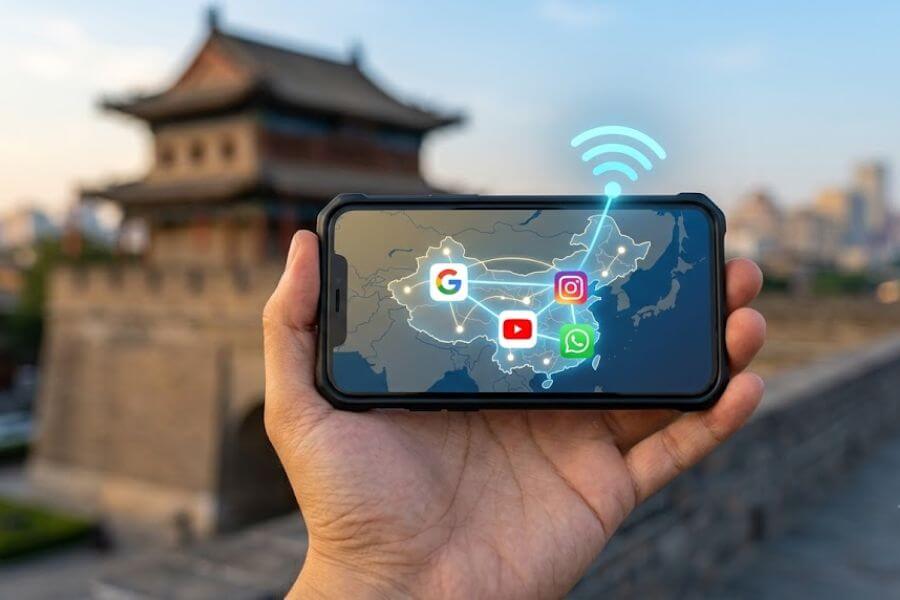
Key Takeaway
If you want to use blocked apps and websites in China, your best bet is a reliable, stealthy virtual private network (VPN) that uses advanced obfuscation to hide its own traffic, or a dedicated proxy setup like Shadowsocks. Make sure you download and set up everything before you step foot in the country.
Imagine landing in a beautiful new city, pulling out your phone to share a quick photo, and realizing your favorite social apps are completely locked down. Welcome to the digital world inside China. The country uses a massive web filtering system that locals and travelers call the Great Firewall. It blocks thousands of the everyday apps and websites that people around the globe use to study, chat, watch videos, and play games.
Whether you are traveling for a family vacation, starting a new school year abroad, or moving for work, losing touch with your digital routine can feel like losing an arm. Thankfully, getting past these digital blocks is entirely possible if you prepare ahead of time. This guide will walk you through exactly how the system works and how you can keep your digital life running smoothly.
What Is the Great Firewall and Why Does It Block Everything?
To beat the system, you first need to understand what you are up against. The Great Firewall is not a physical wall, of course. It is a giant, highly sophisticated network of filters and blocks run by the government. It acts like a strict security guard standing between the internet routers inside China and the rest of the global web.
When you type a website address into your browser or tap an app icon, your device sends a digital request across the internet. In most places, that request goes straight to the app company servers. In China, that request must pass through the government filters first. If the guard sees an address or a keyword that is on the forbidden list, it drops your request immediately.
The reasons behind this system are mostly about control and data. The local authorities want to monitor the information that citizens see and share. They also prefer that people use homegrown digital platforms instead of foreign ones. By blocking major global tech brands, local alternatives have grown into massive businesses that dominate daily life in the country.
The List of Blocked Apps and Websites
You might be surprised by just how many everyday platforms are unavailable once you cross the border. The blocklist includes everything from search tools to streaming platforms and school research sites.
Major Social Media Platforms
You cannot open apps like Instagram, TikTok (the global version), Snapchat, or X without a special tool. If you try to refresh your feed, you will just see a spinning wheel that never loads.
Chat and Communication Apps
Keeping in touch with friends back home is tough because WhatsApp, Messenger, Viber, and Telegram are all restricted. Even the normal text messaging systems on some phones face blocks or heavy delays when sending media across borders.
Search Engines and Video Platforms
Google is completely dark. This means no Google Search, no Google Maps, no Gmail, and no Google Docs for schoolwork. YouTube is also blocked, meaning you cannot watch your favorite creators or educational videos through the normal app.
News and Information Sites
Major global news sites like the BBC, The New York Times, and Wikipedia are unavailable. If you need to do research for a school project or check global headlines, the standard web browser will show an error screen.
Method One: Using a Virtual Private Network (VPN)
A virtual private network is the most popular way to bypass these digital roadblocks. Think of a VPN as a secure, invisible tunnel that wraps around your internet connection.
When you activate a VPN on your phone or laptop, it scrambles your internet data into a secret code. Your internet provider in China can see that you are sending data, but they cannot tell what website you are trying to visit or what app you are opening. The data travels through the secure tunnel until it leaves the country and reaches a VPN server in a place like Japan or the United States. That server unscrambles the data and sends it to the real website.
[Your Device] ---> (Secure Scrambled Tunnel) ---> [VPN Server Outside China] ---> [Unblocked Web]
Choosing the Right VPN Service
Not all networks are strong enough to break through the Great Firewall. In fact, many standard options that work great in Europe or North America will fail completely here because the firewall can detect normal VPN traffic and shut it down. You need a provider that offers specialized stealth features or obfuscation. This feature disguises the scrambled data so it looks like normal, harmless web traffic, such as a regular online shopping session.
Set Everything Up Before You Travel
This is a critical rule that catches many travelers off guard. Once you land inside China, the websites of almost all major VPN companies are blocked. You will not be able to visit their pages to buy a subscription or download their software. You must download the apps onto your phone, tablet, and laptop while you are still at home on your regular connection. Create your account, pay for the service, and log into the app so it is completely ready to run.
Method Two: Using Shadowsocks and Proxies
If you want an alternative to a traditional VPN, you can look into a tool called Shadowsocks. This system was actually created by a developer inside China specifically to get around the Great Firewall.
How Shadowsocks Differs From a VPN
A VPN changes your entire internet connection and routes every single piece of data through a tunnel. Shadowsocks is a proxy system that acts more like a secret passageway just for specific web traffic. It focuses on making your internet data look like ordinary, everyday traffic so the firewall ignores it.
Setting Up a Proxy Connection
Shadowsocks requires a little more hands-on work than a standard app. You usually need to download a client app on your phone or computer, and then you must input specific server details. You can buy access to ready-made servers from various online providers, or if you are very tech-savvy, you can set up your own server on a cloud computer located outside the country. It is a highly customizable option that is very difficult for the firewall to catch because each setup can look completely unique.
Method Three: Using an International Roaming Data Plan
If you are visiting for a short vacation or a quick school trip, you might not need to install complex software at all. You can use the roaming data plan from your home mobile provider.
Why International Roaming Bypasses the Firewall
When you use a phone carrier from your home country (like an American or British mobile network) while traveling, your data is handled differently than a local connection. Even though your phone connects to cell towers inside China, the towers route your internet traffic directly back to your home country network before sending it to the web.
This means if you use a home SIM card with an active roaming plan, you can open Google, Instagram, and YouTube just like you do at home. The Great Firewall simply lets this roaming traffic pass through without blocking it.
The Trade-Offs of Roaming
While this option is incredibly convenient, it has two major downsides: cost and speed. Roaming plans can be very expensive, especially if you watch a lot of video or download big files for school. Additionally, because your data has to travel all the way back to your home country and then back to your phone, your connection might feel a bit slow or laggy.
Method Four: Using Alternative Local Tools
If you are going to stay in the country for a long time, the easiest way to survive digitally is to learn to use the apps that work locally. The local tech ecosystem is incredibly advanced and covers almost everything you need.
Replacing Your Everyday Tools
You can adapt to the local digital environment by swapping out your usual platforms for approved ones that work flawlessly inside the country.
- For Searching: Swap Google for Baidu. It is the main local search engine, though results will be mostly in Chinese.
- For Chatting and Paying: Use WeChat. This is the ultimate super-app. Everyone uses it to text, call, order food, buy train tickets, and pay for things in stores.
- For Navigation: Use Gaode Maps or Baidu Maps. They are much more accurate inside the country than any foreign map tool anyway.
- For Videos: Swap YouTube for Bilibili or Douyin (the local twin of TikTok). You will find endless video content, though it is mostly geared toward a Chinese audience.
Comparison of Digital Access Methods
| Method | Setup Difficulty | Reliability | Cost | Best Used For |
| Stealth VPN | Low (Must do before arrival) | High | Medium Monthly Fee | Long trips, laptops, and accessing all personal apps |
| Shadowsocks Proxy | Medium to High | Very High | Low to Medium | Advanced users who want a stable connection |
| International Roaming | Very Low | Flawless | High Daily Fees | Short trips, quick messaging, and ultimate convenience |
| Local Chinese Apps | Low to Medium | Perfect | Free | Daily life inside the country, shopping, and local friends |
Staying Safe and Smart Online
While looking for ways to open your favorite sites, you should always keep safety in mind. Using tools to visit blocked sites is a common practice for travelers, but you must make sure you use official, trusted software.
Avoid downloading random, free software tools that you find on shady websites. Many of these unverified apps are filled with malware that can steal your private passwords, photos, and personal information. Stick to well-known providers with a solid history of security.
It is also smart to keep a backup option. The firewall receives regular updates and changes constantly. A tool that works perfectly on Monday might stop working on Tuesday. Having two different services installed on your device ensures that you are never left disconnected if one option goes offline for maintenance.
Frequently Asked Questions
Is it legal for a tourist to use a VPN inside China?
The laws regarding internet use are strict for local companies and citizens, but foreigners and tourists rarely face legal issues for simply using a service to check their personal social media or message their families back home. The authorities focus their energy on blocking the services themselves rather than tracking down every single traveler using an app. However, you should always use these tools responsibly and respect local guidelines.
Can I just buy a local Chinese SIM card and download a VPN?
You can easily buy a local SIM card at the airport or a phone store for cheap data, but you cannot download a foreign privacy app once that SIM card is active inside the network. The app stores on your phone will alter their catalog based on your location, and the official download sites will be blocked. You must have your bypass tools installed on your device before you switch to a local cellular network.
Why do free privacy apps rarely work inside the country?
Free services do not have the money or resources to constantly update their server networks to stay ahead of the firewall updates. The government systems block the standard server addresses quickly. Paid services invest heavily in creating new, hidden servers and developing custom encoding techniques that can sneak through the filters without getting flagged.
Will my school or work account function without any special tools?
If your school or business uses Google Workspace, Microsoft 365, or specialized cloud servers based outside the country, those accounts will likely be blocked or experience severe connection issues under the standard local internet network. You will need to utilize one of the stealth methods mentioned above to access your homework files, student dashboards, or corporate mailboxes.