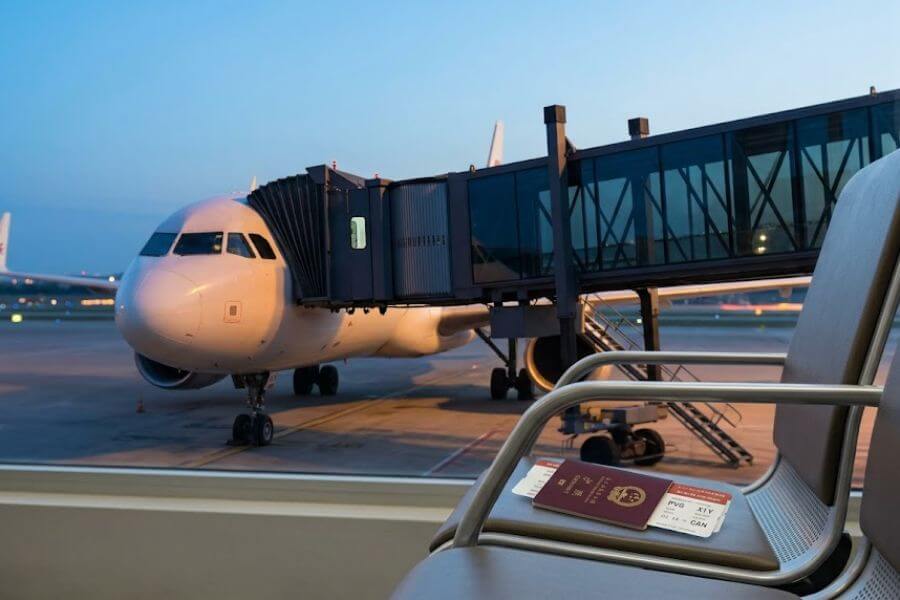
Planning a trip to China is incredibly exciting. You get to think about seeing the Great Wall, walking through the bright lights of Shanghai, and meeting giant pandas in Chengdu. However, China is a massive country. If you want to see multiple cities without spending days on a train, you need to fly. Booking domestic flights inside China as a foreigner can feel confusing at first because the country uses its own unique apps, payment networks, and rules. This complete guide will walk you through every single step of the process, from picking the right app to boarding your plane, using clear language that anyone can follow.
Key Takeaways for Booking Chinese Domestic Flights
Before diving into the detailed steps, here are the most important points to keep in mind for a smooth booking experience.
- Use the Right Platforms: Stick to international-friendly platforms like Trip.com or the English versions of Chinese airline apps to avoid language barriers and payment issues.
- Keep Your Passport Handy: Your passport is your official identity document in China. You must enter your name exactly as it appears in the machine-readable zone at the bottom of your passport photo page.
- Set Up Mobile Payments Early: Download Alipay or WeChat Pay and connect your international credit card before you land in China to make paying for flights and local extras seamless.
- Understand Luggage Limits: Chinese domestic flights often have stricter weight limits for checked bags and carry-on luggage than international flights. Always check the specific weight allowance for your ticket class.
- Arrive at the Airport Early: Navigating Chinese airports takes extra time due to strict security checks, passport verification processes, and large terminal sizes. Aim to arrive at least two hours before departure.
Choosing the Best Booking Platform
When you want to buy a flight inside China, you cannot always rely on the websites you use at home. Many Western travel booking sites do not show all the available flights, or they charge much higher prices. To get the best deals and the most accurate schedules, you need to use platforms that work directly with Chinese airlines.
Trip.com: The Easiest Choice for Foreigners
Trip.com is the international arm of Ctrip, which is the largest travel company in China. This platform is specifically designed for international travelers. The entire app and website operate in perfect English, and they accept major international credit cards like Visa, Mastercard, American Express, and Discover.
One of the biggest benefits of using Trip.com is their customer service. They offer twenty-four-seven support in English through phone calls, live chat, and email. If your flight is delayed or canceled, their staff can communicate with the Chinese airline on your behalf to fix the issue. The app also saves your passport information securely, making it simple to book multiple flights without typing your details every single time.
Local Chinese Apps: Ctrip, Fliggy, and Qunar
If you want to look at what local Chinese citizens use, you will hear about Ctrip (the domestic version of Trip.com), Fliggy (owned by Alibaba), and Qunar. These platforms sometimes have slightly lower prices or special flash sales that do not appear on international sites.
However, these local apps are completely in Chinese. If you do not read Chinese fluently, navigating these apps is very risky. A single mistranslated button could mean booking the wrong date, the wrong city, or buying a ticket that does not include any checked luggage. Furthermore, these apps often require a Chinese national identification card number or a Chinese phone number to complete the registration, making them very difficult for foreign tourists to use.
Booking Directly with Chinese Airlines
Another great option is to book directly on the official website or app of the airline you want to fly with. Major Chinese airlines have dedicated English websites and smartphone apps.
Booking directly with the airline can give you more control over your ticket. If you need to upgrade your seat, choose a special meal, or add extra baggage, doing it directly through the airline app is often much faster than going through a travel agency. The downside is that you have to check multiple airline websites individually to compare prices, whereas a booking platform shows you all the options on one screen.
| Platform Type | Language Support | Accepted Payment Methods | Customer Support | Best For |
| Trip.com | Full English and multiple languages | International credit cards, PayPal, Alipay, WeChat Pay | 24/7 English live chat, phone, and email | Most foreign tourists and first-time visitors |
| Official Airline Apps (English) | English available for major carriers | International cards, Alipay, WeChat Pay | Airline specific hotlines, mixed English support | Booking specific carriers or using airline miles |
| Local Chinese Apps (Ctrip/Fliggy) | Chinese language only | Alipay, WeChat Pay, Chinese bank cards | Chinese language phone and chat support | Advanced travelers fluent in Chinese |
Understanding Major Chinese Airlines
China has dozens of airlines crisscrossing the country every day. Some are massive global carriers, while others are small regional airlines or budget companies. Knowing who you are flying with helps you understand what kind of service and luggage allowance to expect.
The Big Three State-Owned Carriers
The majority of domestic flights in China are operated by three massive airline groups. These airlines offer full service, which means you get a free checked bag, a meal or snack, and standard seat selection included in your base fare.
- Air China: Based in Beijing, this is the national flag carrier. They have an enormous network connecting the capital city to every corner of China. Their service is traditional and reliable.
- China Eastern Airlines: Based in Shanghai, this airline dominates flights in the eastern part of China. They have a very modern fleet of airplanes and great connections throughout the coastal provinces.
- China Southern Airlines: Based in Guangzhou, this carrier operates the largest fleet of aircraft in Asia. They are the best choice if you are traveling around southern China, Hainan Island, or deep into the western regions like Xinjiang.
Major Independent and Regional Airlines
Outside of the big three, there are several large independent airlines that offer fantastic service, often rivaling or beating the state-owned carriers.
- Hainan Airlines: This is a premium independent airline famous for its high-quality customer service, comfortable seats, and excellent food. They are highly rated by international travel organizations.
- Xiamen Air: Based in southeastern China, this airline is known for its incredible cleanliness, friendly flight attendants, and high rate of on-time departures.
- Sichuan Airlines: Based in Chengdu, this carrier is a favorite for food lovers because they serve delicious, spicy Sichuan dishes on board, and their planes often feature fun panda themes.
Low-Cost Carriers and Budget Airlines
If you are traveling on a strict budget, you might want to look at China’s low-cost carriers. The most famous budget airline in China is Spring Airlines, based in Shanghai.
Budget airlines offer very cheap ticket prices, but they stripped away all the extras. When you buy a ticket with Spring Airlines or other budget carriers like West Air or Lucky Air, your ticket only covers your seat and a small piece of carry-on luggage. You must pay extra for any checked bags, onboard food, drinks, and seat choices. Their seats also have less legroom, and their check-in counters at the airport often have much longer lines.
Mastering the Payment Methods
Paying for things in China can be tricky for foreigners because traditional international credit cards are not widely accepted in daily life. Thankfully, the flight booking process is one of the easier things to pay for, provided you set up your tools ahead of time.
Using International Credit Cards
If you choose to use an international platform like Trip.com or the English website of a major airline, you can simply type in your Visa or Mastercard details just like you would at home. This is the most straightforward method.
However, you must watch out for foreign transaction fees from your bank. Additionally, your home bank might flag a sudden purchase from a Chinese company as fraudulent. It is a smart idea to send a travel notice to your bank before you start booking flights so they do not freeze your card during the transaction.
Setting Up Alipay for Travel
Alipay is one of the two dominant mobile payment apps in China. It is an absolute necessity for anyone traveling in the country. In the past, you needed a Chinese bank account to use Alipay, but now they have a system that allows foreigners to link their international credit cards directly to the app.
To set this up, download the Alipay app from your phone app store, sign up using your international phone number, and locate the section to add a bank card. Upload your passport photo for identity verification, add your home credit card details, and you are ready to go. When you book a flight on an official airline website or a Chinese travel app, you can select Alipay at checkout. The app will open, you scan your fingerprint or type your password, and the money is deducted from your home credit card.
Using WeChat Pay
WeChat is China’s most popular messaging app, and it contains a built-in payment function called WeChat Pay. Similar to Alipay, WeChat now allows international users to link their foreign credit cards to the digital wallet.
Once your passport is verified and your card is linked, you can use WeChat Pay to buy flights through the mini-programs inside the app. Many Chinese airlines have official mini-apps built right into WeChat where you can search, book, and pay for flights without ever leaving the chat interface. It is highly recommended to have both Alipay and WeChat Pay set up on your phone before you arrive in China, just in case one app encounters a temporary technical issue.
| Payment Method | Acceptance on Trip.com | Acceptance on Airline Sites | Acceptance on Local Apps | Setup Difficulty |
| International Credit Card | Excellent | Good (Major airlines only) | Very Poor | None |
| Alipay (with Foreign Card) | Excellent | Excellent | Excellent | Medium (Requires passport verification) |
| WeChat Pay (with Foreign Card) | Excellent | Excellent | Excellent | Medium (Requires passport verification) |
Step-by-Step Guide to Entering Personal Information
The absolute number one reason foreigners experience problems at the airport in China is entering their personal information incorrectly during the booking process. Chinese airport security is incredibly strict, and if the name on your ticket does not match your passport exactly, you will not be allowed to pass the security gate.
Formatting Your Name Correctly
In Western countries, names follow the First Name, Middle Name, Last Name order. In China, names are traditionally written with the Last Name first. This can create massive confusion on booking forms.
When filling out a flight booking form, look carefully at the labels on the boxes. If the box says “Given Name,” enter your first name and your middle name together without any punctuation. If the box says “Surname” or “Family Name,” enter your last name.
The safest strategy is to look at the bottom of your passport photo page, where you will see two lines of text filled with chevron symbols. This is called the machine-readable zone. Type your name exactly as it appears in that section. Do not use hyphens, apostrophes, or spaces if the machine-readable zone does not use them.
Handling Middle Names
If you have a middle name, do not skip it. Many foreigners leave out their middle name because they do not use it in daily life, but this is a major mistake when flying in China.
If the booking form only has two boxes, one for “First Name” and one for “Last Name,” you should put your first name and your middle name together in the “First Name” box. For example, if your name is John Robert Smith, you would put “JohnRobert” in the first name box and “Smith” in the last name box. Do not worry if the letters run together; this is exactly how the airport computers read the data.
Passport Numbers and Expiration Dates
Double-check every single digit of your passport number. A single mistyped number means the ticket belongs to a different person in the eyes of the Chinese government.
Make sure your passport has at least six months of validity remaining from the date of your domestic flight. If you are renewing your passport before your trip but want to book flights early, be careful. Some platforms allow you to update your passport number later, but many Chinese airlines do not allow you to change a passport number once the ticket is issued. It is usually much safer to wait until you have your new passport in your hands before booking domestic flights.
Deciphering Fare Classes and Rules
When you browse for flights inside China, you will notice a huge variety of prices for the exact same economy cabin. These different prices represent fare classes, and each one comes with specific restrictions regarding luggage, refunds, and changes.
Checked Luggage Allowances
On full-service Chinese carriers, the standard economy ticket includes one piece of checked luggage weighing up to twenty kilograms (forty-four pounds). Business class tickets usually allow up to thirty kilograms (sixty-six pounds).
However, the cheapest economy fares, often labeled as “discount economy” or “special promotion,” might strip away this luggage allowance completely or lower it to ten kilograms. Before you click the buy button, look for a small icon or text link that says “Baggage Allowance.” If you are traveling with large suitcases, paying a slightly higher fare that includes checked baggage is almost always cheaper than buying extra weight at the airport check-in counter.
Change and Cancellation Policies
Travel plans can change unexpectedly, especially when you are exploring a foreign country. In China, the rules for changing or canceling a domestic flight depend heavily on how cheap the ticket was.
Super-cheap promotional tickets are usually completely non-refundable and non-changeable. If you miss the flight or need to change the date, you lose the entire amount you paid. Mid-tier economy tickets usually allow changes for a specific fee, which gets higher the closer you get to the departure date. Flexible or full-fare economy tickets allow free or very cheap changes right up until the plane takes off.
Meal Codes and Onboard Services
Chinese domestic flights are known for serving hot meals even on relatively short routes. When you look at the flight details during booking, you will see codes like “Meal Served,” “Snack,” or “No Meal.”
If you fly during normal lunch hours (eleven-thirty AM to one-thirty PM) or dinner hours (five-thirty PM to seven-thirty PM), full-service carriers will almost always serve a hot tray of food, usually consisting of rice or noodles with meat and a small side dish. If you have dietary restrictions, such as requiring vegetarian, halal, or gluten-free food, you must log into the airline website at least twenty-four hours before departure to request a special meal, as options are rarely available on short notice on domestic routes.
Navigating Chinese Airports
Chinese airports are engineering marvels. They are massive, clean, and highly efficient, but their sheer scale can be overwhelming if you do not know what to expect.
Terminal Checking and Transportation
Many large Chinese cities, like Beijing, Shanghai, Chengdu, and Guangzhou, have multiple commercial airports. For example, Shanghai has Pudong Airport (mainly international) and Hongqiao Airport (mainly domestic). Beijing has Capital Airport and the newer Daxing Airport.
When you book your flight, look closely at the three-letter airport codes and the terminal numbers. It is a very common mistake for travelers to ride the subway to the wrong airport or the wrong terminal, missing their flight entirely. Give yourself plenty of travel time to reach the airport, especially during morning and evening rush hours when highway traffic in major cities can ground your plans to a halt.
The Check-In Process for Foreigners
When you arrive at the airport, look for the departure screens to find your airline’s check-in counters. While Chinese citizens can use automated self-service kiosks by scanning their national identification cards, foreigners almost always have to go to a staffed counter.
Present your passport to the airline agent. You do not need a paper ticket or a printed confirmation email; your booking is completely digital and tied directly to your passport number. The agent will weigh your luggage, print your physical boarding pass, and hand it back to you. Keep this paper boarding pass safe, as you will need to show it multiple times before you step onto the airplane.
Security and Identification Checks
Passing through airport security in China is a thorough and serious process. First, you will stand in a line where an officer will look at your face, verify your passport, and scan your physical boarding pass. They will also take a quick digital photo of you for security records.
Once you pass the identity check, you move to the physical baggage screening. You must take out all electronic devices larger than a smartphone from your bags, including laptops, tablets, e-readers, and cameras. You must also remove all power banks, umbrellas, and liquids.
Crucial Power Bank Rules: China has incredibly strict rules regarding portable phone chargers. Every power bank must have a clear, legible label showing its capacity. The capacity cannot exceed 100Wh (about 27,000mAh). If the text on your power bank is rubbed off, faded, or missing, security officers will confiscate it on the spot without exception. Power banks must always be carried in your cabin hand luggage; they are completely banned inside checked suitcases due to fire hazards.
Managing Flight Delays and Cancellations
Flight delays are a well-known part of air travel inside China. The airspace over China is highly restricted, and priority is often given to military operations, which can lead to sudden ground delays even when the weather looks perfectly sunny and clear outside.
Understanding Summer Weather Patterns
If you are traveling through China during the summer months (June through August), you must prepare for delays caused by extreme weather. The southern and eastern coastal regions face regular typhoons, heavy rainstorms, and intense thunderstorms during this time of year.
Flights connecting major hubs like Beijing, Shanghai, and Guangzhou are the most susceptible to weather delays. If you have a tight connection or a hard deadline, such as an international flight home, always build in a buffer day. Do not book a domestic flight that lands just a few hours before your international flight leaves the country.
What to Do If Your Flight is Canceled
If your flight is canceled while you are still at the hotel, open the app you used to book the ticket immediately. Platforms like Trip.com will send you an automatic notification and offer buttons to either rebook a different flight for free or claim a full refund.
If you are already at the airport when the cancellation happens, do not panic. Find the service counter for the airline operating your flight. There will likely be a large crowd, so act quickly. The airline staff can move you onto the next available flight, sometimes even with a competing airline, without charging you extra. If the cancellation is due to an airline error and requires an overnight stay, the airline is required to provide you with a free hotel room and bus transportation to the hotel.
Utilizing High-Speed Rail as a Backup
One of the best things about traveling in China is that the country has the most extensive high-speed rail network on earth. If your flight is canceled or heavily delayed, look up the train schedules immediately.
In many cases, taking a bullet train can be faster than waiting for a delayed flight, especially for distances under eight hundred kilometers (five hundred miles). For example, the train journey between Beijing and Shanghai takes just over four hours, running from center to city center, which is often faster than flying when you factor in airport transit, security lines, and potential runway delays. You can book high-speed train tickets easily on the same Trip.com app you use for flights.
Traveling with Children and Infants
If you are traveling through China with your family, you will find that the country is generally very welcoming to children, but booking flights for minors requires a few specific steps.
Booking Tickets for Infants
An infant is defined as a child under the age of two. Inside China, infant tickets do not get a separate seat; the baby must sit on an adult’s lap. The price for an infant ticket is fixed at ten percent of the standard full fare for that specific route.
When booking online, most major platforms allow you to add an infant ticket directly to an adult booking. You will need to input the child’s passport details just like an adult. When you board the plane, the flight attendants will hand you a special loop seatbelt that attaches to your own belt to keep the baby secure during takeoff and landing.
Booking Tickets for Children
Children between the ages of two and twelve require their own seat. The price for a child ticket is typically fixed at fifty percent of the standard full adult fare, or you can opt to buy a discounted adult promotional ticket if it happens to be cheaper than the child fare.
Be aware that some budget airlines do not offer special child discounts, so you will pay the same price for every seat regardless of age. When walking through airport security, children must go through the exact same passport and face verification check as adults, so make sure their travel documents are easily accessible.
Airport Stroller Policies
Most Chinese airlines allow you to bring a stroller for free in addition to your standard luggage allowance. You have two options when traveling with a stroller at Chinese airports.
You can check the stroller at the main ticket counter with your heavy suitcases, or you can use it throughout the terminal and check it at the boarding gate right before you step onto the plane. If you choose gate check, the airline staff will put a special tag on the stroller at the gate. When you land at your destination, you will usually find your stroller waiting for you right outside the airplane door on the jet bridge, though at some smaller airports, you might have to collect it at the oversized baggage carousel.
Frequent Flyer Programs and Alliances
Even though you are flying domestically inside China, you do not have to lose out on earning valuable airline miles. Many major Chinese carriers belong to the large global airline alliances that you might already be a member of back home.
SkyTeam Members in China
If you frequently fly with airlines like Delta, Air France, or KLM, you will be happy to know that China Eastern Airlines and Xiamen Air are full members of the SkyTeam alliance.
When you book a flight with China Eastern or Xiamen Air, look for a field on the booking page that asks for a frequent flyer program. Select your home airline from the dropdown menu and type in your membership number. This allows you to earn miles and elite status qualification points on your home account while flying around China. If you have high elite status with a SkyTeam airline, you can also enjoy perks like priority check-in lines, extra baggage allowances, and access to airport lounges on domestic Chinese routes.
Star Alliance Members in China
For loyal fans of United Airlines, Air Canada, Lufthansa, or Singapore Airlines, the Star Alliance has an excellent presence inside China through Air China and its regional partner, Shenzhen Airlines.
Air China operates an extensive network out of Beijing and western China, making it easy to rack up Star Alliance miles. Just ensure that the name on your domestic ticket matches the name on your frequent flyer account exactly, otherwise, the automated system will fail to credit the miles to your account after the flight is completed.
Independent Partnerships
Some Chinese airlines do not belong to a global alliance but have individual partnerships with Western carriers. For example, Hainan Airlines has partnerships with Alaska Airlines and several other international carriers.
Always do a quick check online before your flight to see if the Chinese airline you are booking has any codeshare agreements or mileage partnerships with your favorite airline. It takes less than a minute to enter your account number during booking, and it can result in thousands of useful miles for your next vacation.
Frequently Asked Questions
Can I travel on a domestic Chinese flight using just my home country identification card or driver’s license?
No, you cannot. For all foreign citizens traveling inside China, your passport is the only legal form of identification accepted by airlines and airport security. A driver’s license, student identification card, or digital identity copy will be rejected immediately, and you will be denied boarding. Always carry your actual physical passport with you in your hand luggage.
Do I need a specific visa to take a domestic flight inside China?
To take a domestic flight, you must hold a valid legal status to be inside China. For most tourists, this means having a standard Chinese tourist visa inside your passport. However, if you are utilizing China’s special transit visa-free policies, such as the seventy-two-hour or one-hundred-and-forty-four-hour transit rules, you can fly domestically only if your flight itinerary stays within the specific geographic zone allowed by your entry permit. Always confirm the boundaries of your specific visa-free transit zone before booking domestic flights.
Are liquids allowed in my carry-on luggage on domestic Chinese flights?
The rules regarding liquids are exceptionally strict on Chinese domestic flights. You are completely banned from carrying any liquids, gels, or aerosols in containers larger than one hundred milliliters in your hand luggage. All your small liquid containers must fit comfortably inside a single clear, resealable plastic bag. If you purchase drinks, water bottles, or liquid soups before passing through security, you will be forced to chug them or throw them away at the security checkpoint. Liquid items bought inside the departure terminal after security are permitted on the plane.
Can I bring my own food on a domestic flight in China?
Yes, you can bring solid food items through airport security and onto the plane. Snacks like biscuits, nuts, bread, fruit, and sandwiches are perfectly fine. However, avoid food items that contain liquid or gel-like substances, such as yogurt, jelly, or jars of sauce, as these will be confiscated by security officers. Most Chinese airports also feature filtered hot and cold water stations past the security gates, so you can bring an empty water bottle and fill it up for free before boarding.
Is it safe for a solo foreign traveler to fly domestically in China?
Flying domestically in China is incredibly safe. Chinese airports and airplanes maintain exceptionally high security standards, and violent crime is virtually non-existent in these heavily monitored areas. All signs, announcements, and digital screens in major airports are displayed clearly in both Chinese and English. Flight attendants on domestic routes usually speak functional English and are highly trained to assist international passengers with any questions or needs during the journey.