Key Takeaways
- Worldwide Income Reporting: The United States requires all citizens and green-card holders to report their entire global income, no matter where they live or earn money.
- Double-Tax Protection: You can use powerful tools like the Foreign Earned Income Exclusion and the Foreign Tax Credit to reduce or completely eliminate your American tax bill.
- Automatic Filing Extension: If you live overseas on the regular April deadline, you get an automatic two-month extension until June 15 to file your paperwork.
- Foreign Account Disclosures: If your combined balance in Chinese bank accounts or digital wallets crosses a certain threshold at any point, you must file special informational reports.
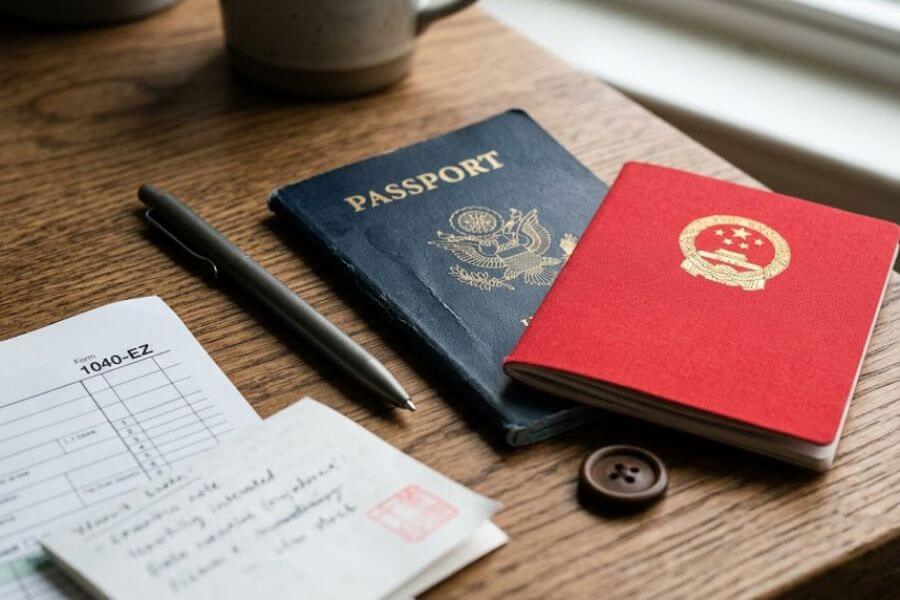
Moving to China is a massive adventure. You get to experience a vibrant culture, eat incredible food, navigate bustling cities, and build a unique career. But while your daily life shifts to a brand-new time zone, one thing stays firmly attached to you: your status as an American taxpayer. The United States is unique because it taxes its citizens based on citizenship rather than where they reside. This means that if you are an American citizen or a green-card holder earning money in Shanghai, Beijing, Shenzhen, or anywhere else in China, you still must deal with the Internal Revenue Service.
Navigating two complex systems at the same time might feel overwhelming, but breaking the rules down into clear steps helps you stay on track. This guide will walk you through exactly how your American tax obligations work while you live and work in China, ensuring you keep your finances in perfect order.
Understanding Your Global Tax Obligations
The foundational rule of American taxation is simple: your location does not change your tax status. If you earn money, you must tell the government about it. This applies whether your paycheck comes from a school in Chengdu, a tech firm in Hangzhou, or a remote consulting gig based back home.
The Concept of Worldwide Income
The government uses a system called worldwide income taxation. This means that your federal tax return must include every single dollar, yuan, or euro you make across the globe. Some people mistakenly believe that if they earn money from a foreign employer and pay local Chinese taxes, the American government does not need to know about it. That is a misunderstanding that can lead to big problems. You must declare all forms of money you receive, including regular salaries, housing allowances, bonuses, investment returns, and side businesses.
Why You Probably Will Not Pay Twice
While you are required to report your global earnings, the system is designed to prevent you from being taxed twice on the exact same money. Because China has its own income tax system, you will likely pay taxes to the Chinese State Taxation Administration. To prevent you from getting hit with a massive double tax bill, the American tax code provides specific mechanisms to lower or erase what you owe to your home country. However, these protections are not automatic. You cannot just skip filing because you think you do not owe anything. You must file a tax return to officially claim these benefits.
Filing Thresholds for Expats
You might wonder if you even make enough money to trigger a filing requirement. The government sets specific income limits every year. If your total gross income from all global sources is higher than the standard deduction for your specific filing status, you are legally required to file a return.
Current Income Thresholds
The specific dollar amounts change over time to account for inflation. For the current tax season, the baseline numbers determine whether you need to send in a return.
| Filing Status | Gross Income Threshold |
| Single | $15,750 |
| Married Filing Jointly | $31,500 |
| Head of Household | $23,625 |
| Married Filing Separately | $5 |
The Married Filing Separately Trap
Look closely at that last number in the table. If you are married to a non-citizen and you choose to file your taxes separately from them, your filing threshold drops down to a mere five dollars. This is a common pitfall that catches many people off guard. If you make even a tiny amount of money while living abroad with a foreign spouse, you almost certainly must file an American tax return.
Important Deadlines to Keep in Mind
When you live overseas, your tax calendar looks a little different than it did when you lived in the United States. You get some extra breathing room, but you still must be very careful about specific dates.
The Standard April Deadline
April 15 is the classic tax day that everyone remembers. If you owe any money to the government, that money must be paid by this date. Even though you get extra time to submit your paperwork as an expat, interest on unpaid taxes starts racking up after this date. If you expect to owe money, it is smart to send in an estimated payment by mid-April.
The Automatic June Extension
Because living abroad makes gathering documents more complicated, the government automatically gives Americans residing outside the country an extra two months to file. Your paperwork deadline shifts to June 15. You do not need to fill out any special request forms to get this extra time; it applies to you automatically as long as your main home and your place of work are outside the United States on the normal April deadline.
The October Extension
If June 15 is still too early for you, you can ask for even more time. By filing Form 4868 on or before June 15, you can push your paperwork deadline all the way out to October 15. This gives you plenty of time to secure your Chinese income statements and ensure everything is accurate.
The Foreign Earned Income Exclusion
The Foreign Earned Income Exclusion is one of the most popular and powerful tools available to Americans working in China. Often called the FEIE, this rule allows you to completely wipe out a massive chunk of your foreign salary from your American taxable income.
How much can you exclude?
For the current tax year, you can exclude up to $130,000 of your foreign earned income. If you and your spouse both work in China and both qualify, you can each claim this benefit, allowing you to shield up to $260,000 of combined earnings from federal income tax.
What counts as earned income?
It is important to know that this exclusion only applies to money you actively work for. This includes things like:
- Your base salary or hourly wages
- Year-end or performance bonuses
- Housing allowances or stipends provided by your employer
- Education allowances for your children paid by your school or company
This exclusion does not apply to passive income. Money earned from stock investments, retirement pensions, bank account interest, or renting out a house cannot be hidden using this specific tool.
Qualifying Tests for the Exclusion
To legally claim this benefit using Form 2555, you must prove to the government that you genuinely live and work in China. You must pass one of two strict tests to qualify.
The Physical Presence Test
This test is purely about counting days on a calendar. To pass, you must be physically present in a foreign country for at least 330 full days during any consecutive twelve-month period.
A full day means an entire twenty-four-hour block starting at midnight. If you spend time on an airplane flying back to visit family in the United States, the days you spend in transit or on American soil do not count toward your 330-day goal. You must keep meticulous records of your travel dates, including flight tickets and passport stamps, because the government looks at these dates very closely.
The Bona Fide Residence Test
This test is less about counting days and more about your long-term intentions. To qualify as a bona fide resident, you must live in China for an uninterrupted period that includes an entire calendar year, from January 1 through December 31.
The government looks for signs that you have truly settled down in your new host country. They will want to see things like a long-term apartment lease, local bank accounts, a resident permit visa, and general integration into the local community. Once you establish this status, you can take short trips back to the United States for vacation or business without losing your qualification, as long as your clear intention is to return to your home in China.
The Foreign Tax Credit
If you earn more than the exclusion limit, or if you do not meet the strict residency tests, you have another great option called the Foreign Tax Credit. This tool works differently than the exclusion. Instead of lowering the amount of income the government looks at, it gives you a dollar-for-dollar reduction on your final American tax bill based on the income taxes you already paid to China.
How the Credit Works
China uses a progressive individual income tax system where higher earners pay higher percentages, with rates topping out at forty-five percent. Because Chinese tax rates on high salaries can be quite high, the amount of tax you pay locally often exceeds what you would owe to the American government on that same income.
When you file Form 1116, you calculate the total amount of income tax you paid to China. The government then applies that amount as a credit to your American tax liability. If your Chinese tax bill was larger than your calculated American tax bill, your American tax liability drops to zero.
Choosing Between the Exclusion and the Credit
Deciding which strategy to use depends heavily on your unique situation.
If you earn less than the exclusion limit and want a simple filing process, the exclusion is often the easiest path to zero out your federal tax. However, if you have children, using the Foreign Tax Credit might allow you to claim the Additional Child Tax Credit, which can result in the government sending you a refund check, even if you paid zero taxes to the United States.
You can also combine both methods if you earn more than the exclusion limit. You can exclude the maximum allowable amount first, and then use the tax credit on the remaining balance.
Dealing with Self-Employment in China
Starting your own business, doing freelance design work, or working as an independent consultant while living in China changes your tax situation significantly.
The Self-Employment Tax Reality
When you are an employee of a Chinese company, you do not have to pay American Social Security and Medicare taxes on your foreign wages. But if you work for yourself, you are considered self-employed.
The United States charges a fifteen point three percent self-employment tax on net business earnings over four hundred dollars. The tricky part is that the Foreign Earned Income Exclusion only reduces your regular income tax. It does not touch your self-employment tax. This means that even if your income is completely under the exclusion limit, you might still owe money for Social Security and Medicare.
Managing Business Expenses
To keep this tax bill as low as possible, you must be incredibly diligent about tracking your business expenses. You report your self-employment income and deductions on Schedule C. Any ordinary and necessary costs required to run your freelance business can be deducted from your gross revenue, lowering your net earnings and reducing both your income tax and your self-employment tax.
- Office Space: The rent for a dedicated studio or co-working space in your Chinese city.
- Technology: Computers, software subscriptions, and specialized gear needed for your projects.
- Communication: A portion of your local phone bill and internet service used for client calls and work.
Reporting Foreign Bank Accounts (FBAR)
Your tax responsibilities extend beyond just reporting your income. The government also wants to know about the money you hold in foreign financial institutions. This is handled through a form known as the FBAR, which stands for Report of Foreign Bank and Financial Accounts.
The Ten-Thousand-Dollar Rule
The trigger for filing an FBAR is based on a specific financial milestone. If the total combined value of all your foreign accounts reaches ten thousand dollars or more at any single moment during the calendar year, you must file this report.
This is an aggregate threshold. It does not mean ten thousand dollars in a single account. If you have three different bank accounts in China, and each holds thirty-five hundred dollars, your total combined balance is ten thousand five hundred dollars. Because that total is over the limit, you must report all three accounts.
What needs to be reported?
The FBAR covers a wide range of financial tools you might use in China:
- Standard savings and checking accounts at local banks like ICBC, Bank of China, or Merchants Bank.
- Digital payment wallets like WeChat Pay and Alipay if they hold balances linked to your personal accounts.
- Foreign investment accounts, mutual funds, and commercial life insurance policies with cash value.
How to File the FBAR
The FBAR is not sent to the IRS with your regular tax return. Instead, it is filed electronically with the Financial Crimes Enforcement Network, a separate branch of the Treasury Department, using FinCEN Form 114. The deadline matches your regular tax return date, and it automatically extends to October 15 if you need more time.
Failing to file this form can result in severe financial penalties, even if you did not mean to hide anything. It is always best to file if you are close to the limit.
Understanding FATCA and Form 8938
In addition to the FBAR, there is another reporting law called the Foreign Account Tax Compliance Act, or FATCA. This law requires you to file Form 8938 directly with your regular tax return if your foreign financial assets cross much higher thresholds.
Asset Thresholds for Expats
Because you live abroad permanently, the government sets the FATCA thresholds much higher than they do for people living inside the United States. This prevents everyday expats from being buried in excessive paperwork unless they have substantial assets.
| Filing Status | Year-End Asset Threshold | Peak Asset Threshold |
| Single / Separate | $200,000 | $300,000 |
| Married Jointly | $400,000 | $600,000 |
If you are single and living in China, you only need to fill out Form 8938 if your total foreign assets are worth more than two hundred thousand dollars on the final day of the tax year, or if they crossed three hundred thousand dollars at any point during the year.
The Challenge of Currency Conversion
Every single number you type into your American tax forms must be written in United States dollars. Because your employer pays you in Chinese Yuan, also known as Renminbi, you must convert all your financial data before doing your math.
Choosing the Right Exchange Rate
You cannot just guess or pick a day when the rate looked favorable to you. The government requires you to use an official, consistent exchange rate. For your regular salary earned evenly throughout the year, you should use the average annual exchange rate published by the Internal Revenue Service or the Federal Reserve.
If you had a major one-time financial event, like selling an apartment or receiving a large lump-sum bonus on a specific day, you must use the exact spot exchange rate for that specific calendar date.
Keeping Conversion Records
Always keep a record of the exact conversion rates you used and where you found them. If the tax office ever asks questions about your math, you want to be able to show them exactly how you turned your Chinese income statements into American dollars.
Local Chinese Taxes and Your US Return
To get the most out of your American tax breaks, you need a basic grasp of how your taxes work on the ground in China. Your Chinese employer is required to withhold Individual Income Tax from your monthly paycheck and give you an annual tax summary at the end of the year.
Tax Documents You Need to Collect
Before you sit down to work on your American tax return, you must gather your local paperwork. You will need your official Chinese tax certificates, often obtained through the official Chinese tax app or directly from your company human resources department. These records show your total gross earnings in yuan and the exact amount of local tax withheld.
The US-China Tax Treaty
The United States and China signed a formal tax treaty decades ago. This agreement helps clarify which country has the primary right to tax specific types of income. For example, it provides protections for American teachers and researchers working temporarily in China, allowing them to exempt certain earnings from local Chinese taxes for a limited time. Understanding how this treaty applies to your specific profession can save you significant amounts of money.
State Tax Obligations While Abroad
While federal taxes apply to every American living overseas, your state tax responsibilities depend entirely on the last place you lived before moving to China.
Domicile States vs. Simple States
Some states are very easy to leave behind. If you moved to China from a state with no income tax, or a state that considers you a non-resident the moment you move away, you generally do not need to worry about state filings.
However, certain states are known as sticky states. Places like California, Virginia, New Mexico, and South Carolina make it very difficult to break your tax residency. They may continue to tax your worldwide income even while you live in China unless you can prove that you have permanently cut all ties with that state.
How to Break State Ties
If you want to stop paying state income taxes while living in China, you must show that you do not plan to return to that state. Helpful steps include:
- Surrendering your state driver’s license
- Closing local bank accounts in that state
- Canceling voter registration in your old district
- Selling or renting out any real estate you own there
What to Do If You Are Behind on Filing
If you have lived in China for several years and had no idea you were supposed to be filing tax returns back home, do not panic. The government offers a safe path to get caught up without facing massive penalties.
The Streamlined Filing Compliance Procedures
The IRS created a special program called the Streamlined Procedures for Americans abroad who genuinely did not know they had a filing requirement. This program is designed for non-willful taxpayers, meaning you made an honest mistake because you did not understand the complex international tax laws.
How to Catch Up
To clean up your record using this program, you must complete a few specific tasks:
- File your last three years of missing federal income tax returns.
- File your last six years of missing FBAR reports.
- Write and sign a formal statement certifying that your failure to file was an honest mistake.
If you complete these steps correctly before the government contacts you, they will generally wave all late-filing and late-payment penalties, allowing you to return to full compliance with total peace of mind.
Frequently Asked Questions
Do I have to file a US tax return if my Chinese employer already takes taxes out of my paycheck?
Yes, you must still file. Your Chinese employer sends your tax money to the Chinese government, but the American government still requires you to file a federal return to report your global income. You can use the tax credit or exclusion options on your return to make sure you do not pay twice, but filing the paperwork is mandatory.
What happens if I completely ignore my US tax responsibilities while living in China?
Ignoring your responsibilities can lead to serious consequences over time. The government can hit you with substantial financial penalties and accumulate interest on any unpaid balances. In severe cases, if you owe a large amount of back taxes, the government has the legal authority to revoke or refuse to renew your American passport, which would make traveling or living abroad impossible.
Can I use digital wallet balances like WeChat Pay or Alipay to trigger an FBAR filing requirement?
Yes, digital wallets count. If your WeChat Pay or Alipay accounts hold balances that are stored in a foreign financial institution, those balances must be added to your regular bank account totals when calculating your ten-thousand-dollar aggregate threshold. If the combined peak value crosses the limit, you must list them on your report.
Can I still contribute to my American IRA retirement account while working in China?
You can only contribute to an Individual Retirement Arrangement if you have a specific type of income known as modified adjusted gross income. If you use the Foreign Earned Income Exclusion to wipe out your entire salary down to zero, you have no eligible earned income left to base a retirement contribution on. If you want to fund an IRA, you might want to use the Foreign Tax Credit strategy instead.
How do I sign and submit my US tax return from inside China?
The most reliable way to submit your return from abroad is through electronic filing. Many modern tax software programs allow you to sign and transmit your forms over the internet. If you must mail a paper return, you should use a secure international courier service with tracking to ensure your important documents arrive safely at the processing center.