Key Takeaways
- You Must Have a Valid Residence Permit: To apply for a Chinese driver’s license, you must hold a valid temporary or permanent residence permit that allows you to stay in China for at least ninety days.
- The Written Test is Your Only Hurdle: If you already hold a valid US driver’s license, you generally do not need to take the practical road test. You only need to pass the written computer-based exam, known as Subject One.
- Official Translations Are Required: Your US driver’s license must be translated into Chinese by a certified, officially recognized translation agency before you submit your application packet.
- Accuracy in Documents Saves Time: Your registered Chinese name must match across all documents, including your passport translation, your driver’s license translation, and your official registration of temporary residence.
Moving to China is an amazing adventure that opens up a whole new world of sights, sounds, and incredible food. You get to see towering skyscrapers right next to ancient temples, and you get to experience a culture that is thousands of years old. But if you want to explore the country on your own terms, you will quickly realize that relying on subways, buses, and hailing rides can only take you so far. To get to the beautiful mountain villages, the remote sections of the Great Wall, or the hidden coastal towns, you need to get behind the wheel yourself.
You might wonder if you can just use your American driver’s license or an International Driving Permit to rent a car and hit the road. The short answer is no. China does not recognize the International Driving Permit, and foreign licenses are not valid for driving within the country. If you want to drive legally in China, you need to get a local Chinese driver’s license. The good news is that the process is straightforward for expats who already know how to drive. If you hold a valid American license, you can bypass the practical driving test entirely. Instead, you just need to pass a single written test on a computer. This comprehensive guide will walk you through every single step of the process so you can trade the crowded subways for the open road.
The Legal Requirements for American Expats
Before you start gathering your paperwork and heading down to the local government offices, you need to make sure you meet the legal criteria set by the Chinese government. The rules are strict, but they are very clear. Understanding these requirements from the very beginning will save you a lot of time and prevent you from making trips to offices only to be turned away at the door.
Age and Health Constraints
First, you must meet the age requirements. To drive a standard passenger car in China, which falls under the C1 or C2 license categories, you must be between eighteen and seventy years old. If you are within this age bracket, you are legally eligible to apply.
Second, you must be in good physical health. The Chinese traffic authorities want to ensure that every driver on the road is physically capable of operating a motor vehicle safely. You will have to undergo a specific, standardized medical examination at a designated hospital or a certified health kiosk. This checkup ensures that your vision, hearing, color recognition, and motor skills meet the national safety standards.
Visa and Residence Status
Your legal status inside China is the most important factor in determining whether you can apply for a local license. You cannot get a permanent Chinese driver’s license if you are just visiting the country as a tourist on an L-visa or on a short-term business trip.
To qualify for the standard conversion process, you must hold a valid residence permit. This permit is usually tied to a work visa, a student visa, or a family reunion visa. The key rule is that your current stay permit must grant you the legal right to remain in China for a continuous period of at least ninety days. When you look at your residence permit sticker in your passport, it should clearly show that your status allows for this duration. If you only have a short-term stay visa, some major cities like Beijing or Shanghai might allow you to apply for a temporary driving permit instead, but that permit is only valid for a limited time and cannot be converted into a full, long-term license.
Choosing the Right License Category
When you apply for your Chinese license, you must specify which type of vehicles you want to drive. The Chinese licensing system uses a combination of letters and numbers to classify different vehicle types. For the vast majority of American expats, you will want to choose between two main categories.
Category C1 versus Category C2
The C1 license is the most versatile option for regular passenger vehicles. If you get a C1 license, you are legally allowed to drive light passenger vehicles with manual transmissions, or stick-shifts, as well as automatic vehicles. This is the best choice if you think you might ever want to rent a manual car, a small pickup truck, or a small van while traveling through rural parts of China.
The C2 license is strictly for automatic transmission vehicles. If you pass the process for a C2 license, you cannot legally drive a manual car. Since almost all modern rental cars and electric vehicles in China are automatic, many expats find that a C2 license meets all their daily needs. The written test is exactly the same for both categories, so you can choose the one that matches your driving comfort level.
Matching Your American License
When you submit your application, the Chinese vehicle administration office will look at your current American driver’s license to see what you are allowed to drive back home. In the United States, a standard Class C license allows you to drive both manual and automatic cars. Therefore, you can generally choose to apply for either a C1 or a C2 license in China.
It is important to note that you cannot use this conversion process to get a license for a commercial truck, a large bus, or a motorcycle unless you hold those specific, separate classifications on your US license and are willing to take additional practical tests. For motorcycles, China uses the E and F categories, which require a completely separate testing process, including a practical riding exam on a closed course.
Gathering Your Essential Documents
The most time-consuming part of this entire journey is collecting and preparing your paperwork. The Chinese bureaucratic system relies heavily on physical documentation, and everything must be perfect. If a single stamp is missing or if a name is misspelled, you will likely have to go home, fix the error, and line up all over again. Take your time during this phase to ensure your file is complete.
Passport and Chinese Visa
You will need your actual physical passport, and it must be in good condition. The vehicle administration staff will check your personal details, your current entry stamp, and your residence permit.
In addition to your original passport, you must prepare photocopies of several specific pages. You need a clear copy of your passport photo page, your current Chinese residence permit page, and the page showing the most recent entry stamp into the country. It is always a good idea to make at least two or three copies of each page just in case the office requires extra sets for their files.
Registration of Temporary Residence
Whenever a foreigner enters China, they are required by law to register their living address with the local police within twenty-four hours. If you stay in a hotel, the front desk handles this automatically for you. But if you live in an apartment, you must go to the local neighborhood police station to get a physical document called the Registration of Temporary Residence form.
This document is absolutely crucial for your driver’s license application because it proves to the vehicle administration that you legally live within their specific jurisdiction. The address printed on this form must match the address you write on your driver’s license application. Make sure the police station has placed their official red ink stamp on this form, as un-stamped forms are completely invalid at the traffic office.
Your Valid American Driver’s License
You must bring your physical American driver’s license with you. It must be completely valid and not expired. If your US license is going to expire within the next few months, it is highly recommended that you renew it online with your home state Department of Motor Vehicles before you apply for your Chinese license. The Chinese authorities will not convert an expired foreign license under any circumstances.
The Translation Process
You cannot simply hand your English-language passport and American driver’s license to the Chinese officials and expect them to process it. Every piece of foreign documentation must be officially translated into Mandarin Chinese. This is a step where many expats make mistakes by trying to do the translation themselves or using basic translation apps on their phones.
Finding a Certified Translation Agency
The vehicle administration office will only accept translations completed by a certified, legally registered translation company within China. You cannot do this yourself, and you cannot have a bilingual friend do it for you.
In most major cities, you can find a list of approved translation agencies near the vehicle administration building or by asking local expat communities. These agencies understand exactly what the traffic bureau looks for. When they finish translating your documents, they will print them out and apply their official company stamp, which is often a red round seal with a special identification number. They will also provide a copy of their own business license to prove they are a legal entity.
Checking for Critical Consistency
When you receive the translated papers from the agency, you must check them line by line before you pay for the service. The most critical element to check is your name.
In China, your official identity is tied directly to the English spelling of your name in your passport. However, when your driver’s license is translated, the agency will often assign you a Chinese character name or write out your English name using Chinese characters that sound similar. You must ensure that the Chinese characters used for your name are exactly the same on the translated version of your US passport, the translated version of your US driver’s license, and your official police residence form. If one document spells your name with one character and another document uses a different character, the vehicle administration computer system will flag it as an error, and your application will be rejected.
| Document Name | Required Condition | Purpose |
| US Passport | Original and copies of photo and visa pages | Proves your identity and legal stay duration |
| US Driver’s License | Original and certified Chinese translation | Proves you are already a qualified driver |
| Temporary Residence Form | Original with official red police stamp | Proves your local address and jurisdiction |
| Medical Certificate | Issued by approved hospital or health kiosk | Proves physical fitness to operate a car |
| Official Photos | White background, specific dimensions | Printed directly onto your new physical license |
Navigating the Medical Examination
The medical checkup is a mandatory requirement for all drivers in China, regardless of whether you are a brand-new driver or a seasoned veteran converting an overseas license. The purpose is to ensure that you do not have any physical conditions that could impair your ability to react quickly on the road.
Where to Go for Your Checkup
You cannot just go to any family doctor or private clinic for this examination. You must visit a designated public hospital that has a certified traffic medicine department, or you can use an automated health examination kiosk.
These automated kiosks are becoming incredibly popular across major cities in China. They look like large photo booths and are often located right inside the lobby of the vehicle administration building or at major subway stations. The kiosk guides you through the entire process using voice prompts and a touch screen. It has built-in cameras and sensors to measure your height, test your eyes, and check your hearing. If you prefer a human touch, you can visit an approved public hospital, where you will follow a specific pathway from room to room to get each test signed off by a nurse or doctor.
What the Medical Exam Entails
The examination is quick and generally takes less than fifteen minutes to complete. The medical staff or the automated kiosk will check several specific areas of your physical health:
- Visual Acuity: You must pass a standard eye chart test. If you wear glasses or contact lenses to drive, you must wear them during the test. Your corrected vision must meet the minimum legal sharpness standard.
- Color Blindness: You will be shown a series of cards with numbers or shapes hidden inside patterns of colored dots. This is to ensure you can easily distinguish between red, green, and yellow traffic lights.
- Hearing Capacity: You will wear headphones or listen to tones to prove you can hear sounds at specific frequencies in both ears, which is necessary for hearing car horns and emergency sirens.
- Physical Extremities: You will be asked to show that you have full movement of your thumbs, fingers, hands, and legs. This ensures you can grip the steering wheel firmly and operate the gas and brake pedals without difficulty.
Once you pass all the stations, the hospital or the kiosk will generate an official forms packet with your photo attached, stamped with an official medical seal. In many modern cities, this medical data is uploaded directly into the government traffic database instantly, meaning you do not even need to carry a physical piece of paper to the next desk.
Submitting Your Application at the Vehicle Administration Office
With your translated documents, your passport, your police registration form, and your medical clearance ready, it is time to head to the local Vehicle Administration Office. In Chinese, this office is called the Cheguansuo. This is where all the administrative magic happens.
Locating the Correct Bureau
Every major city has a central vehicle administration office, and larger cities like Shanghai, Beijing, or Guangzhou have multiple branch offices spread across different districts. You must go to an office that is authorized to handle foreign affairs. Not every small suburban branch can process foreign driver’s license conversions.
It is best to ask the certified translation agency or check the official local traffic police website to find the exact branch designated for foreigners. When you arrive, look for the service desk that says Foreigner Service or Foreign License Conversion to ensure you get in the correct line.
Fees and Photos
When you enter the building, you will need to take a queue number and wait for your turn. When your number is called, approach the window and present your entire document file to the officer. The officer will carefully review each paper, verify the stamps, and enter your details into their computer network.
You will need to provide specific passport-style photos for the license itself. These photos must have a plain white background, and your ears must be clearly visible without any jewelry or hats. Most vehicle administration offices have a small photo studio inside the building where you can get these taken for a small fee, which guarantees they will be the exact correct dimensions.
Once the officer approves your paperwork, you will be asked to pay the application fee and the testing fee. These fees are quite reasonable, usually totaling less than one hundred Chinese yuan. Most offices are completely cashless now, so you will need to pay using local mobile payment systems like WeChat Pay or Alipay, or have a local friend help you make the payment if you do not have these accounts set up yet.
Mastering the Subject One Written Exam
Once your application is accepted, the officer will help you schedule your written exam, which is known as Subject One or Kemu Yi. This is the only exam you need to pass to get your license. Do not underestimate this test. While it is multiple-choice, many of the questions are tricky, poorly translated, or specific to Chinese traffic laws that do not exist in the United States.
Structure of the Exam
The Subject One exam is a computer-based test consisting of one hundred questions. You are given forty-five minutes to complete it. The questions are a mix of true-or-false statements and multiple-choice questions with four options.
To pass the exam, you must score ninety percent or higher. This means you can only miss a maximum of ten questions out of the one hundred. The moment you click your answer for a question, the computer will tell you immediately if you got it right or wrong. If you reach eleven incorrect answers at any point during the test, the exam ends automatically, and you fail.
Language Options Available
One of the best things about the Subject One exam is that it is available in multiple languages. You do not need to know how to read Chinese characters to take this test. Major cities offer the exam in English, French, German, Japanese, Korean, Russian, and Spanish.
When you sit down at your assigned computer terminal, you will select English as your preferred language. However, you should be prepared for some unusual phrasing. The English translations were done years ago and can sometimes sound a bit awkward or confusing. Studying with official question banks will help you get used to this specific style of wording.
Effective Study Strategies for the Test
Since you need a ninety percent score to pass, studying is absolutely mandatory. You cannot just rely on your general driving common sense from the United States because many rules regarding speed limits, traffic signs, police hand signals, and legal penalties are completely unique to China.
Utilizing Online Resources and Apps
The absolute best way to prepare for the Subject One test is to use dedicated study apps and websites. There are several highly popular apps available on Chinese app stores that are designed specifically for foreigners studying for their driver’s license.
These apps contain the exact pool of over one thousand potential questions that the computer draws from to create your test. They allow you to practice by going through questions topic by topic, or you can take simulated practice exams that mimic the real forty-five-minute test. You should spend a week or two taking these mock tests repeatedly until you are consistently scoring ninety-five percent or higher at home.
Key Focus Areas and Tricky Concepts
When you are studying, pay extra attention to the sections covering specific numbers, as these are the questions that most frequently trip up American drivers. You will need to memorize the exact speed limits for different types of roads when there are no signs posted. For example, the speed limit on a city road with only one lane in each direction is different from a highway or a multi-lane city boulevard.
You also need to memorize the specific penalties, point deductions, and fines for various traffic violations. China uses a strict point system for licenses, and the written test will ask you exactly how many points are deducted for things like speeding, tailgating, or running a red light.
Furthermore, you must study the visual diagrams of police hand signals. In China, traffic police often stand on raised platforms in the middle of busy intersections, and their physical gestures override the electronic traffic lights. The test will show you a cartoon animation or a photograph of a police officer making a specific hand gesture, and you must correctly identify whether they are telling you to stop, turn left, turn right, or slow down.
| Traffic Situation | Speed Limit (No Signs) | Key Condition |
| City Roads (Single Lane) | 30 kilometers per hour | High pedestrian areas |
| City Boulevards (Multi-Lane) | 40 kilometers per hour | Divided traffic flow |
| National Highways (Single Lane) | 50 kilometers per hour | Outside urban zones |
| Expressways (Multi-Lane) | 70 kilometers per hour | Minimum speed also applies |
What to Expect on Test Day
When the day of your scheduled exam arrives, make sure you are well-rested and arrive at the testing center early. The atmosphere inside government testing centers is highly formal and strictly regulated, so following the rules perfectly will ensure a smooth experience.
Arrival and Check-In Procedures
You must bring your original physical passport and your official exam registration paper that you received when you applied. Do not bring any large bags, notebooks, or electronic devices into the testing room. Most centers have lockers outside where you must leave your phone, smart watches, and wallet.
When your name is called, a security guard will check your ID, take your photo to verify your identity using facial recognition software, and assign you to a specific computer terminal. The testing room is monitored by multiple security cameras and proctors who walk up and down the aisles to ensure there is absolutely no cheating.
What Happens if You Fail
If you are taking the test and suddenly see that you have made your eleventh mistake, do not panic. The computer will stop the test and inform you that you did not pass. However, your testing fee almost always includes two attempts per session.
You can usually stand up, walk out to the proctor’s desk, show them your score, and they will reset a computer terminal for you so you can try again immediately. This gives you a second chance to pass right then and there while the information is fresh in your mind. If you unfortunately fail the second attempt as well, you will have to go back to the payment window, pay a small re-testing fee, and schedule a completely new test date for a future week.
Receiving and Maintaining Your License
When you finally answer that last question correctly and see the passing score flash across the screen, a wave of relief will wash over you. You have completed the hardest part of the entire journey, and you are now officially a licensed driver in China.
The Issuance Process
Once you pass the test, you need to take your printout score sheet back to the main service hall of the vehicle administration office. Depending on the city you live in, the process for getting your physical license can vary slightly.
In many modern, highly efficient cities, you simply hand your score sheet to the designated window, wait in the lobby for about fifteen to thirty minutes, and they will print and laminate your brand-new Chinese driver’s license right on the spot. In other locations, they might require a few business days to process the final printing. If that is the case, you can choose to return to the office a few days later to pick it up, or you can pay a very small express mail fee to have the postal service deliver the license directly to your apartment door.
Understanding the Probationary Year
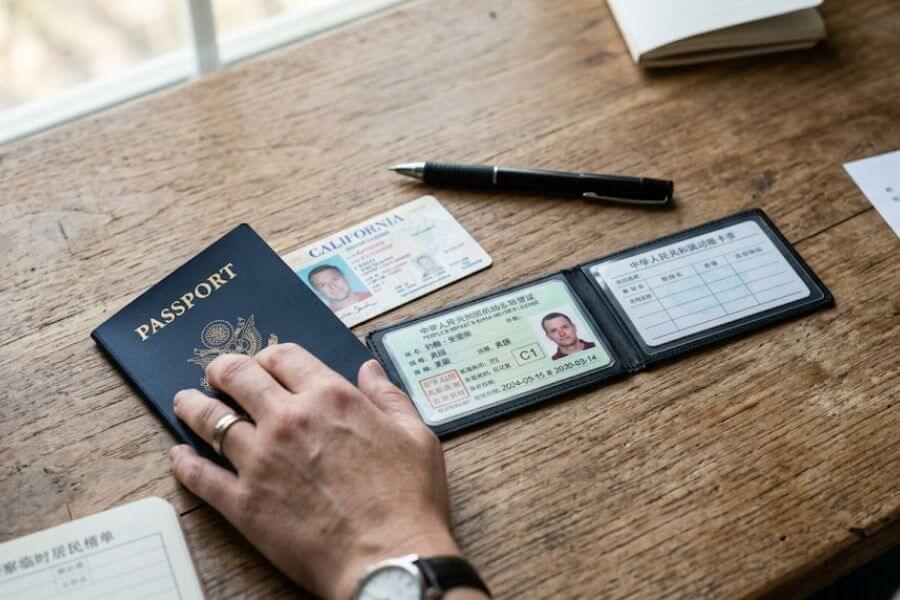
Your brand-new Chinese driver’s license will look like a small black wallet containing two separate paper cards protected by plastic sleeves. The main card shows your photo, your personal details, and the validity dates. The secondary card is used for recording official notes and tracking your driving record.
The first twelve months after your license is issued is legally considered your probationary period. During this first year, there are a few special restrictions you must follow. Most importantly, you are not legally allowed to drive a car on the national expressway network, or highway system, by yourself. If you want to drive on an expressway during your probationary year, you must have a passenger sitting in the front seat next to you who has held a valid Chinese driver’s license for at least three years. This experienced driver is legally responsible for guiding you and keeping you safe during your first year on high-speed roads.
The Twelve-Point System
China uses a strict rolling points system to monitor driver behavior and enforce safety laws. Every year, your license starts with a clean slate of twelve points. If you commit a traffic violation, the police will deduct a specific number of points from your license, in addition to issuing a financial fine.
For example, minor violations like illegal parking might not cost any points, while more serious violations like running a red light will instantly cost six points. If you lose all twelve points within a single calendar year, your license will be automatically suspended. You will be forced to attend a multi-day traffic safety school at the vehicle administration office and retake the Subject One written computer test from scratch to get your license back. If you manage your points well, your balance resets back to a full twelve points every year on the exact anniversary date printed on your license.
Important Chinese Driving Rules to Live By
Driving in China is a thrilling experience, but the flow of traffic behaves quite differently than it does in the United States. To stay safe and avoid getting fines or losing points on your new license, you need to familiarize yourself with the core habits and legal nuances of Chinese roads.
Turning Right on Red Lights
In the United States, turning right at a red light after coming to a complete stop is a standard practice across most states unless a sign says otherwise. In China, the rule is slightly different and depends entirely on the shape of the traffic light arrow.
If the intersection uses a standard round solid red light, you are generally permitted to make a right turn as long as you yield to pedestrians crossing the street and cars coming from the left. However, if the intersection uses a modern electronic arrow light system and the right-pointing arrow turns solid red, you must come to a complete stop and wait for that specific arrow to turn green before you can make your turn. Failing to notice a red arrow light will result in a heavy fine for running a signal.
The Zero-Tolerance Policy for Drunk Driving
This is perhaps the most critical legal rule you must understand before you ever get behind the wheel in China. The Chinese government takes driving under the influence of alcohol incredibly seriously, and they enforce a strict zero-tolerance policy.
The legal limit for blood alcohol concentration in China is significantly lower than it is in most American states. If a breathalyzer test shows any measurable amount of alcohol in your system, you will face severe consequences. If your level is above the legal limit for criminal drunk driving, you will be arrested immediately, spend time in a detention center, face a massive financial penalty, and your driver’s license will be revoked for multiple years. If you plan to have even a single beer or a glass of wine at dinner, do not drive. Instead, use a local smartphone app to hire a designated driver, known as a Daijia. This service sends a professional driver to your location on an electric scooter. They will fold up their scooter, put it in your trunk, and drive you home safely in your own car for a very reasonable fee.
Frequently Asked Questions
Can I drive in China with an International Driving Permit?
No, you cannot drive in China using an International Driving Permit. China is not a signatory to the international conventions that create and recognize these permits. The Chinese traffic authorities only recognize official domestic driver’s licenses issued by the government of the People’s Republic of China. If you are caught operating a motor vehicle with only an International Driving Permit or an American license, you will be treated legally as an unlicensed driver, which can result in heavy financial fines and administrative detention.
How long is my new Chinese driver’s license valid?
When you first receive your Chinese driver’s license after passing the Subject One exam, it will be valid for a continuous period of six years. If you maintain a good driving record during these six years and never accumulate a full twelve points in any single calendar year, you can apply for a renewal that is valid for ten years. If you continue to drive safely during that ten-year period, your next renewal will grant you a permanent life-long driver’s license that does not expire, though you will still need to submit annual medical checks once you reach a certain senior age.
What happens if my American driver’s license expires while I am living in China?
Your Chinese driver’s license is legally tied to the fact that you were already a qualified driver back home when you applied. If your American license expires while you are living abroad, your Chinese license remains completely valid until its own printed expiration date. However, if you need to renew your Chinese license in the future or if you lose your physical Chinese license card and need a replacement, the officers might ask to see your current US license again. Therefore, it is highly recommended to use online DMV services from your home state to keep your American license active while living overseas.
Do I have to take a practical road test to get my license?
No, you do not have to take a physical behind-the-wheel driving test if you already hold a valid, non-commercial American driver’s license. The Chinese vehicle administration office recognizes your existing driving experience from the United States. This means you bypass Subject Two, which is the closed-course skills test, and Subject Three, which is the open-road driving test. Your only testing requirement is passing the Subject One computer-based written exam on traffic laws and signs.
Can I use my Chinese driver’s license to drive in Hong Kong or Macau?
No, a standard Chinese driver’s license issued on the mainland does not automatically allow you to drive in Hong Kong or Macau. Even though Hong Kong and Macau are parts of China, they operate under completely separate legal and traffic systems, and they drive on the left side of the road instead of the right side. If you want to drive in Hong Kong, you must apply for a specific license conversion through the Hong Kong Transport Department using your American or Chinese documents.
What should I do if I move to a different city within China?
If you get your driver’s license in one city, such as Beijing, and later relocate to another city, such as Shenzhen, for a new job, your license remains legally valid for driving anywhere within the borders of mainland China. However, you are required by traffic regulations to update your registration details. You should visit the local vehicle administration office in your new city with your passport and your new police temporary residence form to transfer your license file to your new local jurisdiction, which ensures you can easily handle future renewals or point settlements.