Key Takeaways
Moving to or traveling in China is an amazing adventure. But what happens if you wake up with a high fever, a bad stomach ache, or a sprained ankle? Finding a doctor who speaks your language can feel scary when you are far from home. This guide gives you the exact map to navigate the Chinese healthcare system with ease.
- Go straight to the hospital: Regular clinics are rare in China. Almost all medical care happens inside large public or private hospital buildings.
- Look for the International Department: Most big public hospitals in major cities have a special wing called the Guoji Bu. This is where you will find staff who speak English, shorter lines, and western-style service.
- Keep your paperwork handy: Always carry your passport, your health insurance card, and plenty of cash or digital payment options like WeChat Pay or Alipay.
- Download translation apps: Even with English-speaking doctors, having an app like Pleco or Google Translate helps you talk to nurses, pharmacists, and registration staff.
Welcome to the World of Medical Care in China
Imagine walking down a bright street in Shanghai or Beijing. You are having the time of your life exploring markets and trying new food. Then, your throat starts to hurt. Or maybe you trip on a curb and twist your ankle. Your mind starts to race. How do you find a clinic? Will the doctor understand you?
Navigating a hospital in a different country can feel like solving a giant puzzle. In your home country, you might call a family doctor or visit a small neighborhood clinic. In China, things work quite differently. The system is huge, fast-paced, and relies heavily on large hospitals.
This guide will show you exactly how to get medical help, where to look for English-speaking professionals, and what to expect during your visit. You will learn the difference between public and private options, how to pay for your medicine, and how to prepare for an emergency. Let us dive right into the details so you can feel safe and confident during your stay.
The Big Picture: How Chinese Hospitals Work
To get medical help in China, you must first understand that the hospital is the center of the medical universe. Separate doctor offices do not really exist the way they do in Western countries. If you need a physical checkup, a blood test, or a simple prescription, you go to a hospital.
Public Hospitals versus Private Clinics
Public hospitals are where most local people go. They are often very crowded, noisy, and full of energy. They use a system where patients move from one desk to another for registration, payment, tests, and medicine.
Private hospitals and international clinics are different. They look more like luxury hotels or modern offices. They are quiet, the staff speaks perfect English, and you can make appointments in advance. However, they cost much more money than public options.
The Three Tiers of Public Hospitals
China rates its public hospitals using a three-tier system. This helps you know which building has the best equipment and the most skilled staff.
- Tier 1 (Primary) Hospitals: These are small, local medical centers. They handle basic care, vaccinations, and simple illnesses. They rarely have English-speaking staff.
- Tier 2 (Secondary) Hospitals: These are medium-sized regional facilities. They can take care of more serious conditions and have better technology. Some may have a few doctors who speak a bit of English.
- Tier 3 (Tertiary) Hospitals: These are the largest and most advanced medical centers in China. They are often linked to top universities. They have the best equipment, expert doctors, and specialized international wings where English is widely used. These are called Sanjia hospitals in Chinese.
The Flow of a Typical Visit
When you enter a public hospital, you do not just sit down and wait for your name to be called. You must follow a specific sequence of steps. First, you stand in line to buy a registration card. Next, you pay for your consultation. Then, you find the correct waiting area for your specific department, like internal medicine or bone health. After the doctor sees you, you must pay again before you can get any blood tests or X-rays. Once the tests are done, you bring the results back to the doctor. Finally, you pay a third time to get your medicine from the hospital pharmacy.
Finding English-Speaking Doctors: Your Best Options
The language barrier is usually the biggest worry for travelers and expats. Luckily, there are excellent options available if you know exactly where to look.
The International Department of Public Hospitals
Many top-tier public hospitals create a special section just for foreigners and wealthy patients. This section is known as the International Department, or Guoji Bu. Choosing this option gives you the best of both worlds. You get the vast resources and expert medical minds of a giant public facility, but you also get a much calmer environment. The receptionists, nurses, and doctors in these departments speak English well. The lines are much shorter, and the rooms are private.
Dedicated International Private Hospitals
In massive cities like Beijing, Shanghai, Guangzhou, Chengdu, and Shenzhen, you can find completely private international hospitals. Names like United Family Healthcare, Parkway Mutual Jawa, and Jiahui Health are famous among foreigners. These places operate exactly like premium Western medical facilities. Every single person on the staff speaks English, from the security guard at the front door to the head surgeon. They accept international insurance plans directly, making the paperwork very smooth for you.
Local Community Health Centers
If you live in a residential neighborhood within a major city, you might notice a smaller building called a Community Health Service Center. These centers are wonderful for minor issues like a cold, a shallow cut, or blood pressure checks. While the doctors here might not speak fluent English, they are often very patient. If you bring a translation app or a local friend, you can get quick care for a very low cost without traveling to a giant medical center.
Comparing Your Medical Options in China
To help you decide where to go when you feel unwell, it helps to look at the choices side by side. Each type of facility has its own strengths and weaknesses depending on your budget and your medical situation.
| Type of Facility | Average Cost | Language Support | Wait Times | Best For |
| Public General Wing | Very Low | Rare / Chinese Only | Very Long (Hours) | Minor issues if you speak Chinese, budget care |
| Public International Wing | Medium to High | Good English | Short to Medium | Serious illness, expert surgeries, moderate budget |
| Private International Hospital | Very High | Excellent English | Very Short | Complete comfort, English support, Western style |
| Community Health Center | Lowest | Minimal | Short | Quick checks, prescriptions, minor cuts |
Step-by-Step Guide to Visiting a Public Hospital
If you choose to visit a public hospital, especially its international wing, knowing the exact steps will save you from feeling lost or confused. The process can feel like a game where you must unlock different rooms in a specific order.
Step 1: Arrival and Identification
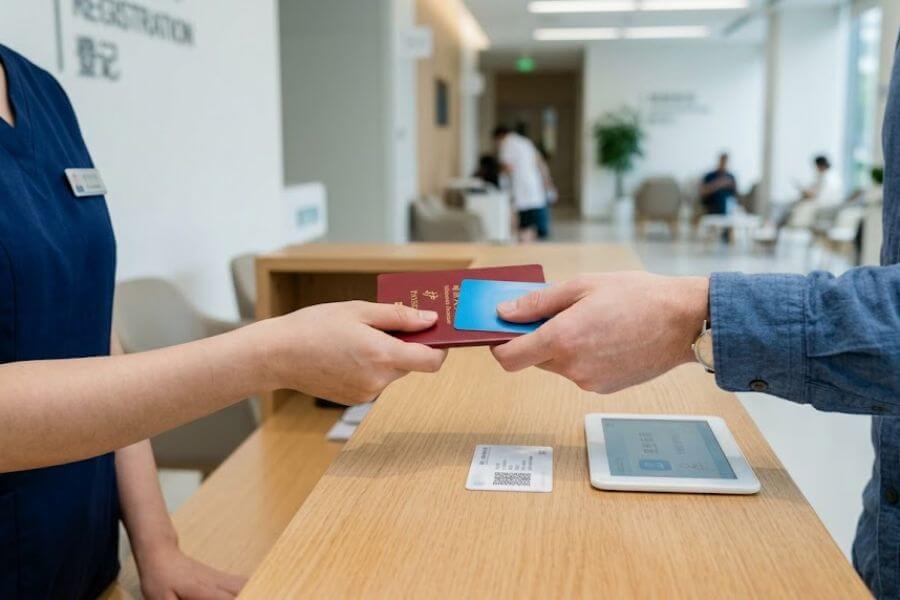
When you walk into the lobby, look for signs that point to the International Medical Center or Foreign Patient Registration. If you do not see any English signs, head to the main information desk and say “Guoji Bu” or show the words on your phone screen. You will need to present your passport. The staff will use your passport details to create a permanent medical card for you. This card holds your digital records for all future visits.
Step 2: Buying Your Consultation Ticket
You cannot see a doctor without buying a ticket first. This fee is called a registration fee or Guahao Fei. In the standard section of a public hospital, this ticket might only cost five to ten dollars. In the international department, the fee can range from fifty to over one hundred dollars. You will receive a slip of paper with a number and the room number of your doctor.
Step 3: The Waiting Area and Triage
Head to the department listed on your ticket. When you arrive, give your slip to the nurse at the desk. They will often take your temperature, check your blood pressure, and tell you to sit in the waiting area. A digital screen on the wall will display your name or number when it is your turn to enter the doctor’s office.
Step 4: The Consultation
Inside the room, you will talk to the doctor. In China, doctors see a huge number of patients every day, so they tend to be very direct and fast. Describe your symptoms clearly. If you have past medical records or a list of allergies, hand them over immediately. The doctor will type notes into their computer and print out pieces of paper for any required tests or medications.
Step 5: Paying for Additional Services
If the doctor orders a blood test, a urine test, or an ultrasound, you cannot go straight to the lab. You must take those printed orders back to a payment window or a self-service machine. Once you pay for the tests, the machine will stamp your papers. Only then can you go to the laboratory or radiology department.
Step 6: Getting Tests Done and Returning to the Doctor
Find the laboratory and hand over your paid receipts. The staff will collect your samples. They will give you a small barcode slip that tells you when your results will be ready. For basic blood work, it often takes less than an hour. You can print the results yourself from digital kiosks in the hallway by scanning your medical card. Once you have the printed results, walk right back to your doctor’s office so they can look at the data and give you a final diagnosis.
Step 7: Picking up Your Medication
The doctor will give you a final prescription printout. Take this to the payment window one last time to pay for the pills or liquids. Once paid, walk to the hospital pharmacy. Watch the electronic screens above the pharmacy windows. When your name lights up, hand over your receipt, and the pharmacist will give you your medicine with instructions on how to take it.
Understanding Medical Costs and Payments
Money works a bit differently in Chinese healthcare. Understanding how to pay will prevent any stressful moments at the checkout counter.
The Pay-As-You-Go Principle
The most important rule to remember is that Chinese public hospitals operate on a strict pay-as-you-go system. In Western countries, you might receive a bill in the mail weeks after your treatment. In China, you must pay for every single item before it happens. If you need an intravenous fluid drip, you pay first, get the receipt, pick up the fluid bags from the pharmacy yourself, and then carry them to the nursing station to get hooked up to the machine.
Accepted Forms of Payment
Cash is still accepted at almost all hospital windows, but it is no longer the favorite choice. China is a highly digital society.
- WeChat Pay and Alipay: These mobile apps are the most common ways to pay for everything in China, including medical bills. You can link your international credit card to these apps before you travel. You simply scan the hospital’s QR code or let the cashier scan your screen.
- Local Bank Cards (UnionPay): If you have a local Chinese bank account, your debit card will work perfectly.
- International Credit Cards: Major foreign cards like Visa and Mastercard are widely accepted at private international hospitals and the international wings of big public hospitals. However, they will rarely work at the regular, local payment windows of public hospitals.
Keeping Track of Receipts
Every time you pay, you will receive an official receipt called a Fapiao. This piece of paper is incredibly valuable. It features a special red ink stamp from the government. If you plan to ask your insurance company back home to give your money back, you must keep every single Fapiao. Insurance companies will not accept simple credit card statements; they require these official stamped receipts.
Health Insurance for Expats and Travelers
Medical care can become expensive quickly if you face a serious injury or need to stay in a hospital bed for several days. Having the right insurance setup is essential.
Travel Insurance versus Global Health Insurance
If you are visiting China for a short vacation or a brief business trip, standard travel insurance is usually enough. These policies cover unexpected emergencies, like a broken bone or sudden food poisoning. If you are moving to China to work or study long-term, you should invest in a global health insurance plan. These comprehensive plans cover routine dental visits, regular checkups, and chronic conditions.
Direct Billing Networks
The easiest way to use insurance in China is through a system called direct billing. This means the hospital sends the bill straight to your insurance company, so you do not have to pay anything out of your own pocket. This luxury is almost exclusive to private international hospitals and select public international departments. Before you visit a doctor, call your insurance provider or check their website to see a list of network hospitals that offer direct billing in your specific Chinese city.
The Reimbursement Process
If your hospital does not offer direct billing, you will have to pay the entire bill yourself using your card or phone app. To get your money back later, you must collect a complete package of documents before you leave the hospital building.
- The Official Stamped Receipts (Fapiao): As mentioned before, these are mandatory.
- The Medical Record Book or Report: A written summary from the doctor explaining your illness, written in English or Chinese.
- Diagnostic Reports: The actual printed pages showing your blood test numbers, X-ray descriptions, or scan results.
- The Prescription List: A detailed list showing exactly what medications were purchased and their individual costs.
Medication and Pharmacies in China
Getting your hands on the right medicine involves understanding two distinct worlds: Western medicine and Traditional Chinese Medicine.
Hospital Pharmacies versus Retail Pharmacies
In China, most patients buy their prescription medications directly from the pharmacy located inside the hospital right after their doctor appointment. However, if you need simple items like band-aids, cough drops, or basic pain relievers like ibuprofen, you can walk into any retail pharmacy on the street. Look for a sign with a green cross or the Chinese characters Yaodian.
Navigating Traditional Chinese Medicine
Do not be surprised if your doctor suggests a mix of Western pills and Traditional Chinese Medicine, which people call TCM. TCM includes herbal teas, roots, acupuncture, and cupping therapies. Many public hospitals have a completely separate TCM department. If you prefer to stick strictly to Western medicine, it is perfectly okay to politely tell your doctor, “I prefer Western medicine only, thank you.”
Bringing Personal Medications Into China
If you take regular medication for a long-term condition like asthma, high blood pressure, or diabetes, it is best to bring enough to last for your entire trip. Keep the pills in their original bottles with your name clearly printed on the label. It is also wise to carry a signed note from your home doctor explaining exactly why you need the medication. This prevents any confusion or delays when you pass through customs at the airport.
Preparing for Medical Emergencies
When a true emergency happens, every second counts. You do not want to be searching for information while you feel panicked. Preparing a few key items in advance will keep you safe.
Crucial Emergency Phone Numbers
Write these numbers down in your notebook or save them in your cell phone contacts immediately. They do not require any area codes when dialed from a local phone.
- 120: This is the main number to call for a medical ambulance across China.
- 110: This connects you directly to the local police department.
- 119: This is the emergency number for the fire department.
What to Expect from an Ambulance Ride
When you call 120, the operators will likely speak Chinese. If you do not speak the language, try to hand the phone to a local person, a hotel receptionist, or a security guard who can explain your exact location. When the ambulance arrives, the paramedics will stabilize the patient and drive them to the nearest public hospital with an open emergency room. You generally cannot choose which hospital they go to during a severe crisis. Be aware that you will be asked to pay a small fee for the ambulance ride once you arrive at the hospital building.
Creating an Emergency Medical Card
It is highly recommended to print out a small physical card that you keep inside your wallet at all times. This card should contain vital health information written in both English and Chinese characters so that emergency workers can help you even if you are unconscious.
- Your full name as it appears on your passport.
- Your blood type (very important for emergency transfusions).
- Any severe allergies to foods or specific medications like penicillin.
- Chronic health conditions like epilepsy or heart disease.
- An emergency contact phone number for a friend, coworker, or family member living inside China.
Helpful Language Phrases for Your Hospital Visit
Even if you go to an international clinic, knowing a few simple words can help you talk to taxi drivers, security guards, or nurses who are trying to guide you through the halls.
Finding Your Way Around the Building
- Yiyuan: This means hospital. Say this to any taxi driver to get to a medical center.
- Guoji Bu: This means International Department. Use this to find the English-speaking wing.
- Jizhen: This means Emergency Room. Use this word if you need immediate, urgent care.
- Guahao: This means to register or buy a consultation ticket.
- Shoufei: This is the payment window where you hand over your cash or phone app.
- Yaofang: This is the pharmacy where you collect your medications.
Describing Your Symptoms to Staff
- Wo shengbi le: I am sick.
- Wo tou teng: My head hurts.
- Wo fazhao le: I have a fever.
- Wo duzi teng: My stomach hurts.
- Wo guomin le: I am having an allergic reaction.
- Wo xuyao yisheng: I need a doctor.
- Ni hui shuo Yingyu ma?: Do you speak English?
Maternity Care and Having a Baby in China
For expat families living long-term in China, experiencing a pregnancy and giving birth in a foreign country is a major life event. The healthcare system handles maternity care with extreme efficiency, but the cultural customs might surprise you.
Choosing Between Public and Private Maternity Care
If you choose a high-end private international hospital for your pregnancy journey, the experience will feel very familiar to Western standards. You will have the same doctor for every single prenatal visit, a private delivery room with soft lighting, and options for pain management like epidurals at any time. If you choose the international wing of a major public maternity hospital, the care is medically outstanding and much cheaper, but the rules are stricter. For example, some public units may not allow husbands into the delivery room during the actual birth.
Cultural Traditions: The “Sitting Month”
After giving birth, you will encounter a deeply respected Chinese tradition called Zuo Yuezi, which translates to “sitting the month.” For thirty days after birth, new mothers are expected to rest completely, eat special warming soups, and avoid cold air, cold drinks, and heavy physical effort. Many local families stay at luxury confinement centers called Yuezi Zhongxin, where professional nurses look after the baby twenty-four hours a day while the mother rests. As a foreigner, you do not have to follow these rules, but understanding them helps you see why your Chinese friends or nurses might give you specific advice about avoiding iced water after your baby arrives.
Pediatric Care: Looking After Your Children
Nothing tests a parent’s strength quite like a child catching a sudden illness in a foreign country. Knowing how pediatric care works in China will help you react quickly and calmly.
Dedicated Children’s Hospitals
While general hospitals have pediatric sections, major cities boast massive, dedicated public facilities called Children’s Hospitals or Ertong Yiyuan. These buildings are entirely designed for kids. They possess incredible expertise because they treat thousands of children every single day. If your child develops a mysterious rash, a very high fever, or swallows a small toy, heading straight to a major children’s hospital international wing ensures they see an absolute expert.
The Pediatric Consultation Process
When you take a child to a public pediatric department, the atmosphere can be very loud and packed with anxious parents and grandparents. Doctors work at lightning speed. It is very common for Chinese pediatricians to order a routine finger-prick blood test during the very first hour of a fever. This helps them instantly see if the infection is caused by a virus or bacteria, allowing them to choose the correct medicine without guessing.
Dental Care and Seeing a Dentist
Taking care of your teeth in China is actually one of the easiest medical tasks you will encounter. The dental industry has grown beautifully over the past few decades.
Finding an English-Speaking Dentist
Unlike general medical care, private dental clinics are incredibly common and easy to find on major city streets. Many of these modern dental studios cater directly to expats. They employ dentists who studied abroad in Europe, the United States, or Australia, meaning their English is flawless. The facilities are spotless, using advanced digital X-rays and state-of-the-art tools.
Dental Costs and Insurance Coverage
Standard medical insurance policies often do not include dental care unless you purchased a specific dental add-on rider. However, basic dental procedures in China, such as routine cleanings, simple fillings, or wisdom teeth extractions, are remarkably affordable compared to Western prices. Even at high-quality private clinics, a professional cleaning might only cost between fifty and one hundred dollars. Always ask for a detailed cost estimate before the dentist begins working on a root canal or a crown.
Mental Health Services and Counseling
Moving to a new country with a different culture, language, and pace of life can sometimes cause feelings of loneliness, stress, or anxiety. Taking care of your mind is just as important as taking care of your body.
Finding English-Speaking Therapists
Mental health awareness is growing rapidly in China, but finding an English-speaking psychologist within the standard public hospital system can still be very difficult. Your best option is to look into private international clinics or specialized counseling networks. Cities like Shanghai and Beijing have dedicated expat counseling centers filled with licensed international therapists, social workers, and psychiatrists who understand the unique stresses of living far from your home country.
Telehealth and Online Therapy
If you live in a smaller Chinese city where face-to-face English therapy is unavailable, do not worry. Online counseling has become a popular and effective solution. Many expats use secure video platforms to connect with therapists located in their home countries or in major Chinese hubs. This eliminates any language barriers and allows you to receive support from the comfort of your own living room.
Telemedicine: The Future of Healthcare in China
China is a global leader in smartphone technology, and this innovation has completely transformed how people access medical advice through their phones.
What is Telemedicine?
Telemedicine allows you to talk to a certified doctor through a video call or text chat on your smartphone. You can describe your symptoms, show a rash through your camera, and receive professional advice without ever stepping foot inside a crowded hospital building.
Popular Medical Apps
Giant technology companies have created apps like Ping An Good Doctor and AliHealth. Many private international hospitals also have their own mini-programs built directly inside WeChat. Through these digital platforms, you can select an English-speaking general practitioner, book a virtual consultation, and have prescription medications delivered directly to your apartment door within a few hours. This is an incredibly convenient option for minor issues like mild skin allergies, stomach bugs, or refilling a standard daily prescription.
A Checklist for Your First Hospital Visit
Before you close your apartment door and head out to see a doctor, walk through this quick checklist to ensure you have everything required for a successful visit.
- Your physical passport: Copies or photos on your phone are usually not accepted for official registration.
- Your smartphone: Make sure it is fully charged and that your digital wallets like WeChat Pay or Alipay are working.
- Your physical health insurance card: Along with any claim forms required by your provider.
- A bottle of drinking water and snacks: Public hospital visits can sometimes take several hours.
- A notebook and pen: To write down instructions, or a translation app downloaded and ready for offline use on your phone.
Frequently Asked Questions
Can I get medical care in China without health insurance?
Yes, you can absolutely receive medical treatment without any insurance. Public hospitals are open to everyone, including foreign tourists. Because local public care is heavily subsidized by the government, basic treatments, consultations, and medications are surprisingly inexpensive. You will just need to pay for each step of your care out of your own pocket using cash or a mobile payment app before the services are performed.
Will my prescriptions from my home country work at a Chinese pharmacy?
No, retail pharmacies and hospital pharmacies in China cannot legally accept a piece of paper signed by a foreign doctor from another country. To get your prescription refilled inside China, you must visit a local doctor first. Show them your original medication bottle and explain your history. The Chinese doctor will then write a fresh, local prescription that you can use at the hospital pharmacy.
What should I do if I have a medical emergency in a small town far away from big cities?
If you are traveling in a remote or rural area and experience a crisis, call 120 immediately or have someone drive you to the nearest local public hospital. In rural areas, you will likely not find anyone who speaks English. Open your translation app immediately, use simple words to describe your pain, and contact your embassy or a friend who speaks fluent Chinese so they can act as a translator over a phone call with the emergency doctors.
Is the water in Chinese hospitals safe to drink?
You should never drink water straight from the tap in any building in China, including hospitals. However, every Chinese hospital floor is equipped with a large public water dispenser that provides hot, boiled water for free. Local people bring their own thermos bottles to drink this water or use it for tea. If you want cold water, it is best to purchase sealed plastic bottles from the small convenience stores or vending machines located inside the hospital lobby.
Do doctors in China protect my private medical records?
Yes, hospitals in China use secure digital databases to protect your personal history. When you register with your passport, your records are tied to your unique ID number. While your data is safe from the public, Chinese medical culture is very open within the hospital building itself. For instance, in a public clinic room, other patients might stand near the door or wait inside the room while the doctor talks to you. If you want complete privacy during your chat, you can politely ask the doctor to close the door or choose an international clinic where strict private consultations are the absolute rule.
Can I find Western brands of medicine in China?
Yes, major global pharmaceutical brands are widely available throughout China, especially at larger public hospitals and international clinics. However, they might be sold under different Chinese brand names. When looking for a specific medication, it is best to look up the scientific name of the active ingredient rather than the commercial brand name. Showing the chemical name to a pharmacist will help them find the exact matching product or an identical generic version.