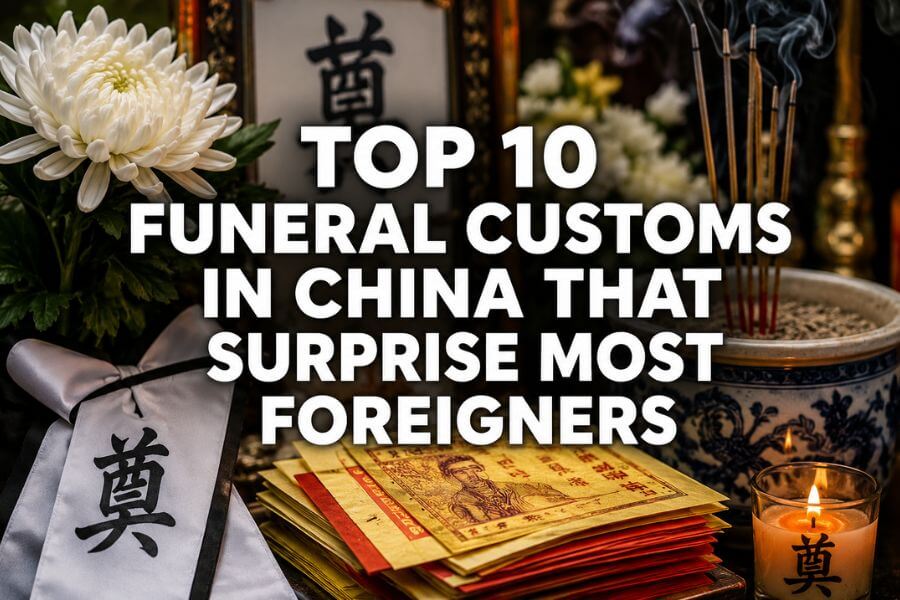
When you think about funerals, you might imagine quiet ceremonies, black clothing, flowers, and emotional speeches. In China, funerals can include all of those things, but they also come with many customs that may surprise people from other cultures. Chinese funeral traditions are deeply connected to family respect, ancestor worship, spiritual beliefs, and centuries of history.
If you ever attend a Chinese funeral or learn about Chinese culture, you may notice practices that seem unusual at first. Some traditions are meant to guide the spirit safely into the afterlife, while others protect the living from bad luck. Many customs also change depending on the region, religion, and family background.
In this guide, you will discover the top funeral customs in China that often surprise foreigners the most. You will also learn why these traditions still matter today and how they reflect Chinese values about life, death, and family.
Quick Summary Table ⚱️
| # | Funeral Custom | Why It Surprises Foreigners |
|---|---|---|
| 1 | Burning Joss Paper | Families burn fake money and paper items for the dead |
| 2 | Wearing White Instead of Black | White is the traditional mourning color |
| 3 | Loud Funeral Wailing | Crying loudly is seen as respectful |
| 4 | Avoiding Red Colors | Red is considered inappropriate during mourning |
| 5 | Funeral Processions | Large public processions are still common |
| 6 | Hiring Professional Mourners | Some families pay people to cry |
| 7 | Strict Mourning Periods | Mourning traditions can last for months or years |
| 8 | Lucky Money After Funerals | Guests may receive white envelopes with coins |
| 9 | Food Offerings for Spirits | Meals are prepared for deceased relatives |
| 10 | Feng Shui Burial Choices | Grave placement is believed to affect descendants |
How We Ranked These Customs 📋
We ranked these Chinese funeral customs based on several important factors:
- How surprising the custom feels to foreigners
- How commonly the tradition is still practiced in China
- The cultural and spiritual importance behind the custom
- How visually unique or emotional the tradition appears
- The level of misunderstanding outsiders often have
- The historical significance of the practice
- The impact the custom has on family and community life
1. Burning Joss Paper and Paper Gifts 🔥
One of the most shocking things foreigners notice at Chinese funerals is the burning of paper items. Families often burn fake paper money, called joss paper, during funeral ceremonies and ancestor rituals.
The belief behind this tradition is simple. The deceased person still needs money and goods in the afterlife. By burning paper versions of these items, the family symbolically sends them to the spirit world.
You may see paper versions of:
- Money
- Cars
- Houses
- Clothes
- Phones
- Jewelry
- Even paper servants or pets
Modern versions have become especially surprising. Some families now burn paper smartphones, luxury handbags, laptops, or sports cars.
To outsiders, this may look strange or wasteful. However, for many Chinese families, it is a meaningful act of care and respect. The family wants their loved one to live comfortably after death.
This custom is strongly connected to traditional Chinese folk religion and ancestor worship. It is still very common during funerals and festivals like the Qingming Festival and the Ghost Festival.
The smoke from the burning paper is believed to carry the gifts to the spirit world. Many people also believe failing to provide these offerings could leave ancestors unhappy or restless.
2. Wearing White Instead of Black ⚪
In most Western countries, black is the color of funerals and mourning. In traditional Chinese culture, white is the primary mourning color.
This surprises many foreigners because white is often linked with weddings, peace, or cleanliness in Western societies. In China, however, white has long been associated with death and sadness.
At a traditional Chinese funeral, you may see:
- White clothing
- White headbands
- White flowers
- White funeral decorations
Close family members sometimes wear rough white cloth made from simple materials. This shows grief and humility.
Black clothing has become more common in modern urban funerals due to Western influence, but white remains deeply important in traditional ceremonies.
Red, on the other hand, is usually avoided completely because it represents happiness, celebration, and good fortune. Wearing bright red to a funeral would be seen as highly disrespectful.
The strong symbolism of colors in Chinese culture surprises many visitors because colors often carry much deeper meaning than they do in other parts of the world.
3. Loud Crying and Public Wailing 😢
Foreigners are often surprised by how emotional and loud Chinese funerals can be. In some traditional funerals, family members openly cry, scream, or wail during the ceremony.
In many Western cultures, people try to remain calm and quiet at funerals. In Chinese tradition, openly expressing grief can actually show love and respect for the deceased.
The louder and more emotional the mourning appears, the more it may reflect the importance of the person who passed away.
Some families even hire professional mourners. These individuals are paid to cry loudly, kneel, and express grief dramatically during the ceremony.
To outsiders, this may seem fake or uncomfortable. But historically, public mourning was considered an important way to honor the dead properly.
Professional mourning was especially common in rural areas and among wealthy families in older times. While less common today, the practice still exists in certain regions.
The emotional atmosphere can feel intense for foreigners who are not used to such visible displays of sorrow. However, within the cultural context, these actions symbolize respect, loyalty, and family devotion.
4. Avoiding Red and Happy Activities 🚫
Chinese mourning traditions often come with strict rules about behavior after a death. One major rule involves avoiding anything associated with joy or celebration.
Many Chinese families avoid:
- Wearing red
- Attending weddings
- Hosting parties
- Decorating homes brightly
- Listening to festive music
The mourning period can last from several weeks to even several years in traditional families.
Foreigners are often surprised by how seriously these restrictions are taken. In some cases, families may postpone weddings or celebrations because they believe joyful events conflict with the sadness of mourning.
Red is especially avoided because it represents luck, wealth, and happiness in Chinese culture. During funerals, you will mostly see muted or pale colors.
These customs come from Confucian values about respect for parents and ancestors. Mourning is considered a serious responsibility, not simply a personal emotion.
Although younger generations may follow these rules less strictly today, many families still maintain at least some traditional mourning practices.
5. Large Funeral Processions Through the Streets 🚶
In some parts of China, funeral processions are still very public and highly visible events. These processions can include long lines of family members, musicians, banners, incense carriers, and ceremonial vehicles.
Foreign visitors are often surprised to see funeral activities taking place openly in busy public spaces.
Traditional processions may include:
- Funeral bands
- Firecrackers
- Large portrait photos of the deceased
- Paper offerings
- Chanting or prayers
- Family members walking behind the coffin
The purpose of the procession is to guide and honor the spirit during its final journey.
In rural areas, these events may involve the entire village community. Roads may even temporarily close to allow the procession to pass.
Some processions are accompanied by loud music. To foreigners, cheerful or dramatic music during a funeral may feel confusing. However, the sounds are believed to ward off evil spirits and honor the dead.
The scale and public nature of these funerals often leave a lasting impression on international visitors.
6. Hiring Professional Mourners 🎭
One of the most talked-about Chinese funeral customs is the hiring of professional mourners.
These mourners are paid to:
- Cry loudly
- Kneel beside the coffin
- Sing funeral songs
- Praise the deceased
- Create a strong emotional atmosphere
For many foreigners, this practice sounds unbelievable. Some assume it is dishonest or theatrical.
Historically, however, professional mourning reflected the social status of the family. A larger, more emotional funeral suggested the deceased was respected and important.
In some regions, families believed a quiet funeral could appear disrespectful. Hiring mourners helped ensure the ceremony showed proper grief.
This tradition has existed for centuries and was especially common in rural communities.
Modern China has seen government efforts to reduce excessive funeral spending and dramatic ceremonies, but professional mourners still appear in certain areas.
The practice reveals how differently cultures can express grief. In Chinese tradition, public emotion can symbolize honor rather than insincerity.
7. Strict Mourning Periods for Family Members ⏳
Traditional Chinese mourning customs can last far longer than many foreigners expect.
In ancient China, Confucian teachings encouraged children to mourn their parents for up to three years. Although modern families rarely follow such long periods today, mourning expectations can still be significant.
Some families continue mourning traditions for:
- 49 days
- 100 days
- One year
- Three years in symbolic form
During this time, family members may avoid celebrations, wear plain clothing, and participate in memorial rituals.
The number 49 is especially important in Buddhist traditions because it relates to beliefs about the soul’s journey after death.
Foreigners are often surprised by how structured and formal mourning can be. In some cultures, grief is considered a private emotional process. In Chinese tradition, mourning also carries social and family responsibilities.
Adult children are expected to demonstrate respect and loyalty toward deceased parents. Even modern families may continue annual ancestor ceremonies long after the funeral ends.
These long mourning customs reflect the deep importance of filial piety in Chinese culture.
8. Receiving Lucky Coins or White Envelopes 💰
At some Chinese funerals, guests receive a small white envelope containing money or a coin before leaving the ceremony.
This confuses many foreigners because money is usually given by guests, not received from the funeral host.
The envelope often contains:
- A coin
- Candy
- Small symbolic money
- A piece of string or cloth
The purpose is symbolic protection. Guests may be told to spend the coin immediately or leave it outside their home before entering.
Many people believe funerals carry yin energy, which is associated with death and spiritual imbalance. The coin or token helps protect the guest from bad luck.
White envelopes are also used because white symbolizes mourning.
Some traditions advise guests to wash their hands after returning home or avoid visiting another family immediately after attending a funeral.
To outsiders, these practices may sound superstitious, but they remain meaningful cultural traditions for many Chinese families.
9. Preparing Food Offerings for the Dead 🍚
Food plays an important role in Chinese funeral customs and ancestor worship.
Families often prepare meals for deceased relatives during funerals and memorial ceremonies. These offerings may include:
- Rice
- Meat dishes
- Tea
- Fruit
- Alcohol
- Favorite foods of the deceased
The belief is that ancestors continue to exist spiritually and can receive care from the living family members.
Foreigners are often surprised to see food placed before photos, graves, or altars.
In many homes, ancestor altars remain active long after the funeral. Families may continue offering food during holidays and important events.
Some people even speak to deceased relatives during these rituals, asking for guidance or protection.
This tradition highlights the continuing relationship between the living and the dead in Chinese culture. Ancestors are not considered completely gone. Instead, they remain spiritually connected to the family.
The strong focus on ancestor respect is one of the most important foundations of Chinese traditions.
10. Feng Shui Determines Burial Locations 🪦
Many Chinese families carefully choose burial sites using feng shui principles.
Feng shui is the traditional Chinese practice of balancing energy and harmony within spaces. According to these beliefs, the location of a grave can influence the luck and prosperity of future generations.
Families may consult feng shui masters to determine:
- The best mountain location
- Proper grave direction
- Surrounding landscape
- Water flow
- Energy balance
Foreigners are often amazed by how much importance is placed on burial placement.
Some families spend large amounts of money securing a favorable cemetery plot because they believe ancestors can bless descendants if buried properly.
Bad feng shui, on the other hand, may supposedly bring financial problems, illness, or family conflict.
Modern urbanization has changed some burial practices in China, especially with growing cremation rates, but feng shui beliefs still influence many funeral decisions.
This custom shows how closely spiritual beliefs and family destiny are connected in traditional Chinese thinking.
Conclusion 🌏
Chinese funeral customs can feel surprising, emotional, and even mysterious to many foreigners. Practices like burning paper money, hiring professional mourners, wearing white, and consulting feng shui masters may seem very different from Western funeral traditions.
However, when you look deeper, these customs all share common themes: respect for family, care for ancestors, spiritual balance, and honoring the memory of loved ones.
Chinese funeral traditions remind you that cultures around the world approach death in very different ways. What may appear unusual at first often carries deep historical and emotional meaning.
As China continues to modernize, some traditions are becoming simpler or less common. Still, many families continue practicing these customs because they provide comfort, connection, and respect for generations that came before them.
Understanding these traditions can help you appreciate not only Chinese culture but also the many ways humans honor life and death across the world.
Frequently Asked Questions ❓
Do all Chinese people follow traditional funeral customs?
No. China is extremely diverse, and funeral traditions vary depending on region, religion, ethnicity, and family beliefs. Urban families may hold modern funerals, while rural communities often maintain older customs.
Why are odd numbers sometimes avoided at Chinese funerals?
Odd and even numbers carry symbolic meaning in Chinese culture. Certain numbers are believed to attract luck or misfortune. Funeral arrangements often follow traditional beliefs about balance and spiritual harmony.
Is cremation common in China today?
Yes. Cremation has become very common, especially in cities. Government policies and limited cemetery space have increased cremation rates across many parts of China.
Why do Chinese families continue ancestor rituals after funerals?
Many families believe ancestors remain spiritually connected to the household. Continuing rituals helps maintain family bonds, show respect, and seek blessings or protection from deceased relatives.
Are children allowed to attend Chinese funerals?
This depends on the family. Some families bring children to teach respect for ancestors and family traditions, while others believe young children should avoid funerals because of spiritual concerns.