The way people pay for goods and services in China has changed rapidly over the past decade. Mobile payment apps already made cash less common, but now the country is taking another major step with the digital yuan. Officially known as the e-CNY, China’s digital yuan is a government-backed digital currency designed to work alongside physical cash and existing payment systems.
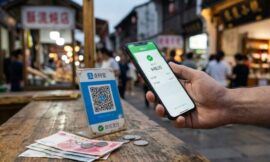
If you visit China today, you may notice people scanning QR codes almost everywhere, from luxury malls to tiny street food stalls. The digital yuan is becoming part of that experience. It is not a cryptocurrency like Bitcoin, and it is not controlled by private companies. Instead, it is issued directly by the central bank, giving the government a new way to modernize payments and financial systems.
For everyday people, the digital yuan changes how they shop, travel, send money, and even receive salaries or government support. Some people see it as a faster and more convenient payment method, while others focus on concerns about privacy and financial monitoring. Either way, the digital yuan is already influencing how millions of people handle money every day.
In this article, you will discover the top 10 ways China’s digital yuan is changing how people pay and why the world is paying close attention to this financial experiment.
Quick Summary Table 📱
| Rank | Change | Main Impact |
|---|---|---|
| 1 | Faster Everyday Payments | Quicker and smoother transactions |
| 2 | Reduced Dependence on Cash | Less need for physical money |
| 3 | More Government Control | Increased oversight of payments |
| 4 | Easier Offline Transactions | Payments possible without internet |
| 5 | Stronger Financial Inclusion | More access for rural communities |
| 6 | Integration With Public Services | Easier transport and utility payments |
| 7 | Increased Competition for Payment Apps | New pressure on Alipay and WeChat Pay |
| 8 | Faster Cross Border Experiments | Potential future international use |
| 9 | Programmable Money Features | Targeted spending and smart payments |
| 10 | Changing Consumer Habits | A shift toward fully digital lifestyles |
How We Ranked These 🧠
We ranked these changes based on several important factors that affect everyday life and the future of payments in China.
- Real impact on how people spend and transfer money
- Influence on businesses and retailers
- Convenience for everyday users
- Potential long-term effects on global finance
- Level of government involvement
- Accessibility for people in different regions
- Innovation compared to traditional payment systems
- Influence on consumer behavior and habits
1. Faster Everyday Payments ⚡
One of the biggest reasons the digital yuan is attracting attention is speed. Modern consumers expect payments to happen instantly, and the digital yuan is designed to make transactions as smooth as possible.
When you use traditional payment methods, several systems often work together behind the scenes. Banks, payment processors, and financial apps all play a role. With the digital yuan, the payment process can become simpler because the currency is issued directly by China’s central bank.
For consumers, this means shorter wait times and fewer payment delays. Buying coffee, paying for groceries, or splitting a restaurant bill can happen almost immediately. In crowded cities where millions of transactions happen daily, speed matters a lot.
The digital yuan also supports QR code payments, which are already deeply connected to daily life in China. Since people are already comfortable using mobile payment systems, the transition feels natural for many users.
Retailers benefit too. Faster payments can reduce long lines and improve customer experiences. Small businesses especially appreciate systems that are easy to use and require less complicated banking processes.
As more stores and public services adopt the digital yuan, the payment experience may become even smoother than current mobile wallet systems.
2. Reduced Dependence on Cash 💴
China has already become one of the least cash-dependent societies in the world. In many cities, you can go through an entire day without touching paper money. The digital yuan pushes this trend even further.
Physical cash comes with several challenges. It can be lost, stolen, damaged, or counterfeited. Handling cash also costs money because banks and businesses must transport, count, and store it safely.
The digital yuan offers a cleaner and more efficient alternative. People can carry digital money directly on their smartphones instead of carrying wallets full of bills and coins.
For younger generations, this feels completely normal. Many people already prefer scanning codes instead of using cash. The digital yuan simply gives them another digital payment option backed by the government itself.
This shift also changes how businesses operate. Street vendors, taxi drivers, and local shops can accept digital yuan payments without worrying about making change or handling large amounts of cash.
Even public transportation systems benefit. Commuters can quickly pay fares using digital wallets, reducing congestion at ticket machines and counters.
Over time, China may continue moving closer to a mostly cashless society where physical money becomes increasingly rare in daily life.
3. More Government Control 🏛️
While many people focus on convenience, another major change involves government oversight. Since the digital yuan is issued by the central bank, authorities can potentially monitor transactions more closely than with traditional cash.
Cash transactions are difficult to trace, but digital transactions create records. This allows governments to track money movement more efficiently.
Supporters argue that this helps reduce financial crimes such as money laundering, tax evasion, illegal gambling, and corruption. A more transparent payment system can improve law enforcement and financial regulation.
Critics, however, worry about privacy. Some people fear that digital currencies issued by governments could allow greater monitoring of individual spending habits.
For consumers, this creates a balance between convenience and personal privacy. Some users may not mind government oversight if it improves security and reduces scams. Others may feel uncomfortable knowing transactions can be monitored more closely.
Businesses are also affected. Companies may face stricter financial reporting requirements and greater transparency in transactions.
Regardless of where people stand on the debate, it is clear that the digital yuan changes the relationship between governments, money, and personal financial activity.
4. Easier Offline Transactions 📡
One interesting feature of the digital yuan is its ability to support some offline transactions. This is important because internet connections are not always reliable.
Traditional digital payment apps usually require internet access to complete transactions. If your phone loses signal or battery power, making payments can become difficult.
The digital yuan aims to reduce this problem through technology that allows limited offline payments between devices. This means two people may still complete a transaction even without a strong network connection.
This feature is especially useful in rural areas, crowded events, underground transportation systems, or emergency situations where internet service may be weak.
For travelers, offline payments can also improve convenience. Tourists sometimes struggle with unstable mobile connections or payment app restrictions. Offline digital yuan technology may help reduce these issues in the future.
Small businesses benefit as well because they can continue accepting payments even during temporary network outages.
This flexibility makes the digital yuan more practical than many people initially expected. It is designed not only for major cities but also for real-world situations where perfect internet access is not guaranteed.
5. Stronger Financial Inclusion 🌱
Not everyone has equal access to banking services. In some rural or lower-income communities, traditional banking systems can be difficult to use.
The digital yuan may help improve financial inclusion by giving more people access to digital payments without requiring complicated banking relationships.
For example, some digital yuan wallets can be opened with simplified identification requirements. This allows people who may not fully participate in traditional banking systems to still access digital financial tools.
Rural communities can benefit from easier payment systems that work through smartphones instead of physical bank branches. This is important in large countries where remote areas may have limited financial infrastructure.
Older adults may also gain easier access to digital services if the systems are designed with simple interfaces and government support programs.
Financial inclusion matters because it affects economic participation. When people can send money, receive payments, and access financial services more easily, they often gain more economic opportunities.
The government can also distribute subsidies or emergency financial support directly through digital yuan systems, reducing delays and administrative costs.
As smartphone use continues growing across China, digital currency systems may help narrow financial gaps between urban and rural populations.
6. Integration With Public Services 🚆
Another major advantage of the digital yuan is how easily it can connect with public services. China is already highly digital in areas like transportation, healthcare, and utility payments, so the digital yuan fits naturally into existing systems.
For example, commuters can use digital yuan wallets for subway rides, buses, and train tickets. This creates a more connected transportation experience where one payment system handles many daily activities.
Healthcare services may also integrate digital payments for hospital fees, prescriptions, and insurance systems. Instead of carrying cash or multiple payment cards, users can manage everything through one digital wallet.
Utility payments become easier too. Electricity bills, water fees, and internet services can all connect to digital currency systems.
For local governments, this creates opportunities to improve efficiency. Administrative costs may decrease while payment processing becomes faster and more transparent.
Tourism industries may also benefit. Visitors can use digital wallets at attractions, restaurants, hotels, and transportation systems more smoothly.
As more public systems adopt digital yuan payments, daily life may become increasingly connected through one centralized digital payment ecosystem.
7. Increased Competition for Payment Apps 📲
Before the digital yuan became widely discussed, China’s payment market was already dominated by large technology companies such as Alipay and WeChat Pay.
These platforms transformed consumer behavior by making mobile payments fast and easy. However, the arrival of the digital yuan introduces a new government-backed competitor into the market.
This competition may push private companies to improve their services even further. Consumers could benefit from better security, lower fees, and more innovation.
At the same time, some experts believe the digital yuan could reduce the dominance of major technology firms by giving the government greater influence over payment infrastructure.
Businesses may gain more payment choices instead of depending heavily on only a few large platforms.
Consumers may also enjoy better interoperability between systems. Ideally, users should be able to move money more smoothly across different apps and services.
The competition may reshape China’s financial technology industry over the next decade. Payment companies will likely continue adapting their platforms to remain attractive in a changing digital economy.
8. Faster Cross Border Experiments 🌐
Although the digital yuan mainly focuses on domestic use right now, many experts are watching its potential for international payments.
Cross-border transactions are often slow, expensive, and complicated. International transfers may involve multiple banks, exchange fees, and long waiting periods.
China has already experimented with using the digital yuan in limited international settings. These projects explore whether digital currencies can make global payments faster and cheaper.
For travelers, this could eventually mean easier overseas spending experiences. Businesses involved in international trade may also benefit from reduced transaction costs.
Some countries are paying close attention because digital currencies could influence the future balance of global financial systems.
However, international adoption faces many challenges. Different countries have different financial laws, privacy standards, and currency controls.
Even so, the digital yuan has already started global conversations about the future of central bank digital currencies and how international payments might evolve.
9. Programmable Money Features 🤖
One of the most advanced aspects of the digital yuan is the idea of programmable money. This means payments can include built-in conditions or rules.
For example, government support payments could be designed to work only for specific purposes, such as food, transportation, or healthcare.
Businesses might also create automated payment systems that release money only after certain conditions are met.
This technology could improve efficiency in supply chains, government programs, and business operations.
However, programmable money also raises concerns. Some people worry that restrictions on spending could reduce financial freedom if governments or institutions gain too much control over how money is used.
Still, supporters believe programmable features could reduce fraud, improve accountability, and create smarter financial systems.
For consumers, these features may eventually appear in loyalty programs, public subsidies, and automated financial services.
The concept sounds futuristic, but China is already exploring how programmable digital currency systems may shape the future economy.
10. Changing Consumer Habits 🛍️
Perhaps the biggest long-term effect of the digital yuan is how it changes consumer behavior.
When digital payments become faster and easier, people naturally rely less on physical money. Shopping habits evolve alongside technology.
Consumers may become more comfortable making small daily purchases digitally. Businesses increasingly design stores and services around mobile payment systems instead of cash handling.
Younger generations are growing up in environments where digital payments feel completely natural. For them, scanning a QR code is often quicker and easier than using physical cash or bank cards.
This shift influences everything from retail design to online shopping behavior. Businesses focus more on digital experiences because customer expectations continue to change.
At the same time, the digital yuan may encourage broader acceptance of government-backed digital currencies around the world.
The way people think about money itself may gradually change. Physical wallets may become less important while smartphones become central financial tools.
As China continues expanding digital yuan adoption, consumer habits will likely keep evolving toward a fully digital payment culture.
Conclusion 🚀
China’s digital yuan represents much more than a new payment method. It reflects a larger transformation in how money moves through society. From faster transactions and reduced cash use to government oversight and programmable payments, the digital yuan is reshaping everyday financial experiences in major ways.
For many people, the biggest advantages are convenience, speed, and easier access to digital services. Businesses benefit from smoother transactions and stronger integration with modern technology systems. Governments gain more efficient tools for managing financial systems and public services.
At the same time, the rise of a government-backed digital currency raises important discussions about privacy, financial freedom, and the future role of central banks in daily life.
Whether people see the digital yuan as an exciting innovation or a controversial experiment, one thing is clear. China is already influencing the future of digital payments, and the rest of the world is watching closely.
Frequently Asked Questions ❓
Is the digital yuan the same as cryptocurrency?
No. The digital yuan is very different from cryptocurrencies like Bitcoin. It is issued and controlled by China’s central bank, while cryptocurrencies are usually decentralized and not controlled by governments.
Can tourists use the digital yuan in China?
In some pilot programs and selected areas, tourists may be able to access digital yuan wallets for payments. Availability depends on local systems and government policies.
Does the digital yuan replace regular cash completely?
No. Physical cash still exists in China. The digital yuan is designed to work alongside traditional money rather than completely replacing it right away.
Why is the world paying attention to China’s digital yuan?
Many countries see it as an important experiment in central bank digital currencies. The success or failure of the digital yuan could influence how other nations develop their own digital payment systems.
Are digital yuan payments secure?
The system includes advanced security technologies and government oversight designed to reduce fraud and improve payment safety. However, like all digital systems, security and privacy concerns still exist.