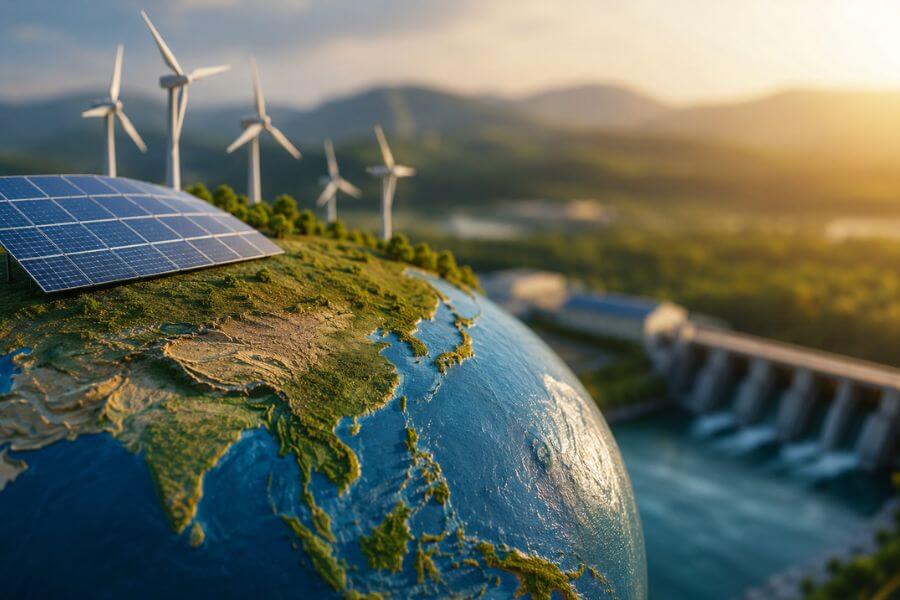
China has become one of the biggest investors in environmental and clean energy projects across the globe. While many people know China for its massive manufacturing sector and rapid economic growth, fewer realize how much money Chinese companies and financial institutions are putting into renewable energy, green transportation, reforestation, and climate-friendly infrastructure around the world.
If you are interested in sustainability, global development, or the future of clean energy, these projects offer a fascinating look at how environmental investment is changing entire regions. From giant solar farms in deserts to wind power projects along coastlines, China is helping fund initiatives that could reduce emissions and support cleaner economic growth for decades to come.
In this article, you’ll discover the 10 biggest environmental projects China is funding around the world right now and why they matter.
Quick Summary Table 📊
| Rank | Project | Location | Main Focus |
|---|---|---|---|
| 1 | Mohammed bin Rashid Al Maktoum Solar Park | UAE | Solar Energy |
| 2 | Benban Solar Park Investments | Egypt | Solar Energy |
| 3 | Jizzakh Wind Power Project | Uzbekistan | Wind Energy |
| 4 | Noor Midelt Solar Complex Support | Morocco | Solar and Energy Storage |
| 5 | Southeast Asia Green Railway Projects | Thailand and Laos | Sustainable Transportation |
| 6 | Pakistan Renewable Energy Expansion | Pakistan | Wind and Solar Energy |
| 7 | South American Solar Developments | Chile | Utility Scale Solar |
| 8 | Kazakhstan Wind Energy Projects | Kazakhstan | Wind Power |
| 9 | African Reforestation and Land Restoration Programs | Multiple Countries | Ecosystem Restoration |
| 10 | Indonesia Hydropower Modernization Projects | Indonesia | Clean Electricity Generation |
How We Ranked These Projects 🏆
We ranked these environmental projects using several important factors:
- Total investment size
- Potential reduction in carbon emissions
- Number of people impacted
- Long-term environmental benefits
- Innovation and technology used
- Regional significance
- Contribution to renewable energy goals
- Ability to support sustainable development
- International cooperation involved
- Overall global environmental impact
1. Mohammed bin Rashid Al Maktoum Solar Park in the UAE ☀️
One of the most ambitious renewable energy projects in the world, the Mohammed bin Rashid Al Maktoum Solar Park continues to receive significant international investment and participation from Chinese companies and financiers.
The project aims to become one of the largest solar power facilities ever built. Located near Dubai, it stretches across a vast desert area and uses advanced solar technologies to generate clean electricity for millions of residents.
What makes this project particularly impressive is its scale. Multiple development phases continue to expand the facility, increasing power generation capacity year after year.
For you as a consumer of energy, projects like this demonstrate how large cities can transition away from fossil fuels while maintaining reliable electricity supplies.
2. Benban Solar Park Investments in Egypt 🌞
Egypt’s Benban Solar Park is often considered one of Africa’s greatest renewable energy success stories. Chinese investment and support have helped strengthen solar development efforts throughout the region.
Located in southern Egypt, the massive facility contains hundreds of thousands of solar panels spread across the desert landscape.
The project has delivered several benefits:
- Reduced dependence on fossil fuels
- Increased energy security
- New employment opportunities
- Lower carbon emissions
- Greater renewable energy capacity
Benban serves as a model for other countries seeking large-scale solar solutions in sunny climates.
3. Jizzakh Wind Power Project in Uzbekistan 💨
Central Asia is becoming an important frontier for renewable energy, and the Jizzakh Wind Power Project stands out as one of the region’s most significant developments.
Chinese investors and energy companies have played major roles in supporting the project’s growth.
The area experiences strong and consistent wind conditions, making it ideal for utility-scale wind generation. Once fully operational, the project is expected to produce large amounts of clean electricity while reducing reliance on traditional energy sources.
For local communities, the project provides both economic opportunities and environmental benefits.
4. Noor Midelt Solar Complex Support in Morocco 🔋
Morocco has become a leader in renewable energy development, and the Noor Midelt Solar Complex is a major reason why.
The project combines solar generation with advanced energy storage technologies. This allows electricity to remain available even after sunset, solving one of the biggest challenges facing renewable energy systems.
Chinese financing and technical expertise have contributed to the growth of clean energy initiatives across the region.
The combination of solar power and storage makes this project especially important because it helps create a more reliable and stable energy grid.
5. Southeast Asia Green Railway Projects 🚆
Transportation is responsible for a significant share of global emissions. That is why environmentally focused railway projects in Southeast Asia have attracted so much attention.
Chinese-backed rail developments connecting parts of Thailand and Laos aim to encourage more efficient transportation while reducing dependence on road traffic.
These projects provide environmental advantages through:
- Reduced fuel consumption
- Lower transportation emissions
- Improved regional connectivity
- Better freight efficiency
- Reduced highway congestion
As trade and travel continue growing, sustainable transportation systems will play an increasingly important role in environmental protection.
6. Pakistan Renewable Energy Expansion ⚡
Pakistan has experienced rising electricity demand for many years. To address this challenge sustainably, several wind and solar projects supported by Chinese investment have been developed throughout the country.
These initiatives are helping diversify Pakistan’s energy mix while reducing dependence on imported fuels.
Many projects are located in regions with excellent renewable energy resources, allowing them to generate substantial amounts of clean electricity.
For local residents, this means improved energy access while also supporting national climate goals.
7. South American Solar Developments in Chile 🌄
Chile possesses some of the highest solar radiation levels on Earth, especially in the Atacama Desert region.
Chinese-backed renewable energy projects have helped transform the country into one of South America’s clean energy leaders.
The advantages of these developments include:
- Exceptional solar efficiency
- Large-scale power generation
- Reduced greenhouse gas emissions
- Increased investment in clean technology
- Greater energy independence
The success of Chile’s solar sector demonstrates how geography and international investment can work together to accelerate environmental progress.
8. Kazakhstan Wind Energy Projects 🌬️
Kazakhstan’s vast open landscapes provide ideal conditions for wind power generation.
Chinese investment has helped support multiple wind energy initiatives that contribute to the country’s long-term sustainability goals.
These projects are particularly important because Kazakhstan has historically depended heavily on fossil fuels. Expanding renewable energy infrastructure helps diversify the nation’s energy supply while reducing environmental impacts.
As more wind farms come online, the country’s clean energy capacity continues to grow.
9. African Reforestation and Land Restoration Programs 🌱
Not all environmental projects focus on energy generation. Some target ecosystem recovery and land restoration.
Chinese-backed initiatives in parts of Africa support reforestation, desertification control, and sustainable land management programs.
These efforts can create long-term environmental benefits such as:
- Improved biodiversity
- Better soil quality
- Reduced erosion
- Increased carbon absorption
- Enhanced agricultural productivity
Restoring degraded land often provides benefits that extend far beyond environmental protection by helping strengthen local economies and food security.
10. Indonesia Hydropower Modernization Projects 💧
Indonesia’s growing population requires increasing amounts of electricity. Hydropower remains one of the country’s most important renewable energy resources.
Chinese-supported modernization projects are helping improve existing facilities while supporting the development of cleaner electricity generation systems.
Modern hydropower projects often include upgraded technologies that improve efficiency and reduce environmental impacts compared to older infrastructure.
These investments contribute to Indonesia’s efforts to meet growing energy demand while limiting carbon emissions.
Conclusion 🌎
China’s environmental investments are becoming increasingly influential across multiple continents. From solar parks in the Middle East and Africa to wind farms in Central Asia and sustainable transportation systems in Southeast Asia, these projects are helping reshape how countries generate and use energy.
While opinions about international infrastructure investment often vary, there is little doubt that many of these initiatives are contributing to cleaner electricity production, improved transportation efficiency, and ecosystem restoration.
For anyone watching the future of global sustainability, these projects offer a glimpse into how international cooperation and large-scale funding can support environmental progress on a global scale.
Frequently Asked Questions ❓
Are all Chinese-funded overseas projects environmentally friendly?
No. While many recent investments focus on renewable energy and sustainability, some overseas projects still involve traditional infrastructure and industrial development. Environmental impacts vary depending on the project.
Why is China investing so heavily in renewable energy abroad?
China sees renewable energy as an important economic opportunity. These investments also strengthen international partnerships, support clean technology exports, and contribute to global climate goals.
Which regions receive the most Chinese environmental funding?
Asia, Africa, and the Middle East receive a large share of environmental investment, although significant projects can also be found in South America and other regions.
How do these projects help reduce carbon emissions?
Most renewable energy projects replace or reduce the need for electricity generated from coal, oil, or natural gas. This helps lower greenhouse gas emissions over time.
Could these projects influence global climate targets?
Yes. Large renewable energy and environmental restoration projects can contribute meaningfully to emission reduction efforts. When combined across multiple countries, their impact can be substantial in supporting international climate objectives.