Key Takeaways
If you are in a rush, here are the most critical rules to remember for your next Chinese business meeting:
- Respect the Hierarchy: Always acknowledge the most senior person first. Never contradict a leader in public.
- Master Face-Saving: Protect the reputation of your partners. Avoid direct flat-refusals and instead use soft phrasing like “we will look into it.”
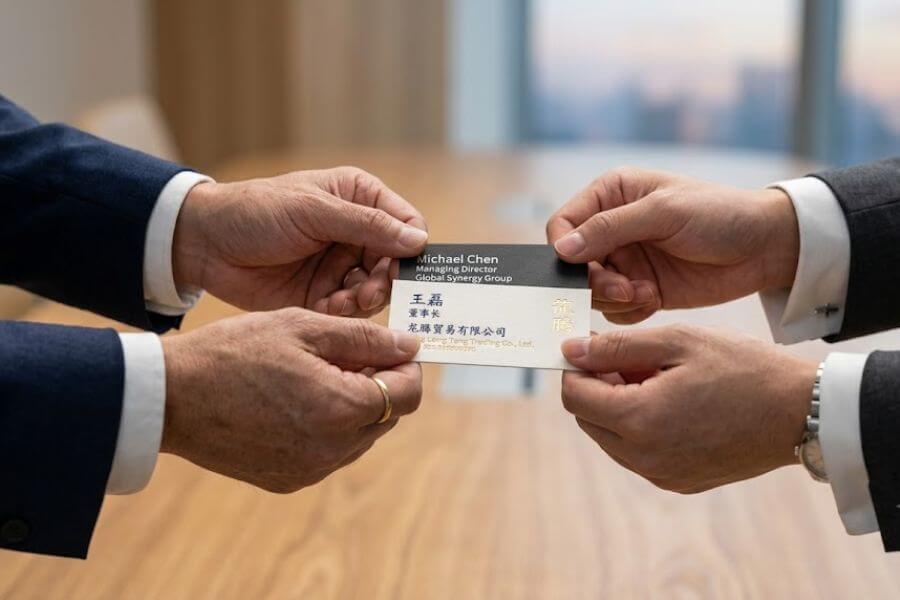
- The Business Card Ritual: Use both hands to give and receive cards. Read them carefully before putting them away.
- Build the Relationship First: Business in China relies heavily on trust, also known as guanxi. Expect multiple dinners and casual chats before signing contracts.
- Gift-Giving Rules: Avoid sharp objects, clocks, or white items. Always offer and accept gifts with both hands.
Imagine walking into a sleek boardroom in Shanghai. You have your pitch ready, your slide deck looks amazing, and your suit is perfectly pressed. You stretch out your hand for a firm, confident handshake, just like you practiced. But instead of an enthusiastic grip, you get a soft, brief touch, and the room falls into a heavy, quiet pause.
Did you just make a mistake?
In the Western business world, a strong handshake shows power and confidence. In China, it can sometimes feel aggressive. Doing business in China is not just about numbers, prices, or contracts. It is about reading the unspoken rules of the room. When you master these cultural habits, you do not just close deals; you earn deep respect. Let us dive into the essential strategies you need to navigate Chinese business culture with confidence.
The Foundation of Chinese Business: Understanding Guanxi
To understand how business works in China, you must learn one specific word: guanxi. Pronounced “gwan-shee,” this word translates roughly to networks or relationships. However, it means much more than just networking in the Western sense. It represents a deep, long-term web of mutual trust, shared favors, and personal obligation.
In many Western countries, business is transactional. You find a supplier, negotiate a fair price, sign a contract, and start working. The relationship develops later. In China, this order is completely reversed. The relationship comes first. If a Chinese business owner does not feel a personal connection with you, the contract will rarely happen, no matter how great your price is.
How to Build Authentic Connections
Building guanxi takes time, patience, and genuine effort. You cannot rush it over a single phone call or email.
- Show Up in Person: Sending emails is a slow way to build trust. Flying across the world to sit down at a dinner table shows that you value the relationship more than a quick profit.
- Find a Trusted Middleman: It is incredibly difficult to cold-call your way into Chinese business circles. The best strategy is to find a mutual friend or business partner to introduce you. This shared connection transfers a baseline level of trust to you right from the start.
- Follow Up Regularly: Do not just contact your Chinese partners when you need something. Send friendly messages during major holidays, ask about their family, and stay in touch when business is quiet.
The Give-and-Take Balance
Guanxi operates like an invisible bank account of favors. When someone does you a favor, you owe them one in return. If you refuse to help a partner when they ask, you break the chain of trust. This mutual dependence creates a strong safety net for long-term business partnerships.
Saving Face: The Invisible Currency
The concept of face, known as mianzi, is the absolute core of social and professional life in China. Face represents a person’s reputation, dignity, pride, and social standing. In Chinese culture, face is something you can give, earn, lose, or save.
Understanding face will completely change how you communicate. In the West, professionals often value blunt honesty and direct feedback. In China, protecting someone’s face is far more important than pointing out a mistake. If you cause a business partner to lose face, even by accident, you might destroy your partnership permanently.
How People Lose Face
Losing face happens when someone feels publicly humiliated, criticized, or rejected. Here are common ways foreigners accidentally cause others to lose face:
- Public Correction: Pointing out a mistake made by a colleague or partner in front of others is a major error. Even if your data is correct, the public call-out causes deep embarrassment.
- Direct Refusals: Saying a flat, hard “no” to an invitation or a business proposal can feel like a slap in the face.
- Inappropriate Humor: Making jokes at someone else’s expense, even in a playful way, does not translate well and can hurt pride.
How to Give and Save Face
Giving face means showing high respect and boosting someone’s status in front of their peers. You can give face by praising a team member’s hard work in front of their boss, highlighting a partner’s wisdom during a meeting, or treating your guests to an upscale dinner.
If you must handle a mistake, save their face by discussing the issue in a private, one-on-one setting. Use soft, indirect language. Instead of saying, “Your report has an error on page five,” you could say, “Let us look at the numbers on page five together to make sure we both understand the data.” This approach allows the other person to fix the issue without feeling exposed.
Decoding Communication Styles: The Art of Indirectness
Communication in Western countries is usually low-context. This means people say exactly what they mean, and they expect you to take their words literally. China has a high-context communication culture. The true meaning of a conversation is often hidden beneath the surface, inside the context, the body language, and the specific words left unsaid.
Chinese professionals rarely express disagreement directly. They prefer to maintain harmony and protect face at all costs. To succeed, you must learn to read between the lines and listen for the hidden meanings in polite responses.
Translating Common Polite Phrases
When you ask a question or make a proposal in a Chinese business meeting, you might receive answers that sound positive but actually mean something else. Here is a quick guide to understanding what your partners are really saying:
| What They Say | What It Usually Means |
| “The plan looks interesting.” | They have serious doubts but do not want to offend you. |
| “We will think about it further.” | The answer is likely no, or they need approval from a higher boss. |
| “This might be a bit difficult.” | It is impossible, or they are highly uncomfortable with the idea. |
| “We will do our best.” | Do not count on it; they are facing major roadblocks. |
Navigating the Non-Verbal Clues
Since words can be ambiguous, you must pay close attention to physical signals. Silence is a powerful communication tool in China. In the West, a long silence in a meeting feels awkward, and people rush to fill it. In China, silence often means people are thinking carefully, showing respect, or processing a difficult point. Never interrupt a period of silence.
Pay attention to posture and eye contact as well. Prolonged, intense eye contact can feel confrontational or overly aggressive. A gentle lowering of the gaze during serious discussions is a sign of respect and focused listening, not a sign of dishonesty.
Master the First Impression: Greeting Etiquette
The first few minutes of your first meeting set the tone for the entire relationship. Chinese business greetings are structured around respect, age, and professional hierarchy. Following the correct steps shows that you respect their culture and take your business seriously.
The Physical Greeting
While the traditional bow is less common in modern corporate settings, it has been replaced by a specific type of handshake. Expect a handshake that is noticeably softer and lasts longer than a typical Western grip.
When you greet someone, a slight nod of the head or a gentle inclination of the shoulders is a fantastic way to show respect. Avoid large physical gestures like patting someone on the back, hugging, or putting your arm around a partner’s shoulder. Personal space is highly valued in professional environments.
The Order of Introductions
Hierarchy determines the order of everything in a Chinese meeting. When you enter a room, the most senior person on your team should enter first. The Chinese hosts will be lined up in order of importance as well.
Always greet the highest-ranking person first. If you are unsure who holds the top position, look at how the hosts interact with each other. The person who speaks first, sits at the center, or receives the most attention from the team is the leader. Greet them by their official title and surname, such as Director Wang or Manager Zhang, rather than using their first name.
The Business Card Ritual: A Step-by-Step Guide
In the West, a business card is just a scrap of paper with contact details. People toss them into pockets, scribble notes on them, or slide them across tables carelessly. In China, a business card represents the person who hands it to you. It is treated as an extension of their professional identity and honor.
Exchanging business cards, known as mingpian, is a formal ritual that requires your full attention. Hurrying through this process shows a lack of respect for the individual and their company.
How to Give Your Card
Make sure you have your cards ready before the meeting starts. Keep them in a clean, professional case rather than pulling them out of a messy wallet or pants pocket.
1. Hold the card correctly: Use both hands.
Hold your card with both hands at the top corners. Make sure the text is facing the recipient so they can read it right side up.
2. Present with a slight bow: Show humility.
Extend your arms gently toward the recipient while offering a slight nod or mini-bow.
3. State your name and title: Clear introduction.
As you hand the card over, say your name and your company name clearly.
How to Receive a Card
When someone offers you their business card, you must follow an equally respectful process.
1. Accept with both hands: Show high respect.
Reach out and take the card using both of your hands. Never grab it with one hand.
2. Study the card closely: Do not look away immediately.
Spend at least ten to fifteen seconds reading the card carefully. Look at their title, their office location, and their name. Even if you cannot read the Chinese side, look at the English side with focus.
3. Place it on the table: Keep it visible.
Sit down and place the card neatly on the conference table in front of you. Leave it there for the entire duration of the meeting. This helps you remember names and titles while showing that you value their presence.
Critical Warning: Never write notes on a business card in front of the owner. Never fold, bend, or fiddle with the card during the meeting. When the meeting ends, place the card carefully inside your card case. Slipping it into your back pants pocket is considered a direct insult.
Meeting Room Dynamics: Structure and Strategy
When you enter a Chinese meeting room, the seating arrangements, the talking points, and the decision-making process follow strict guidelines. Meetings are rarely open forums for spontaneous brainstorming. Instead, they are highly orchestrated events where pre-arranged ideas are formally presented and confirmed.
Seating Arrangements by Rank
Do not just sit down in the first open chair you see. The host or an assistant will usually guide you to your assigned seat. The seating plan is a visual map of the power dynamics in the room.
The highest-ranking member of the hosting team will sit in the center of the main table, usually facing the door or a window with the best view. The leader of your visiting delegation should sit directly opposite the host leader.
The remaining team members will sit next to their respective leaders in descending order of rank. Translators and assistants sit at the outer edges of the table or directly behind the main speakers.
The Flow of the Discussion
The senior leader will open the meeting with a formal welcoming speech. Your team leader should follow with an equally polite response thanking the hosts for their hospitality.
Let the hosts direct the conversation. Do not interrupt anyone while they are speaking, even if you disagree with their points. Interrupting breaks the harmony of the room and causes the speaker to lose face.
Keep your presentations clear, professional, and well-paced. If you are using a translator, speak in short, complete sentences and pause frequently to allow for accurate translation.
The Reality of Decision-Making
Do not expect to sign a contract or get a final handshake agreement at the end of a single meeting. In Chinese business culture, decisions are made through a top-down consensus process behind closed doors.
The people sitting across from you in the boardroom are often information gatherers. They will take your data, evaluate your attitude, and report back to senior executives who may not even be present in the meeting. Patience is your biggest asset here. Trying to force a quick decision will make you look desperate and untrustworthy.
The Art of the Business Banquet: Dining for Deals
A massive portion of Chinese business does not happen in a boardroom. It happens around a large, round dining table filled with dozens of exotic dishes. The business banquet is a vital testing ground where your hosts evaluate your character, your patience, and your suitability as a long-term partner.
At a banquet, your hosts want to see the real you. They want to see how you behave when you relax, how you treat service staff, and how you handle alcohol. Surviving and thriving at a Chinese dinner requires a solid grasp of dining table etiquette.
Seating and Starting the Meal
Just like the meeting room, the dining table has a strict seating chart. The guest of honor is always seated to the right of the host. The seat facing the main entrance of the room is reserved for the highest-ranking person.
Do not touch your chopsticks, your drink, or your food until the host takes the first bite or makes the opening toast. When food arrives on the revolving glass tray, also known as a Lazy Susan, let the senior guests serve themselves first.
Chopstick Etiquette Rules
Using chopsticks correctly shows effort and cultural awareness. Even if you struggle to pick up slippery items, trying your best is highly appreciated. However, there are a few absolute taboos you must avoid:
- The Incense Trap: Never stick your chopsticks vertically into a bowl of rice. This visual looks exactly like the burning incense sticks used at Chinese funerals and is considered a sign of terrible luck.
- The Pointing Finger: Do not hold your chopsticks while gesturing or pointing at someone across the table.
- The Drumstick Effect: Do not drum on the side of your bowls or plates with your chopsticks. This is associated with beggars asking for food.
- The Food Scavenger: Do not use your chopsticks to dig through a communal dish looking for the best pieces of meat. Take from the top of the dish closest to you.
Handling Exotic Foods
Chinese hosts take immense pride in their local cuisine. They may order rare, expensive, or unusual dishes to honor you, such as sea cucumber, jellyfish, or specialized meats.
If you are served something you find unappealing, do not make a dramatic face or say how strange it looks. Try a small bite if you can. If you absolutely cannot eat it due to allergies or restrictions, leave it politely on your small plate. Your hosts will rarely force you to eat something if you handle it quietly without drawing negative attention to the dish.
Toasting and Alcohol Etiquette
Alcohol plays a massive role in Chinese business banquets, particularly a strong, clear sorghum grain liquor called baijiu. Pronounced “bye-joo,” this spirit has a very high alcohol content and a distinct, fiery taste. Toasting with baijiu is a traditional way to cement relationships and show sincerity.
The Structure of a Toast
Toasts are a formal affair. The host will make the first toast to welcome the group. Throughout the evening, individual guests will move around the table to offer personal toasts to others.
When someone toasts you, stand up, hold your glass with both hands, and look them in the eye. If someone says ganbei, which literally translates to “dry glass,” they are inviting you to down your drink in one shot. If you do not want to drink the entire glass, you can smile, say suibin, which means “as you please,” and take a polite sip instead.
The Glass Position Trick
When you clink glasses with a Chinese business partner, pay close attention to the physical height of your glass. Touching the rim of your glass lower than the rim of your partner’s glass is a sign of deep humility and respect.
If you are toasting a senior executive or an elder, always make sure the top of your glass hits below theirs. If both parties are trying to show humility, you might see a playful battle where both people keep lowering their glasses further and further toward the table.
[Proper Toasting Etiquette]
Your Glass Rim ---->   _
                      |_|
Senior Partner's ----> _  (Positioned Higher)
                      |_|
What if You Do Not Drink Alcohol?
If you cannot drink alcohol for health, religious, or personal reasons, you must establish this boundary at the very beginning of the dinner before the first bottle opens.
Do not wait until a toast is poured to refuse it. State clearly and politely that you do not drink alcohol. You can ask the server to fill your toast glass with water, juice, or tea instead. As long as you participate in the active toasting process with enthusiasm using your non-alcoholic beverage, your hosts will respect your choice.
The Dos and Don’ts of Gift-Giving
Gift-giving is an established custom used to express gratitude, show goodwill, and mark the beginning of a business partnership. However, because the Chinese language has many words that sound identical but have completely different meanings, certain gifts carry accidental negative messages. Choosing the wrong item can turn a generous gesture into an awkward misunderstanding.
Gifts to Avoid at All Costs
Many gift taboos are rooted in homophones, which are words that sound the same but are written with different characters.
- Clocks: Giving a clock is a major taboo. The Chinese phrase for “giving a clock” sounds exactly like the phrase for “attending a funeral ritual.” It implies that you are counting down the days of the recipient’s life. Watches, however, are perfectly fine and are viewed as luxury items.
- Green Hats: In Chinese culture, saying a man wears a green hat means his partner is unfaithful to him. Avoid green hats, green baseball caps, or green winter beanies.
- Sharp Objects: Scissors, knives, or letter openers symbolize the cutting of a relationship. Giving these items suggests you want to sever your business ties.
- Pears and Umbrellas: The Chinese word for pear sounds like the word for parting or separation. The word for umbrella sounds like the word for breaking up or scattering.
- White or Black Items: White and black are traditional colors associated with mourning, funerals, and sadness. Stick to bright, festive colors like red or gold for wrapping paper and gift boxes.
Great Choices for Business Gifts
The best gifts are high-quality items that represent your home country or city. They should feel unique and thoughtful without looking like a cheap souvenir.
- Local Specialties: High-end food items, local honey, maple syrup, or specialty snacks unique to your home region make wonderful gifts.
- Premium Writing Instruments: A beautiful, heavy pen from a respected brand is a safe, professional gift for executives.
- Cultural Art Books: Coffee-table books featuring photography of your home country’s landscapes or architecture are highly appreciated.
- Top-Shelf Alcohol: If you know your hosts enjoy drinking, a premium bottle of whiskey or wine from your home region is an excellent choice.
The Gift Protocol
Always present and receive gifts using both hands. Expect your Chinese partner to refuse your gift at least two or three times before finally accepting it. This is a traditional display of modesty and politeness designed to show they are not greedy. Be persistent, smile, and gently offer the gift again until they accept.
Do not open a gift immediately after receiving it unless your host explicitly asks you to do so. Opening a gift right away can look greedy or demanding. Instead, thank them warmly with both hands on the package, express your appreciation, and set it aside to open later in private.
Dress Code: Professionalism and Modesty
The way you dress for a Chinese business meeting shows your level of professionalism and your respect for the hosts. The general rule for corporate dressing in China is simple: conservative, modest, and high-quality.
While Western tech startups have popularized super-casual clothing like t-shirts and hoodies, the Chinese corporate landscape remains largely formal, especially during initial meetings and interactions with state-owned enterprises or traditional industries.
Guidelines for Men
Men should stick to classic corporate attire, particularly for first impressions.
- Suits: Dark, neutral colors like navy blue, charcoal gray, or black are the standard choice. Avoid bright, loud patterns or neon colors.
- Shirts: Clean, well-pressed white or light-blue dress shirts work best.
- Accessories: A conservative tie and polished leather dress shoes complete the look. Keep jewelry minimal.
Guidelines for Women
Women’s business wear should focus on modesty and classic cuts.
- Outfits: Business suits with trousers, elegant pantsuits, or conservative dresses with high necklines and knee-length hemlines are appropriate.
- Styles to Avoid: Low-cut tops, short skirts, spaghetti straps, and overly tight clothing should be avoided in professional settings.
- Footwear and Makeup: Flat shoes or moderate heels are preferred over very high stiletto heels. Keep makeup subtle, natural, and clean.
The Role of Time, Calendars, and Holidays
Your understanding of time can make or break your business schedule in China. Punctuality is a sign of respect and discipline. Arriving late to a meeting is considered lazy and highly disrespectful to your hosts.
Scheduling with Punctuality
Plan to arrive at least ten to fifteen minutes before your scheduled meeting time. If you run into unexpected traffic or delays, notify your contact immediately with a clear explanation and an updated arrival time. This gesture shows that you value their schedule.
When planning your business trips, avoid scheduling critical meetings during major Chinese national holidays. The entire country shuts down during these periods, and factories, offices, and government bureaus close completely for days or weeks.
Major Holidays to Track
| Holiday Name | Timing | Business Impact |
| Chinese New Year | Late Jan to mid-Feb | Complete shutdown for one to two weeks; major travel delays. |
| Labor Day | Early May | Three to five days of public holiday; limited corporate activity. |
| Golden Week | Early Oct | Full week of national holiday celebrating National Day; offices closed. |
Pro Tip: Keep in mind that the Chinese New Year follows the lunar calendar, meaning the exact dates change every year. Always check the calendar months in advance before booking flights or setting production deadlines with Chinese manufacturers.
Negotiating the Deal: Patience and Strategy
Negotiations in China can feel long, intense, and emotionally draining for Westerners used to quick deals. A Chinese negotiation team will look at every detail, ask for deep concessions, and use time to test your limits. Understanding their tactics will help you stay calm and maintain a strong position.
The Team Approach
Chinese negotiation teams are often large. They will include technical experts, financial managers, legal advisors, and high-level observers.
You may notice that one person does most of the talking while others sit silently taking meticulous notes. The person doing the talking is often not the actual decision-maker. They are testing your arguments and gathering facts to pass up the corporate ladder.
Handling the Concession Game
Expect your partners to ask for significant price discounts or major contract concessions early in the process. This request is an expected part of the negotiation dance. If you accept their first offer immediately, they may feel they started too low and become suspicious of your product’s true value.
Build room into your initial pricing structure for reasonable concessions. When you give up something, always ask for something of equal value in return. This shows that you are a strong, capable business person who respects their own company’s worth.
The True Meaning of a Contract
In Western business, a signed contract is the final, definitive end of the negotiation process. It is a rigid legal document that sets strict rules for the partnership.
In China, a contract is often viewed as a snapshot of an agreement at a specific point in time. It marks the formal beginning of a long-term working relationship, not the final word. If market conditions change, raw material costs rise, or unexpected events happen, your Chinese partners may expect you to renegotiate the terms of the contract based on your shared relationship. Instead of relying solely on legal threats, lean into your built relationship to solve disputes smoothly.
Frequently Asked Questions
What should I do if I accidentally drop a business card or make a cultural mistake during a meeting?
Do not panic or overreact. If you drop a card or use an incorrect title, pick it up quickly with both hands, apologize briefly with a warm smile, and move forward. Chinese business professionals understand that foreign visitors are learning their customs. As long as your overall attitude shows humility, respect, and sincerity, minor slip-ups will be forgiven easily.
Is it acceptable to use smartphone apps like WeChat for formal business communication in China?
WeChat is the absolute hub of communication in China, both for personal life and professional business. It is incredibly common for executives to exchange WeChat contacts during their first meeting instead of or in addition to business cards. It is perfectly acceptable to send project updates, schedule meetings, and share documents through the app. However, keep your tone professional and respectful, avoiding overly casual slang or emojis until the relationship is deeply established.
Why do my Chinese partners want to take me out to karaoke after dinner?
Karaoke lounges, known as KTV, are common venues for post-dinner business entertainment. Singing together is an extension of the relationship-building process. It is designed to break down formal walls, build personal comfort, and show that you do not take yourself too proud or seriously. You do not need to be a talented singer to participate. Choosing a well-known, simple song and joining in the fun with enthusiasm will earn you immense respect from your hosts.
How should I handle dietary restrictions or allergies during a formal business banquet?
The best approach is to notify your host or their assistant about any severe medical allergies or strict religious dietary restrictions a few days before the dinner. This advance notice allows them to select a restaurant or order specific dishes that accommodate your needs without making a scene during the actual meal. If you have a mild personal preference or aversion, simply leave those specific items on your plate quietly without drawing focus to them.
Should I bring an independent translator to my business meetings, or can I rely on the host’s translator?
Bringing your own professional translator is highly recommended for critical business negotiations. While your hosts will often provide a translator, that individual’s primary loyalty lies with their own employer. Having your own translator ensures that you capture the subtle nuances, background whispers, and precise meanings of the discussion. It also shows your hosts that you are fully prepared and serious about the technical details of the deal.