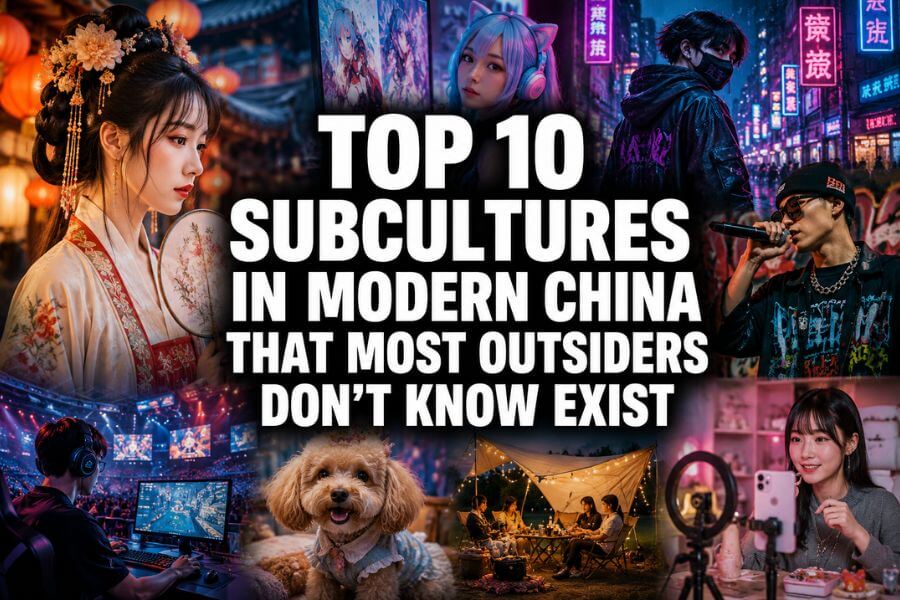
When most people think about modern China, they picture crowded megacities, fast trains, ancient temples, or massive tech companies. But beneath the surface of daily life, China is also home to dozens of unique subcultures that many outsiders rarely hear about.
These groups are shaped by music, fashion, gaming, internet culture, lifestyle choices, and changing social values. Some are deeply connected to youth culture, while others grew from online communities or underground creative scenes. Together, they show a side of modern China that is far more diverse and surprising than many people expect.
In this article, you will explore ten fascinating subcultures thriving across China today. Some are loud and rebellious. Others are quiet and deeply personal. All of them reveal how younger generations are redefining identity, creativity, and social life in one of the world’s most influential countries.
Quick Summary Table 📊
| Rank | Subculture | Main Focus | Most Common Age Group | Why It Stands Out |
|---|---|---|---|---|
| 1 | Hanfu Revival | Traditional Chinese clothing | Teens to 30s | Blends history with modern fashion |
| 2 | ACG Community | Anime, comics, and gaming | Teens and young adults | Huge online and convention culture |
| 3 | Tang Ping | “Lying flat” lifestyle | Millennials and Gen Z | Rejects extreme work pressure |
| 4 | Cyberpunk Street Fashion | Futuristic urban fashion | Young creatives | Inspired by neon city life |
| 5 | E-Sports Fan Culture | Competitive gaming | Teens to 30s | Massive stadium events and fandoms |
| 6 | Guochao | Chinese trend culture | Young consumers | Mixes patriotism with style |
| 7 | Live Streaming Communities | Online personalities and fan groups | All ages | Built billion-dollar digital economies |
| 8 | Underground Hip-Hop Scene | Rap music and street culture | Young adults | Grew despite controversy |
| 9 | Pet Humanization Culture | Luxury lifestyles for pets | Urban professionals | Pets treated like family members |
| 10 | Urban Camping Culture | Outdoor escape lifestyle | Young professionals | Nature-focused social trend |
How We Ranked These Subcultures 🧭
We ranked these modern Chinese subcultures based on several important factors:
- Cultural influence inside China
- Popularity among younger generations
- Uniqueness compared to Western subcultures
- Social and economic impact
- Visibility on Chinese social media
- Growth over the past decade
- Influence on fashion, entertainment, and lifestyle
- Ability to reflect changing Chinese society
1. Hanfu Revival Culture 👘
One of the most fascinating modern Chinese subcultures is the Hanfu revival movement. Hanfu refers to traditional clothing worn by Han Chinese people before the Qing Dynasty. For years, these outfits were mostly seen in historical dramas or museums. Today, they are becoming part of daily life again.
Young people across China wear Hanfu in parks, cafes, shopping districts, and cultural festivals. Some people wear it casually, while others invest heavily in historically accurate designs. Entire online communities discuss fabric styles, historical details, hairstyles, and ancient etiquette.
What makes this movement especially interesting is that it combines patriotism, fashion, and cultural pride. Many young Chinese people feel disconnected from older traditions because of rapid modernization. Hanfu gives them a way to reconnect with history while still expressing individuality.
Social media platforms helped this trend explode. Beautiful photography, short videos, and makeup tutorials turned Hanfu into both a lifestyle and a visual art form. Some influencers even became celebrities because of their traditional fashion content.
The Hanfu movement also boosted local businesses. Designers, photographers, makeup artists, and event organizers now make money from this growing market. Entire shopping streets and festivals are dedicated to traditional Chinese aesthetics.
To outsiders, Hanfu may simply look like historical cosplay. But for many participants, it represents identity, cultural confidence, and pride in Chinese heritage.
2. The ACG Community 🎮
ACG stands for anime, comics, and games. While many people assume Japanese pop culture dominates this space, China has built one of the largest ACG communities in the world.
Chinese ACG fans gather online through forums, livestreams, gaming apps, and conventions. Major cities host giant cosplay events where thousands of people dress as fictional characters from anime, games, and web novels.
This subculture is especially important because it gives young people a sense of belonging. Academic pressure and workplace stress can be intense in China, so many fans see ACG communities as emotional escape spaces.
Chinese companies also began creating their own animated series, games, and virtual idols. Instead of simply copying foreign content, China developed a massive domestic entertainment industry around ACG culture.
Cosplay became particularly influential. Some fans spend months crafting costumes with incredible detail. Others build careers through cosplay photography, streaming, or event hosting.
Virtual streamers are another huge part of this world. Digital personalities powered by animation technology now attract millions of viewers. Fans donate money, buy merchandise, and follow their favorite virtual stars daily.
The ACG scene shows how digital entertainment has become deeply connected to identity and social life in modern China.
3. Tang Ping or “Lying Flat” Movement 🛋️
The Tang Ping movement shocked many people because it openly challenged China’s intense work culture. “Tang Ping” translates to “lying flat,” and it describes people who choose to step away from extreme competition and pressure.
Many young Chinese workers feel exhausted by long hours, rising living costs, and impossible expectations. Instead of chasing wealth or status, Tang Ping supporters choose simpler lifestyles with lower stress.
Some avoid overtime jobs. Others delay marriage, home buying, or having children. Many openly discuss burnout and emotional fatigue online.
This movement became controversial because it pushed against traditional ideas of ambition and hard work. Yet it resonated strongly with younger generations who felt trapped by modern economic pressures.
Tang Ping is not just laziness, as critics sometimes claim. For many participants, it is about protecting mental health and finding personal freedom.
The rise of this subculture reflects major changes happening inside Chinese society. Younger people increasingly question whether nonstop competition truly leads to happiness.
Even though discussions around Tang Ping sometimes face restrictions online, the idea continues influencing conversations about work-life balance in China.
4. Cyberpunk Street Fashion Culture 🌃
China’s massive neon cities helped create a cyberpunk-inspired street fashion movement unlike anything else in the world.
Cities like Shanghai, Chongqing, and Shenzhen already look futuristic at night. Young fashion lovers turned that atmosphere into a lifestyle.
This subculture mixes dark clothing, glowing accessories, futuristic makeup, dyed hair, and tech-inspired fashion. Some outfits resemble scenes from science fiction movies or video games.
Photography plays a huge role in this movement. Influencers take dramatic night photos under neon signs, crowded overpasses, and high-rise buildings. The city itself becomes part of the fashion statement.
Unlike traditional luxury fashion, cyberpunk style often celebrates urban chaos, technology, and individuality. Many followers see it as a reaction to modern city life and digital overload.
Music also shapes the culture. Electronic music, experimental art, and underground clubs are closely connected to the aesthetic.
What makes Chinese cyberpunk culture unique is how naturally it fits China’s urban environment. The country’s rapidly changing skyline already feels futuristic, making the style seem surprisingly authentic rather than fictional.
5. E-Sports Fan Culture 🏆
China has one of the biggest e-sports industries on Earth. Competitive gaming is not just entertainment there. For many young people, it is a serious passion and social identity.
Professional gamers have celebrity status. Large tournaments fill stadiums with screaming fans. Millions more watch online livestreams for hours every day.
Games like multiplayer battle arenas and tactical shooters helped create giant fan communities. Teams sell merchandise, players sign sponsorship deals, and fans organize support groups much like traditional sports supporters.
The emotional intensity is enormous. Fans celebrate victories, argue about strategy, and follow players’ personal lives closely.
China’s e-sports scene also changed public attitudes toward gaming. Parents once saw gaming only as a distraction. Today, professional gaming is recognized as a real industry with career opportunities.
Streaming platforms became central to this culture. Popular streamers can earn huge incomes through donations, advertisements, and fan subscriptions.
This subculture highlights how digital entertainment became deeply integrated into Chinese youth culture and modern business.
6. Guochao or “National Trend” Culture 🧨
Guochao means “national trend,” and it represents the growing popularity of Chinese-inspired fashion, design, and branding.
For years, many Chinese consumers viewed foreign brands as more fashionable or prestigious. Guochao changed that mindset. Young people increasingly support local brands that celebrate Chinese culture in modern ways.
You can see Guochao everywhere now. Sneakers with traditional dragon designs, modern streetwear using Chinese calligraphy, and cosmetics inspired by ancient art are all part of the movement.
This subculture combines nationalism, creativity, and consumer identity. Many young buyers feel proud supporting brands that reflect Chinese culture rather than Western trends.
Social media played a huge role in spreading Guochao. Influencers showcase local brands through fashion videos, photography, and lifestyle content.
The movement also helped smaller Chinese companies compete against global brands. Instead of copying foreign styles, they built unique identities centered around Chinese heritage.
Guochao reflects a broader cultural shift in modern China. Younger generations increasingly see Chinese culture as stylish, modern, and globally influential.
7. Live Streaming Communities 📱
China’s livestreaming world is far bigger and more advanced than many outsiders realize. Streaming is not just about gaming there. People livestream cooking, shopping, music, daily life, studying, farming, and almost everything else imaginable.
Entire fan communities form around popular streamers. Viewers send virtual gifts, interact in live chats, and support creators financially.
Shopping livestreams became especially powerful. Influencers can sell thousands of products within minutes during live broadcasts. Some hosts became national celebrities because of their sales power.
But livestream culture is not only commercial. Many people watch streams for companionship and social connection. Lonely workers, students, and elderly viewers often spend hours interacting with online personalities.
This created entirely new digital relationships between creators and audiences. Fans feel emotionally connected to streamers they watch daily.
Chinese livestreaming culture is also extremely competitive. New creators constantly appear, trying to build loyal audiences in crowded online spaces.
The industry became so influential that livestreaming now shapes trends in fashion, food, entertainment, and shopping across China.
8. Underground Hip-Hop Culture 🎤
Chinese hip-hop existed underground for years before becoming mainstream. At first, many people viewed rap music as foreign or rebellious. Over time, local artists created distinctly Chinese styles that blended global influences with local experiences.
Today, underground rap scenes thrive in many Chinese cities. Artists rap about ambition, social pressure, city life, relationships, and identity.
Street dance, graffiti art, and fashion are closely tied to this culture. Sneakers, oversized clothing, and street photography all became part of the aesthetic.
What makes Chinese hip-hop unique is how it adapts local culture into rap music. Some artists mix regional dialects, traditional instruments, or Chinese storytelling into modern beats.
The internet helped this movement grow rapidly. Online music platforms allowed underground artists to reach millions of listeners without relying on traditional media companies.
Even though the genre sometimes faces criticism or restrictions, it remains highly influential among younger audiences.
Hip-hop culture gave many young Chinese people a stronger sense of self-expression and artistic freedom.
9. Pet Humanization Culture 🐶
Pet ownership exploded in urban China during the past decade. But what surprises many outsiders is how deeply people now treat pets like family members.
Young professionals especially spend huge amounts of money on pet clothing, luxury food, birthday parties, hotels, and even pet photography studios.
Some pet owners celebrate holidays with their animals or organize pet social events. Cafes and shopping malls increasingly welcome pets as part of daily urban life.
This trend is connected to changing lifestyles. Many young people delay marriage or children, so pets become emotional companions and important family figures.
China’s pet economy became enormous because of this cultural shift. Businesses now offer pet bakeries, pet spas, and advanced veterinary care.
Social media further accelerated the trend. Cute pet videos attract massive audiences online, creating celebrity animals with millions of followers.
The rise of pet-centered lifestyles reflects broader changes in modern Chinese society, especially in large cities where traditional family structures are evolving.
10. Urban Camping Culture ⛺
One of China’s fastest-growing lifestyle trends is urban camping. Young professionals living in crowded cities increasingly seek short escapes into nature.
Unlike traditional hardcore camping, this subculture focuses more on relaxation, aesthetics, and social experiences. Stylish tents, portable coffee setups, mood lighting, and scenic photography are all central parts of the experience.
Many people camp only a short distance from cities. Weekend trips allow them to disconnect from stressful urban routines without traveling far.
Social media transformed camping into a fashionable lifestyle trend. Beautiful outdoor photos inspire others to join the movement.
This culture became especially popular after years of intense urban work schedules. Many participants describe camping as a way to slow down mentally and reconnect with nature.
Camping brands, outdoor cafes, and rental businesses grew quickly because of rising demand.
Urban camping culture shows how younger Chinese generations increasingly value personal well-being, experiences, and balance instead of nonstop productivity.
Conclusion 🌟
Modern China is far more culturally diverse than many outsiders realize. Beneath the headlines about economics and politics, millions of people participate in creative and evolving subcultures that shape everyday life.
From traditional Hanfu fashion to futuristic cyberpunk aesthetics, these communities reveal a generation balancing history, technology, identity, and personal freedom. Some movements celebrate Chinese heritage, while others push back against social pressure or create entirely new forms of entertainment and self-expression.
Together, these subcultures offer a deeper understanding of modern China beyond stereotypes. They show a society changing rapidly, where young people constantly reinvent what it means to live, work, and belong in the twenty-first century.
Frequently Asked Questions ❓
Are these Chinese subcultures mostly limited to big cities?
Most of these subcultures are strongest in large cities like Beijing, Shanghai, and Guangzhou because younger populations and digital industries are concentrated there. However, social media has helped many trends spread into smaller cities and towns as well.
Why do outsiders know so little about these subcultures?
Language barriers, internet differences, and limited Western media coverage all play major roles. Many Chinese online communities exist on domestic platforms that are less familiar outside China, making these trends harder for international audiences to notice.
Which Chinese subculture is growing the fastest right now?
Urban lifestyle movements such as camping culture, livestream communities, and Guochao fashion are currently expanding very quickly because they connect strongly with younger consumers and social media trends.
Do older generations in China support these subcultures?
Reactions vary widely. Some older people appreciate movements tied to traditional culture, such as Hanfu. Others are more skeptical about trends connected to gaming, hip-hop, or alternative lifestyles. Generational differences often shape how these subcultures are viewed.
Could these Chinese subcultures influence global culture in the future?
Yes, many already are. Chinese fashion trends, gaming communities, livestream technology, and entertainment styles increasingly influence international audiences. As Chinese media and technology companies expand globally, these subcultures will likely become even more visible worldwide.